



Obama budget includes $100 million for L.A. subway extension
The President's budget also recommends that Section 2 -- a 2.6-mile extension of the subway receive a Full Funding Grant Agreement which, if granted, would serve as the commitment to provide federal matching funds for this portion of the subway.

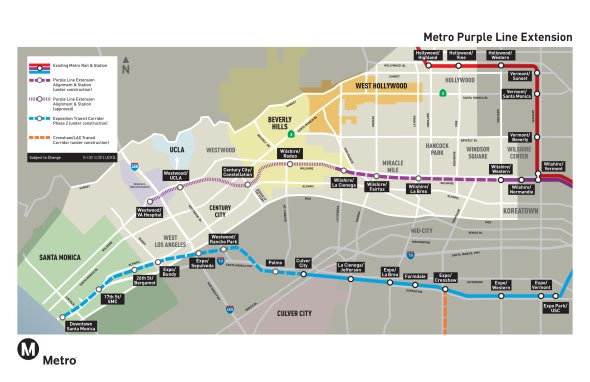

President Obama included $100 million in his proposed FY16 Budget for Los Angeles Metro's Purple Line subway extension project.
The President's budget also recommends that Section 2 of the subway receive a Full Funding Grant Agreement (FFGA) which, if granted, would serve as the commitment to provide federal matching funds for this portion of the subway. Section 1 of the project received an FFGA this past spring. Mayor Eric Garcetti, along with local leaders, applauded the announcement Monday, and also praised the President for including $230 million for Metro's two existing New Starts projects — the Regional Connector and the first section of the Purple Line Extension ($115 million each).
RELATED:L.A. Metro breaks ground on Purple Line extension
The proposed funding within the President's U.S. Department of Transportation budget — if approved by Congress later this year — can be combined with L.A. County's voter-approved Measure R sales tax revenue and could fund construction of Section Two, a 2.6-mile extension of the subway through Beverly Hills to Century City scheduled to open in 2026. Metro has already begun construction of Section 1 between Wilshire/Western and Wilshire/La Cienega. A third and final subway section is planned to reach the Westwood/VA Hospital in 2035.
The second section of the project would build two new underground stations — in downtown Beverly Hills near Wilshire/Rodeo and in Century City at Constellation/Avenue of the Stars.
"I've made transportation funding a key focus of mine in Washington, and I want to thank President Obama for responding in such a big way to help us cut traffic, reduce air pollution, and shorten commutes," Mayor and Metro Chair Garcetti said. "Our transportation infrastructure initiative is now the nation's largest public works program, putting tens of thousands of people to work and creating a better Los Angeles for today's commuters and tomorrow's workforce. As Mayor and Metro Chair, I am going to make sure we spend these dollars efficiently through tough oversight and sound management."
The long-awaited subway extension will provide a high-capacity, high-speed, dependable transit alternative for those traveling to and from the Westside — L.A.'s "second downtown." More than 300,000 people travel into the Westside every day for work from areas throughout the county and beyond.
Metro is continuing to pursue funding to complete the project to Westwood and accelerate the pace of construction.
The Purple Line Extension Project is partially funded by the Measure R sales tax approved by voters in 2008 and can be used to leverage federal "New Starts" matching funds. Metro's Long Range Transportation Plan for Los Angeles County commits $4.2 billion (in 2009 dollars) over the next 30 years to building the subway extension project.
Metro is in the process of applying for a federal grant and loan that will be paired with Measure R funds to build Section Two of the project. The Federal Transit Administration recently gave Metro approval to begin preliminary engineering work.
Construction for Section 1 of the project began late last year and pre-construction activities for the second section of the subway are now underway. In January, Metro began performing potholing work in the Century City area to learn more about underground utilities there. Metro has also begun contacting tenants who may need to be relocated and is beginning the process of acquiring any properties needed to build in the area.
Once built, Purple Line Extension riders will be able to travel from Downtown Los Angeles to the Westwood/UCLA station in 25 minutes. More than 78,000 daily project trips are projected to use the seven new stations
More Management
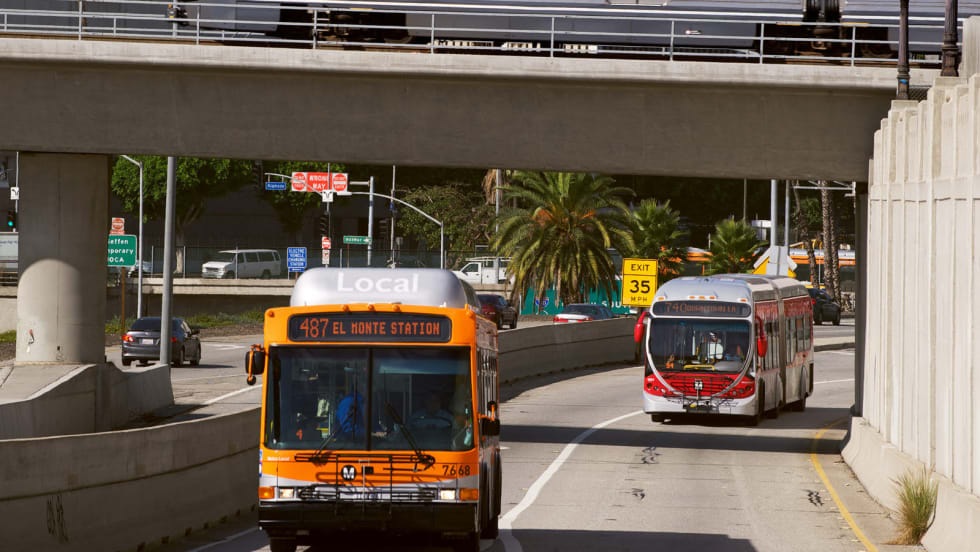
New Tricks for Old Bureaucracies: Joshua Schank on Making Transit Innovation Stick
Former LA Metro Chief Innovation Officer Joshua Schank discusses why good ideas aren't enough, how transit agencies can overcome resistance to change, and why today's challenges demand more innovation.
Read More →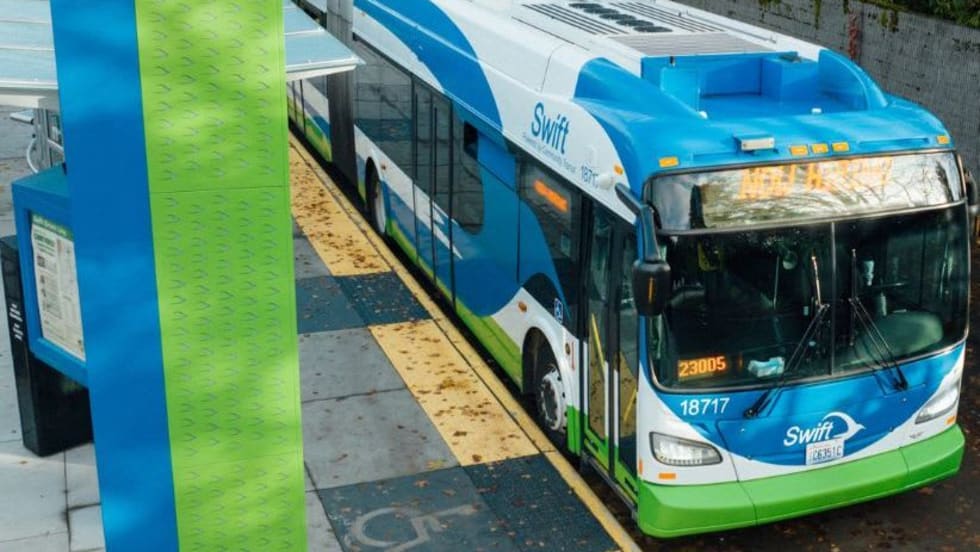
Washington's Community Transit Sets Six-Year Roadmap for Growth, Expansion
Approved TDP targets more bus service, new mobility options, Swift BRT expansion, and a potential Everett Transit annexation.
Read More →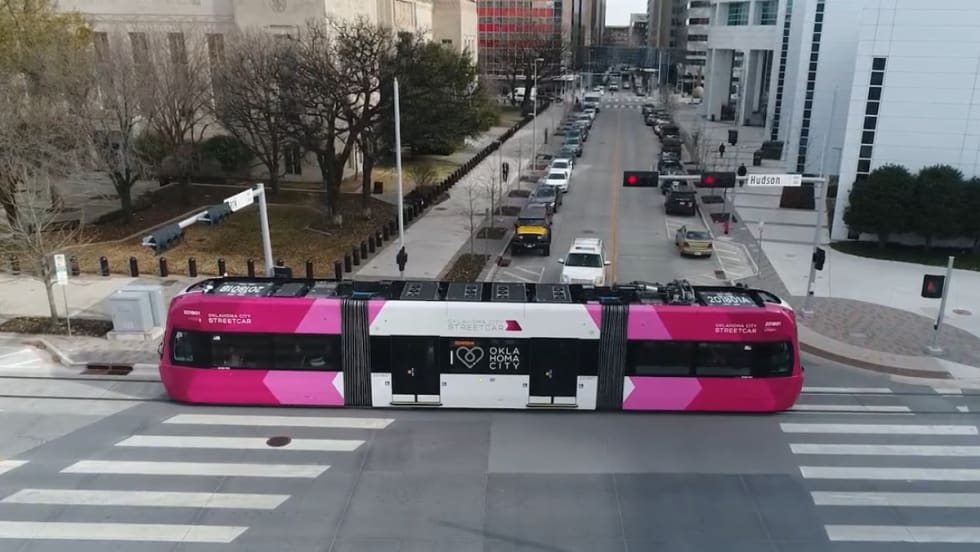
OKC Streetcar Makes Zero-Fare Service Permanent
Ridership increased an average of 71% compared with the same period a year earlier during the fare-free pilot.
Read More →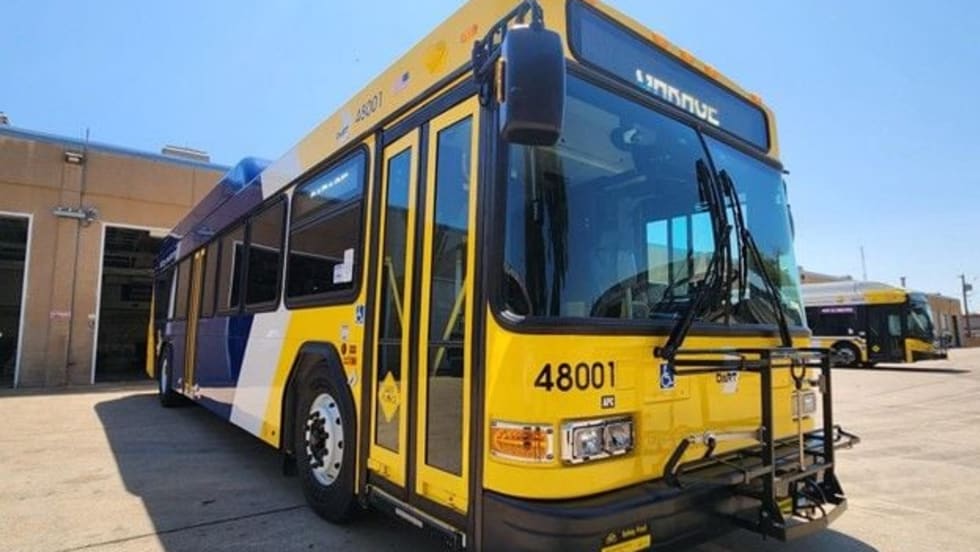
DART Customer Satisfaction Reaches Six-Year High
Overall satisfaction rose to 74.9%, while the agency’s Net Promoter Score reached a record 33.7.
Read More →
House Surface Transportation Bill Advances as Transit Funding Debate Intensifies
A bipartisan transportation package moving through Congress could redefine how the U.S. funds highways, transit, and motorcoach travel, while igniting new fights over electrification, regulation, and federal priorities.
Read More →
How Data, Strategy, and Community Engagement Are Reshaping Transit
In this edition of METROspectives, strada360 CEO Steve Lassey discusses how transit agencies can better align planning with operations, leverage data to improve decision-making, and build public trust as they prepare for the future of mobility.
Read More →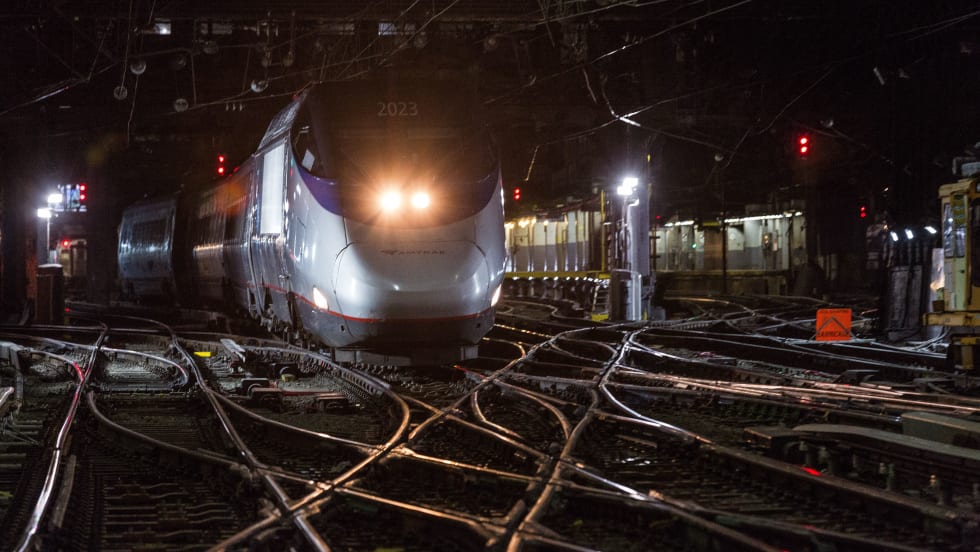
Amtrak Board Advances Plan to Restructure Organization, Seeks Public Input
The proposal, developed by Amtrak management and approved by the board for further consideration, is intended to modernize the organization's structure while improving accountability, operational efficiency, and customer service.
Read More →
Turn Transit Data Into Action
Discover how leading agencies are using connected technology to gain real-time visibility across operations, improve service reliability, and reduce disruptions.
Read More →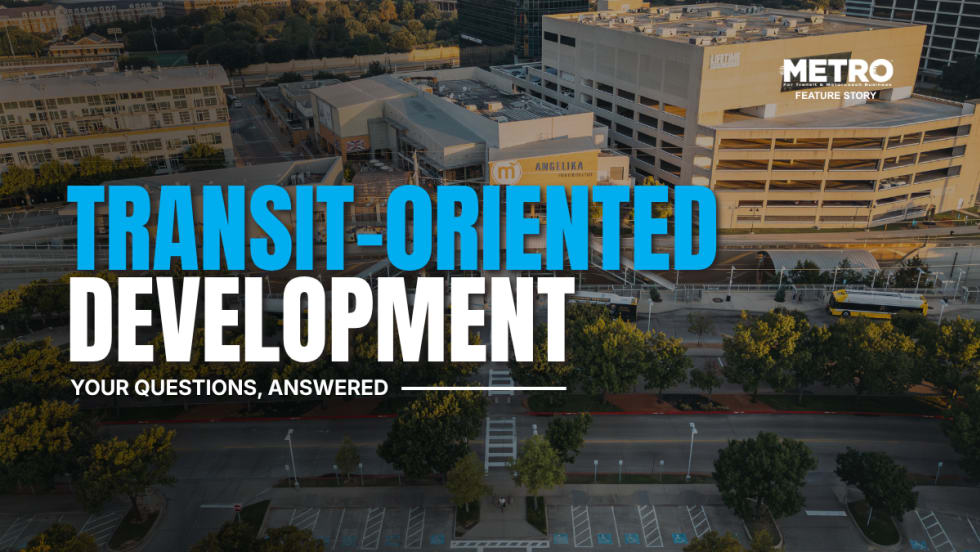
What Transit-Oriented Development Means for the Future of Public Transportation
Once viewed primarily as transit operators, agencies are now leveraging land, partnerships, and long-term planning to boost ridership, expand housing, and strengthen communities.
Read More →
USDOT Announces $22 Million for Transit Innovation, Updates High-Speed Rail Rules
New federal transit funding will support safety, accessibility, and technology projects as updated rail regulations establish new noise standards for high-speed trains.
Read More →