



$25M available for PTC implementation
The funding is part of the 2016 Consolidated Appropriations Act that funds the U.S. Department of Transportation.



The Federal Railroad Administration (FRA) is accepting applications for $25 million in competitive grant funding available to railroads, suppliers, and state and local governments for Positive Train Control (PTC) implementation. The funding is part of the 2016 Consolidated Appropriations Act that funds the U.S. Department of Transportation.
“Positive train control is a long overdue technology that prevents accidents and saves lives,” said U.S. Transportation Secretary Anthony Foxx. “These funds will help us get closer to implementing PTC, and I encourage applications that can make these limited dollars go as far as possible.”
Applications will be accepted until May 19, 2016, and FRA will give preference to projects that would provide the greatest level of public safety benefits. As part of the President’s Fiscal Year 2017 budget proposal, FRA requested $1.25 billion to assist commuter and short line railroads with implementing PTC.
In 2008, Congress mandated PTC implementation on certain railroad main lines where railroads transport poisonous-by-inhalation hazardous or toxic-by-inhalation hazardous materials, or any line where a railroad provides regularly scheduled passenger service. Last October, Congress extended the original deadline from Dec. 31, 2015 to at least Dec. 31, 2018.
“Any Congressional funding and investment to make Positive Train Control active on our nation’s railroad network is a worthwhile investment,” said FRA Administrator Sarah E. Feinberg. “But it will take even more significant funding to achieve this important, life-saving goal. We look forward to working with Congress to find these resources and encourage railroads to submit strong applications.”
Since 2008, FRA has provided significant assistance to support railroads’ PTC implementation. Those efforts include:
Providing more than $650 million in grant funds to passenger railroads, including nearly $400 million in American Recovery and Reinvestment Act of 2009 funding.
Issuing a nearly $1 billion loan to the New York Metropolitan Transportation Authority to implement PTC on the Long Island Rail Road and Metro-North Railroad.
Building a PTC testbed at the Transportation Technology Center in Pueblo, Colo.
Working directly with the Federal Communications Commission and the Advisory Council on Historic Preservation to resolve issues related to spectrum use and improve the approval process for PTC communication towers.
Dedicating staff to work on PTC implementation, including establishing a PTC task force.
More Management
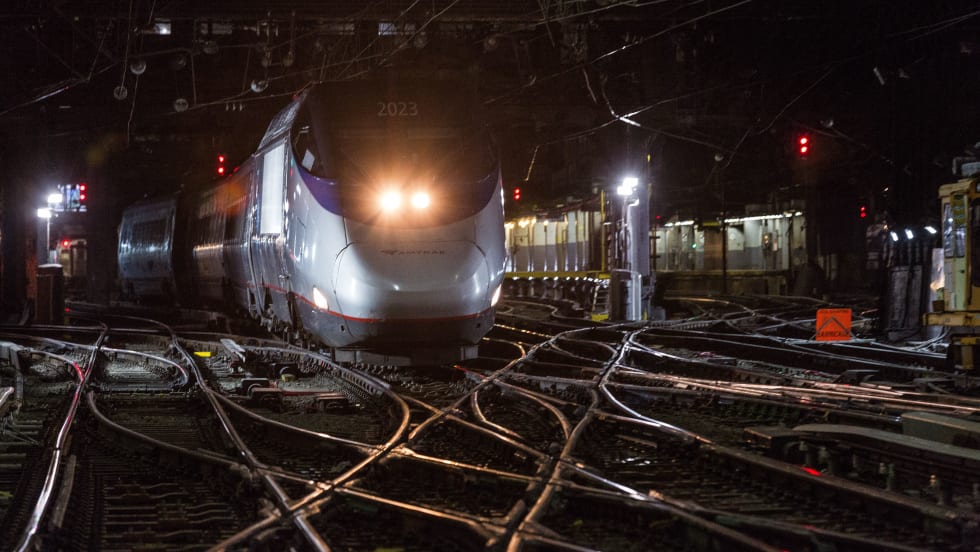
Amtrak Board Advances Plan to Restructure Organization, Seeks Public Input
The proposal, developed by Amtrak management and approved by the board for further consideration, is intended to modernize the organization's structure while improving accountability, operational efficiency, and customer service.
Read More →
Turn Transit Data Into Action
Discover how leading agencies are using connected technology to gain real-time visibility across operations, improve service reliability, and reduce disruptions.
Read More →
What Transit-Oriented Development Means for the Future of Public Transportation
Once viewed primarily as transit operators, agencies are now leveraging land, partnerships, and long-term planning to boost ridership, expand housing, and strengthen communities.
Read More →
USDOT Announces $22 Million for Transit Innovation, Updates High-Speed Rail Rules
New federal transit funding will support safety, accessibility, and technology projects as updated rail regulations establish new noise standards for high-speed trains.
Read More →
Transportation Construction Coalition Unveils Infrastructure Case Studies Ahead of Federal Funding Deadline
The coalition noted the next surface transportation bill should provide sustained investment in highways and public transit to strengthen freight movement, improve safety, and support economic growth.
Read More →
People Movement: American Bus Association Extends Ferguson and More
METRO’s People Movement highlights the latest leadership changes, promotions, and personnel news across the public transit, motorcoach, and people mobility sectors.
Read More →
METRO Magazine Announces 2026 Innovative Solutions Awards Winners
Projects Recognized for Advancing Mobility Through Technology, Accessibility, Workforce Innovation, and Operational Excellence
Read More →
MBTA Rolls Out Pilot Programs to Cut Costs, Simplify Travel
Three new fare pilots — including unlimited two-hour transfers, reduced express bus fares, and free transit for eligible seniors — will launch this fall as Massachusetts extends popular commuter rail discounts through November.
Read More →
FTA Opens $610 Million Funding Opportunity for Bus Infrastructure Projects
The latest Notice of Funding Opportunity provides transit agencies with funding for bus facilities, fleet modernization, and low- and no-emission vehicles, with applications due September 21.
Read More →
Biz Briefs: STV teams with Amtrak, Motorcoach Operators Boost Fleet and Land Contracts, and More
From manufacturers and suppliers to transit agencies and motorcoach operators, these updates offer a snapshot of the projects, partnerships and business moves driving the industry forward.
Read More →