
Outstanding Public Transportation System Achievement
More Than 20 Million Passenger Trips


 MENU
MENU SEARCH
The Toronto Transit Commission developed a five-year plan that put the customer at the center of all that it does, from service planning to service delivery, including a new station management model, customer charter, fleet and infrastructure renewal, and how it manages its people.
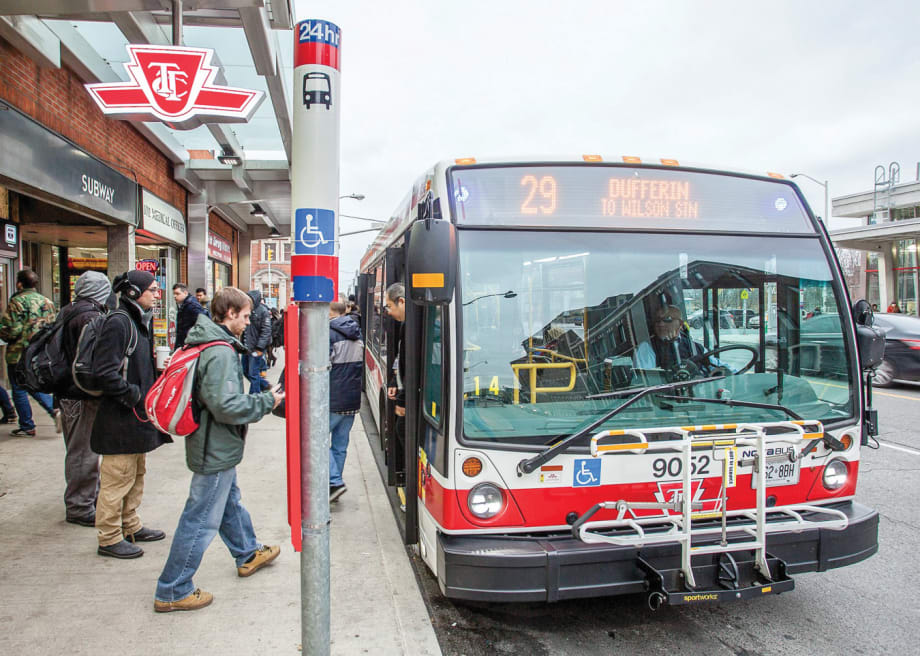
By passenger volume, the TTC is North America’s third-largest transit system. Photo: TTC
By passenger volume, the TTC is North America’s third-largest transit system. Photo: TTC
The Toronto Transit Commission’s (TTC) Outstanding Public Transportation System Achievement award recognizes the transformative change the TTC has undergone over the last five years. The TTC last won the award in 1986.
In 2013, the TTC set out to change itself. It developed a five-year plan that put the customer at the center of all that it does, from service planning to service delivery, including a new station management model, customer charter, fleet and infrastructure renewal, and how it manages its people.
After almost 100 years in service and 31 billion trips taken, the TTC has grown to become one of the most visible and vital public services in Toronto. A number of achievements over the past five years include:
A cleaner, more punctual and exponentially more responsive service.
Unprecedented capital investment
Introduction of new vehicles — buses, streetcars and trains.
PRESTO is now available in all subway stations and vehicles.
Completion of the spectacular Leslie Barns.
Delivery of a world-class transit plan in support of the 2015 Pan Am Games.
A more accessible TTC with the addition of external announcements on buses, subways, and streetcars and more fully-accessible subway stations.
One Person Train Operation on Line 4 Sheppard, improving the safety, and reliability of the service.
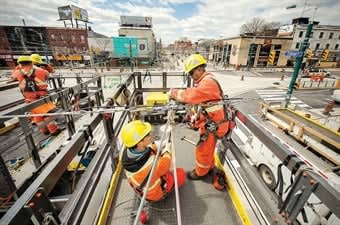
The agency was recently recognized as one of the Greater Toronto Area’s Top Employers. Photo: TTC
A reduction in the number of delay minutes across the subway network.
A second subway platform at Union Station, reducing over-crowding, and improving customer circulation.
Increased service on more than 40 routes, operating all day, every day and 52 routes now operate every 10 minutes or better.
Increased service on the Blue Night Network so that 99% of Toronto residents now live within a 15-minute walk of overnight bus and streetcar service.
Real-time travel information is made available on Platform Video Screens.
Implementation of a new wayfinding system that uses consistent symbols, colors and numbers to clearly communicate to the city’s diverse audience.
Underwent a brand revitalization moving the brand from one of a utility to what it really is: a critical part of Torontonians’ everyday lives.
Recognized as one of the Greater Toronto Area’s Top Employers.
Additionally, the most recent customer satisfaction survey results show that TTC customers are satisfied at a record of more than 80%. The TTC will continue to modernize its signal system, fare system. and its workplace. Later this year, TTC will open a six-station, five-mile extension of its Line 1 Yonge-University subway service.

Nominations are now being accepted for METRO Magazine’s Operator of the Year and Innovative Operator of the Year awards.
Read More →
Contract Four is the largest in the Second Avenue Subway Phase 2 project and includes construction of station infrastructure, tracks, and signals for the subway expansion, MTA officials said. Work on Contract Four will begin in 2027.
Read More →
Leaders from 15 major transit systems shared crime-reduction results and safety initiatives while discussing the role of continued federal support.
Read More →
The new regional transit authority appointed its first board chair and interim executive director while extending reduced fares across CTA, Metra, and Pace for eligible riders.
Read More →
Reliability-Centered Maintenance helps transit agencies move beyond routine checklists to focus limited resources on the assets and failures that have the greatest impact on safety, reliability, and service.
Read More →
Leadership changes will help shape the association’s priorities and its representation of the transportation industry during the 2026–2027 term.
Read More →
The 90-day demonstration will deploy coordinated security teams at five light rail stations while testing controlled access and gathering data to guide future investments.
Read More →
Learn about delivering 1300 gates at 91 stations while managing fare evasion. Explore the large scale deployment, solution customization and real-world results that affect the region. Prepare for deployment in your region now.
Read More →
Between packed transit stations and team motorcoaches, see how agencies and operators across North America tackled the transportation demands of the 2026 FIFA World Cup.
Read More →
The stopgap keeps federal transportation programs moving, but missing advance funding could complicate the transit and rail projects agencies are planning next.
Read More →