



Process to transfer safety oversight of D.C. rail to commission unveiled
FTA has begun conducting pre-transition activities, including briefings with MSC's executive team and board members.

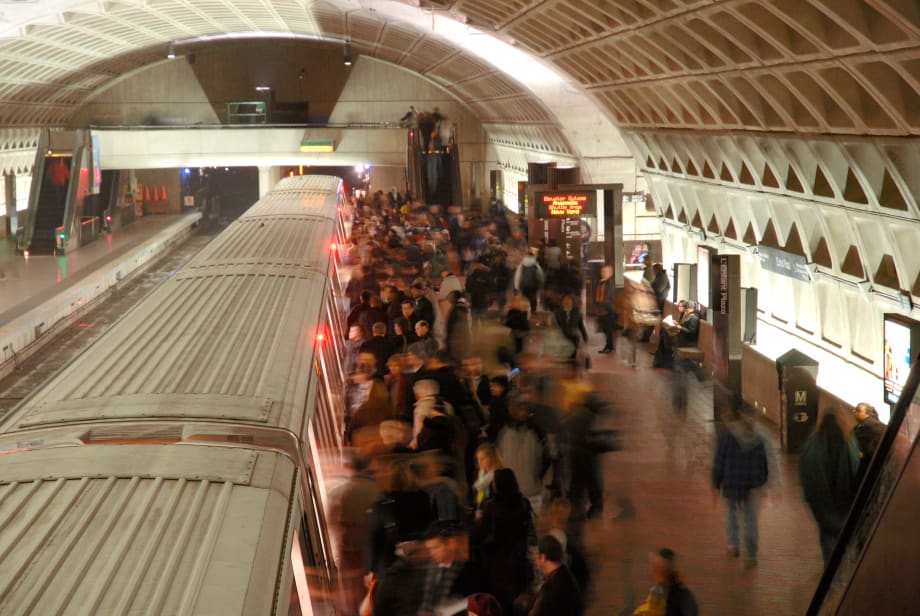
FTA assumed temporary and direct safety oversight of Metrorail in October 2015. Photo: Larry Levine/WMATA
FTA assumed temporary and direct safety oversight of Metrorail in October 2015. Photo: Larry Levine/WMATA
The U.S. Department of Transportation’s Federal Transit Administration (FTA) today outlined the process by which primary responsibility for federal safety oversight of the Washington Metropolitan Area Transit Authority (WMATA) Metrorail system will transfer from FTA to the Metrorail Safety Commission (MSC).
“FTA is ready to initiate the formal transition process and the MSC is nearing completion of the work it needs to do before the process can begin,” said FTA Executive Director Matthew J. Welbes.
The MSC is the designated State Safety Oversight (SSO) Agency established jointly by the District of Columbia, Maryland, and Virginia to provide safety oversight of Metrorail. FTA assumed temporary and direct safety oversight of Metrorail in October 2015.
The transition process involves three key steps:
• First, the MSC must submit its SSO Program certification application to FTA. Before MSC can submit its application, the MSC commissioners must approve the SSO Program and MSC must be adequately staffed to perform all safety oversight responsibilities.
• The second step occurs after FTA receives the MSC certification application and sends a letter of acknowledgement that the application is under review. Then, a transition period will begin during which FTA conducts a knowledge transfer to MSC, including technical sessions on all six core areas of safety oversight responsibilities and the status of each as it relates FTA’s safety oversight of Metrorail. The six core areas are: inspections, investigations, corrective action plans, emergency management, safety and security certifications, and triennial audits.
Also during this transition period, MSC staff will shadow FTA inspectors and investigators in the field to increase familiarity with the Metrorail system and better understand FTA’s activities related to safety oversight of Metrorail. Then, FTA staff will shadow MSC inspectors and investigators to validate that the MSC has the capacity to carry out its safety oversight responsibilities pursuant to federal transit law and its own SSO Program standard. The length of this transition period is not set and is highly dependent on factors such as MSC’s SSO Program standards, staffing, and technical capacity.
• The third and final step is FTA certification of the MSC SSO Program, which will occur only after FTA both approves the application and validates that MSC has the capacity to oversee WMATA Metrorail. When certification occurs, FTA will ensure an orderly transfer of safety oversight as MSC assumes the primary responsibility from FTA.
FTA is working to help MSC achieve certification and has a long history of providing review of draft SSO Program documents, and other technical assistance relevant to safety oversight of Metrorail. In addition, in recent months, FTA has begun conducting pre-transition activities with the MSC, including briefings with its executive team and board members.
Pursuant to federal law, the MSC must obtain certification of its SSO Program by April 15, 2019, and the deadline cannot be waived or extended. If MSC misses the deadline, FTA will be prohibited by law from obligating a minimum of $638 million in FY 2019 federal transit funding to all transit providers across the District of Columbia, Maryland, and Virginia until certification is achieved. Additionally, FTA will continue to withhold about $32 million in FY 2017 and FY 2018 federal transit funding for failure of the jurisdictions to meet a prior SSO Program certification deadline.
More Management

METRO Opens Submissions for 2026 Motorcoach Awards
Nominations are now being accepted for METRO Magazine’s Operator of the Year and Innovative Operator of the Year awards.
Read More →
New York MTA Advances Final Contract for Second Avenue Subway Expansion
Contract Four is the largest in the Second Avenue Subway Phase 2 project and includes construction of station infrastructure, tracks, and signals for the subway expansion, MTA officials said. Work on Contract Four will begin in 2027.
Read More →
Transit Agencies Highlight Safety Gains at National Summit
Leaders from 15 major transit systems shared crime-reduction results and safety initiatives while discussing the role of continued federal support.
Read More →

NITA Names New Leadership, Expands Reduced-Fare Program at First Board Meeting
The new regional transit authority appointed its first board chair and interim executive director while extending reduced fares across CTA, Metra, and Pace for eligible riders.
Read More →
Beyond the Checklist: A Structured Approach to Transit Maintenance
Reliability-Centered Maintenance helps transit agencies move beyond routine checklists to focus limited resources on the assets and failures that have the greatest impact on safety, reliability, and service.
Read More →
APTA 2026 Nominating Committee Selects Leadership Slate, Names Chair and Vice Chair Nominees
Leadership changes will help shape the association’s priorities and its representation of the transportation industry during the 2026–2027 term.
Read More →
DART Launches Major Security, Fare Enforcement Initiative
The 90-day demonstration will deploy coordinated security teams at five light rail stations while testing controlled access and gathering data to guide future investments.
Read More →
Advancing Fare Collection Through Technology and Innovation
Learn about delivering 1300 gates at 91 stations while managing fare evasion. Explore the large scale deployment, solution customization and real-world results that affect the region. Prepare for deployment in your region now.
Read More →
Game Day in Motion: Moving Millions During the 2026 World Cup
Between packed transit stations and team motorcoaches, see how agencies and operators across North America tackled the transportation demands of the 2026 FIFA World Cup.
Read More →
Surface Transportation Extension Averts Shutdown, Leaves Transit Funding Gap
The stopgap keeps federal transportation programs moving, but missing advance funding could complicate the transit and rail projects agencies are planning next.
Read More →