



Motorcoach Operators Need to Be Ready for a Catastrophe
You've never had a crash in which passengers were injured. And you don't expect to. But even the most cautious, conservative motorcoach operation can be involved in a catastrophe. Are you prepared?
[IMAGE]f_0408d.jpg[/IMAGE]
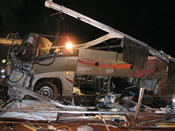
Bus crashes have found their share of headlines in 2008. So far this year...
Jan. 2 — One passenger was killed and dozens injured after their charter bus veered off a highway in Victoria, Texas, and was struck by a pickup truck.
Jan. 6 — Nine passengers were killed and two dozen injured when their charter bus crashed near Mexican Hat, Utah.
Feb. 19 — Four children were killed and more than a dozen injured when their school bus was struck by another vehicle and rolled over at an intersection in Cottonwood, Minn.
And these are just the fatal crashes. Buses have been involved in severe crashes in North Carolina and Florida that resulted in numerous injuries.
You are not invincible
Although the chances that your motorcoach operation will be involved in a catastrophic accident like the ones mentioned above are thankfully small, they’re very real nonetheless.
“People have to admit that they’re not invincible,” says Michelle Silvestro, national marketing manager for National Interstate Insurance in Richfield, Ohio. “Bad things do happen to good people.”
The it’ll-never-happen-to-me approach to disaster planning often leads the victim down the path to financial ruin.
“The bottom line is that the very existence of any of these motorcoach entities can be threatened by a large loss,” says Peter R. Cohen, vice president of transportation for Capacity Coverage Co. in Mahwah, N.J. “And the smaller operators, those with two to eight coaches, typically don’t have much of a plan in place.”
Operators should view the aforementioned accidents as a wake-up call and start taking seriously the possibility that they will be involved in a similar predicament.
The first thing they should do is, as Cohen says, get a plan. “You have to have a plan before these types of circumstances present themselves,” he says. “When the call comes in at 3:00 in the morning, the owner, the general manager and the driver need to know what to do.”
Create a detailed plan
The first step that needs to be taken is to create a comprehensive and detailed plan. “It’s not sufficient to have simply jotted down a few items or procedures,” says Paul R. Berne, senior vice president of claims for Lancer Insurance Co. in Long Beach, N.Y. “Your plan should be detailed at all levels, and read and understood by everyone in management.”
The plan should include instructions to each driver on who to call in an emergency. Generally, that call should be placed to the owner of the company or his or her designated appointee.
“When the first call comes in from the accident scene, you should make sure that the driver is under control,” Berne says.
Because the situation undoubtedly will place the driver under severe stress, your first question should address the driver’s condition. “You need to make sure at each contact that your driver understands you are concerned with his or her safety and well-being,” Berne says.
The condition of the driver is important because he or she will be the company’s de facto first responder.
“Of immediate importance, make sure all passengers are safely moved to a secure area,” Berne says. In addition, alternate transportation should be arranged and passengers should be kept informed about its estimated time of arrival.
Another item in the plan should be media response. If approached, the driver should not speak with reporters. Berne said one person in the company should be designated to speak with the media. “All inquiries should be directed to him or her,” he says. “You should have a standard script.”
Cohen of Capacity Coverage recalls an incident in which a bus company owner spoke with TV reporters after a fatal accident involving one of his vehicles. “The operator was not prepared for the media onslaught — most people aren’t — and his comments to the media prejudiced the insurance company’s handling of the claim at the very outset, when emotions are raw and impressions are lasting,” he says.
Notify your disaster team
After company managers get the call from the accident scene, they in turn need to immediately notify their disaster management team, usually comprising a corporate lawyer and insurance representative. “If you don’t have a corporate lawyer on your management team, the first call goes to the insurance company,” says Cohen. “You ask them to handle all calls and to take you out of the line of fire.”
If you decide to go to the accident scene, you should bring supplies. It might be wise to bring another company representative as well. “You might need someone to deal with the authorities while another person takes care of passenger arrangements, including recovery of luggage and personal items,” Berne says.
The management team should prepare what Berne calls a “go kit” ahead of time. It should include flashlights, tags for personal items, several rolls of quarters (for vending machines as well as telephones), pencils, writing pads and contact information for your company and insurance company.
In addition, you should make sure that your bus has a single-use camera on board. Drivers should be instructed on how to use the camera and what types of photos to take at the accident scene.
“Photos of the scene and vehicles from various angles are important,” Berne says. “Be sure to also photograph other important items like obstacles that may have blocked the driver’s vision, construction signage, etc. Do not photograph individuals.”
Drivers should be warned not to start taking photos until passengers and the vehicle are in a safe location.
Freeze your documents
Back at the office, companies should issue a “document freeze,” Berne says. “This would include anything relating to the driver; the vehicle involved; or your hiring, safety or maintenance program.”
Be aware that all records, including e-mail, could be subject to subpoena at a later date. Berne says failure to produce the documents, especially if there is evidence they were altered or destroyed after the accident, could have a significant adverse impact on the defense of your company and driver.
Also remember that your driver will need to be tested for drugs and alcohol in accordance with federal regulations. “While police handle this most of the time, don’t assume arrangements have been made,” Berne says.
Once the smoke has cleared, the motorcoach operator needs to work collaboratively with its insurance company and the adjusters, lawyers and accident reconstruction engineers.
For the best possible preparation, run a thorough mock drill. “I highly recommend that every company do this,” Silvestro of National Interstate Insurance says. “Have someone call in a catastrophic loss and make sure that everyone knows who they need to be talking to. Everyone needs to know what their role will be in that scenario.”
More Management
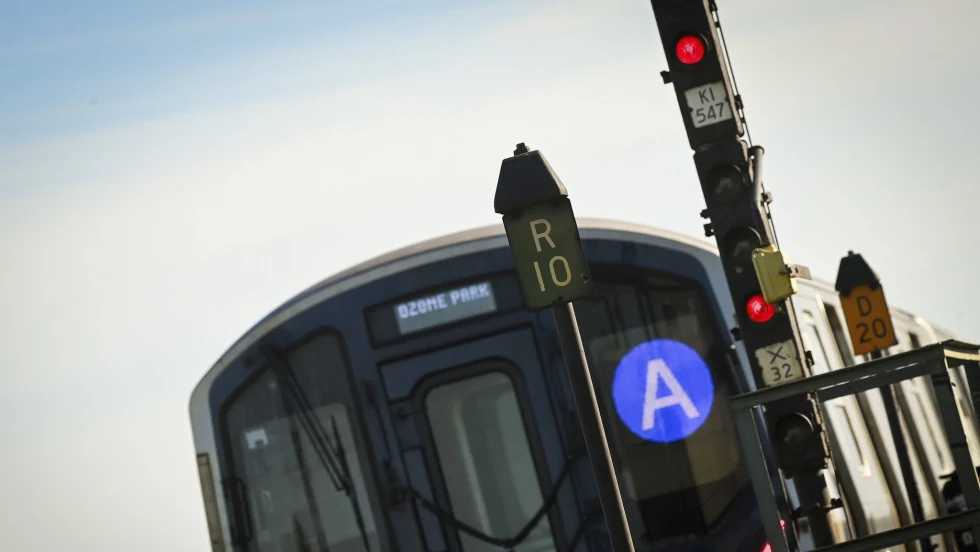
New York MTA Launches Historic $1.9B Signal, Track Modernization Project
Funded in part by congestion pricing revenue, the project will replace nearly century-old signals along the A and C lines in Brooklyn and Queens.
Read More →
Brian Dickson on Building Stronger, More Resilient Transportation Organizations
Bus Business Consultants Founder Brian Dickson discusses the leadership principles, operational discipline, and strategic planning that separate transportation companies positioned for long-term success from those stuck in survival mode.
Read More →
LA Metro Breaks Ground on Vermont BRT Project
The 12.4-mile corridor is projected to serve 66,200 daily riders, reduce travel times by up to 24%, and create the nation's busiest bus rapid transit corridor.
Read More →
Building Stronger Leaders, More Resilient Transit Teams
Dr. Carol Parker Walsh discusses leadership development, employee retention, workplace culture, and preparing transit’s workforce for AI and automation.
Read More →
Roman Cornell on ABC Companies’ Evolution and the Future of Passenger Transportation
The company’s CEO discusses carrying forward a third-generation family legacy, ABC’s continued evolution in passenger transportation, support for increasingly complex fleets, and how technology and continued investment could help operators improve uptime.
Read More →
CATS Launches West Charlotte Microtransit Zone, Expands Transit Services
The new microtransit zone connects residents to key destinations as Charlotte Area Transit System rolls out the first phase of its 2055 Transit System Plan.
Read More →
VIA Bus Ridership Grows 10.1% Through August 2026
San Antonio's VIA Metropolitan Transit reported the highest bus ridership growth among major Texas transit systems. Federal Transit Administration data ranked it second among the nation's 50 largest transit systems.
Read More →
CSA Group Releases Climate Resilience Standard for Transit, Passenger Rail
Developed with support from the Standards Council of Canada, CSA D700 guides assessing climate-related risks and planning adaptation measures for transit and passenger rail systems.
Read More →
ETA CEO John Maglio on Transit Technology, Innovation, and Building Agency Trust
ETA founder and CEO John Maglio explores the evolution of transit technology, the importance of reliable systems, and how stronger partnerships can help agencies improve operations and the passenger experience.
Read More →
COTA Launches First Customer Experience Action Plan to Improve Transit Service
The new plan outlines improvements to service reliability, accessibility, communication, and the overall rider experience across Central Ohio's transit system.
Read More →