



Innovative Operator Profile: Running Leaner Through Downsizing
St. Louis, Mo.-based Mid American Coaches has seen a lot in its more than four decades in business. The company, which began as a six-bus transit line and occasional charter in 1927, has grown into a successful 23-vehicle charter service and tour operation.
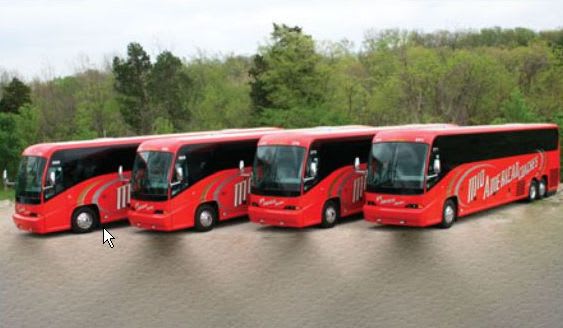
St. Louis, Mo.-based Mid American Coaches has seen a lot in its more than four decades in business. The company, which began as a six-bus transit line and occasional charter in 1927, has grown into a successful 23-vehicle charter service and tour operation.
Dennis Jones, vice president, and Roger Jones, president, whose father Ralph purchased the company in 1957, are discovering there’s no better time than the present to tighten Mid American’s enterprise.
“The economy is hurting everyone,” says Dennis Jones. In response, the company recently made some bold changes to its operation, which have drastically affected Mid American’s bottom line.
After a detailed inspection of the company’s maintenance department, Dennis discovered a more lucrative method of managing its parts supply. “We realized that our parts situation was out of hand,” he says. “For years we were too heavily stocked.”
Although to some operators, having more than you need is better than not having that part when you really need it, Jones saw the situation as an opportunity to save on the cost of having a fully stocked parts department. With the availability of next-day air and the close proximity of manufacturer facilities, Mid American no longer needed to spend the extra money to keep all of it its parts on hand. “It just didn’t make sense anymore,” he says. “We have saved a lot of money just by changing that one thing.”
“The state of the economy has made us more conscious of exactly what our costs are,” says Jones. Because of this, he adds, the company has reduced the size of its fleet from 43 vehicles in the early ‘90s, to 23 vehicles today. Jones believes this has made a huge difference in revenue.
“Instead of having unused vehicles in the yard,” says Jones, “sometimes we just have to say no on the busy days.” The cost savings in vehicle maintenance and equipment more than make up for it, Jones adds. In turn, downsizing has found Mid American running leaner and more efficiently in the long run.
Instead of holding on to hardly-used motorcoaches, the coach company also recently purchased five new fuel-efficient coaches to add to its fleet. All of the new vehicles are equipped with the latest in EGR engine technology. “We prefer to invest in new coaches with newer technologies to protect the environment,” says Jones.
In addition to efficiency, Mid American Tours takes its safety record very seriously. In a tough economy, with many operators attracting business by slashing rates, Mid American is tightening its safety standards and saving money at the same time.
The company has two dedicated safety officers who manage the safety and training of its drivers. “In the past, we were incurring a lot of damage to our vehicles,” says Jones. “This program has changed everything.” The training team does frequent ride-alongs, monitors the company’s DriveCam systems and retrains drivers when it is deemed necessary.
In addition to minimizing damage and eliminating unnecessary fuel costs due to idling and speeding, Jones says the program has instilled an added sense of morale among Mid American’s drivers. “Our drivers have a great rapport with the safety officers,” says Jones, “and appreciate the training.”
MOTORCOACHES: 22
FLEET MIX: MCI, Prevost, Setra, Van Hool
EMPLOYEES: 54
DRIVERS: 41
SERVICE AREA: U.S. and Canada
SERVICES OFFERED: charters and tours
YEAR STARTED: 1927
VICE PRESIDENT: Dennis Jones
More Management

LIT Marks 10-Year Milestone at Annual Summit
Hosted by the COTA from September 10 to 13, the Summit carried the theme “Celebrating 10 Years of Excellence, Leadership, and Impact,” with every part of the program honoring the people, agencies, and partners who built LIT over its first decade.
Read More →
People Movement: Dan Dipert Coaches Adds Third-Generation Leader, Keolis Names New Valley Metro VP/GM, and More
In this edition, we also cover recent appointments and announcements at the Wabtec, SilverRide, HNTB, and more, showcasing the individuals helping to shape the future of transportation.
Read More →
METRO Opens Submissions for 2026 Motorcoach Awards
Nominations are now being accepted for METRO Magazine’s Operator of the Year and Innovative Operator of the Year awards.
Read More →

New York MTA Advances Final Contract for Second Avenue Subway Expansion
Contract Four is the largest in the Second Avenue Subway Phase 2 project and includes construction of station infrastructure, tracks, and signals for the subway expansion, MTA officials said. Work on Contract Four will begin in 2027.
Read More →
Transit Agencies Highlight Safety Gains at National Summit
Leaders from 15 major transit systems shared crime-reduction results and safety initiatives while discussing the role of continued federal support.
Read More →
NITA Names New Leadership, Expands Reduced-Fare Program at First Board Meeting
The new regional transit authority appointed its first board chair and interim executive director while extending reduced fares across CTA, Metra, and Pace for eligible riders.
Read More →
Beyond the Checklist: A Structured Approach to Transit Maintenance
Reliability-Centered Maintenance helps transit agencies move beyond routine checklists to focus limited resources on the assets and failures that have the greatest impact on safety, reliability, and service.
Read More →
APTA 2026 Nominating Committee Selects Leadership Slate, Names Chair and Vice Chair Nominees
Leadership changes will help shape the association’s priorities and its representation of the transportation industry during the 2026–2027 term.
Read More →
DART Launches Major Security, Fare Enforcement Initiative
The 90-day demonstration will deploy coordinated security teams at five light rail stations while testing controlled access and gathering data to guide future investments.
Read More →
Advancing Fare Collection Through Technology and Innovation
Learn about delivering 1300 gates at 91 stations while managing fare evasion. Explore the large scale deployment, solution customization and real-world results that affect the region. Prepare for deployment in your region now.
Read More →