



Human trafficking the focus of L.A. Metro program
The campaign includes brochures and posters on buses and trains, as well as training programs for employees to identify and help potential victims.
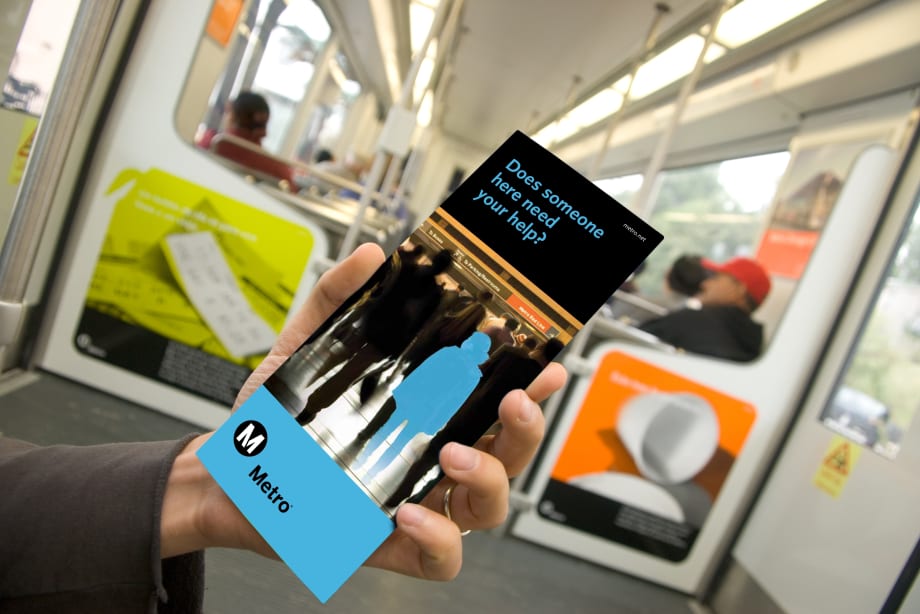
Courtesy L.A. Metro
Courtesy L.A. Metro
As the federal government attempts to shed a light on human trafficking across all modes of transportation, the Los Angeles County Metropolitan Transportation Authority (Metro) has developed its own awareness program to help identify and report human trafficking.
The campaign includes brochures and posters on buses and trains, as well as training programs for employees to identify and help potential victims.
Once the agency’s marketing campaign gathered momentum, Metro began using social media and billboards for which media giant Clear Channel donated 90 in more than 60 locations to spread the word, according to Robin O’Hara, director, TAP services, for Metro. The program has continued to grow since its positive reception both in the community and the mainstream media.
“Through all of the positive feedback, we were encouraged to do more,” O’Hara said. “The point to our marketing was basically to raise awareness for the campaign, give people a number to call if they thought they saw something suspicious and offer people a safe way to report it.”
The program was launched following the urging of L.A. County Supervisor and Metro Board Member Don Knabe, however, Metro was slow to get the program moving because as a public agency it could not appear as if it was advocating.
“It’s not our agency’s place to advocate, so we carefully evaluated the program first,” said O’Hara. “L.A. is one of the top five cities for human trafficking, so we felt that it could be happening on our system, and therefore, does impact the safety and security of our passengers. Because of that, we felt it was a worthy campaign to kind of sink our teeth into.”
Human trafficking is a modern-day form of slavery involving the illegal trade of people for exploitation or commercial gain.
Every year, millions of men, women and children are trafficked in countries around the world, including the U.S. It is estimated that human trafficking is a $32 billion per year industry, second only to drug trafficking as the most profitable form of transnational crime.
Traffickers often use force, fraud, or coercion to lure their victims and force them into labor or commercial sexual exploitation. They look for people who are vulnerable for a variety of reasons, including economic hardship, natural disasters or political instability. The trauma can be so great that many may not identify themselves as victims or ask for help, even in highly public settings.
To help its employees and passengers identify and help potential victims, Metro also began a voluntary training program, which is accessible on its website, explained O’Hara.
“It leads the person to a learning module they can read through, and after that, allows them to take a short eight question quiz, which reviews what they read, providing our employees and customers an overall picture of what to look out for and be aware of,” she said.
Metro is also developing a mandatory training program for all employees.
In 2010, the Department of Homeland Security (DHS) launched its “Blue Campaign” to more effectively combat human trafficking through enhanced awareness, training, victim assistance and law enforcement investigations.
In 2012, the U.S. Department of Transportation (U.S. DOT) teamed with DHS to begin training its more than 55,000 professionals to be able to identify and report human trafficking. The U.S. DOT and DHS also teamed with Amtrak last year to begin training its more than 20,000 employees and created a nationwide awareness training program across all modes of transportation, including public transportation.
While Metro’s program has been widely lauded, O’Hara explained it is difficult to quantify how successful the program has been in foiling human trafficking.
From the standpoint of the amount of marketing materials put out on the system, however, O’Hara said, it is clear Metro’s message is reaching people.
“We are in the process of gathering information, but it is difficult because we are dealing with a very sensitive matter,” she said. “We are content with where we are right now, but we are really trying to nail down some outcomes because we feel that is the best way to prove the program has been a success.”
More Management

METRO Opens Submissions for 2026 Motorcoach Awards
Nominations are now being accepted for METRO Magazine’s Operator of the Year and Innovative Operator of the Year awards.
Read More →
New York MTA Advances Final Contract for Second Avenue Subway Expansion
Contract Four is the largest in the Second Avenue Subway Phase 2 project and includes construction of station infrastructure, tracks, and signals for the subway expansion, MTA officials said. Work on Contract Four will begin in 2027.
Read More →
Transit Agencies Highlight Safety Gains at National Summit
Leaders from 15 major transit systems shared crime-reduction results and safety initiatives while discussing the role of continued federal support.
Read More →

NITA Names New Leadership, Expands Reduced-Fare Program at First Board Meeting
The new regional transit authority appointed its first board chair and interim executive director while extending reduced fares across CTA, Metra, and Pace for eligible riders.
Read More →
Beyond the Checklist: A Structured Approach to Transit Maintenance
Reliability-Centered Maintenance helps transit agencies move beyond routine checklists to focus limited resources on the assets and failures that have the greatest impact on safety, reliability, and service.
Read More →
APTA 2026 Nominating Committee Selects Leadership Slate, Names Chair and Vice Chair Nominees
Leadership changes will help shape the association’s priorities and its representation of the transportation industry during the 2026–2027 term.
Read More →
DART Launches Major Security, Fare Enforcement Initiative
The 90-day demonstration will deploy coordinated security teams at five light rail stations while testing controlled access and gathering data to guide future investments.
Read More →
Advancing Fare Collection Through Technology and Innovation
Learn about delivering 1300 gates at 91 stations while managing fare evasion. Explore the large scale deployment, solution customization and real-world results that affect the region. Prepare for deployment in your region now.
Read More →
Game Day in Motion: Moving Millions During the 2026 World Cup
Between packed transit stations and team motorcoaches, see how agencies and operators across North America tackled the transportation demands of the 2026 FIFA World Cup.
Read More →
Surface Transportation Extension Averts Shutdown, Leaves Transit Funding Gap
The stopgap keeps federal transportation programs moving, but missing advance funding could complicate the transit and rail projects agencies are planning next.
Read More →