



How to Improve Motorcoach Customer Satisfaction
As competition gets tougher, many motorcoach operators are exploring ways to both maintain and grow their customer bases, including taking action on items mentioned in customer surveys and diversifying both their business models and fleets to be able to move into niche markets.
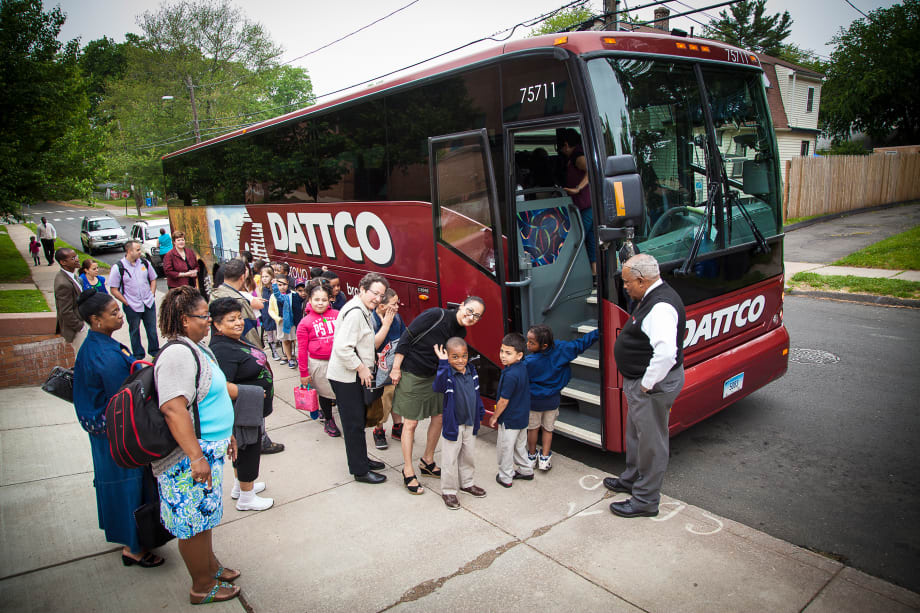
By diversifying its fleet, DATTCO has ensured it will have the right vehicle to service its customers’ needs.
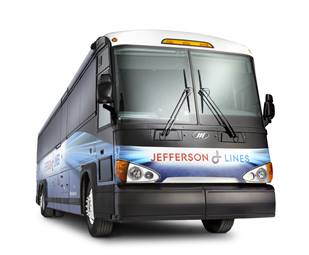
As competition in the motorcoach industry increases and operations look for ways to maintain and grow their customer bases, responding to the customer’s needs has become even more vital.
While spotting trends, diversifying business and being prepared to provide transportation for niche markets have become important, so too have monitoring passengers’ travel patterns and simply asking if they enjoyed their trip as well as what they’d like to see improved.
“In our view, it’s 100 percent about the customer,” says Pete Worthington, VP, coach & tour, at New Britain, Conn.-based DATTCO. “If they want something, be it a service or amenity, we try to fulfill their needs whenever possible.”
Responsiveness
Keeping in line with its mission to understand what its customers value, and then, exceeding those expectations, Minneapolis’ Jefferson Lines began a customer satisfaction survey program in May 2012.
“We spend a significant amount of money acquiring passengers and would really like to retain them, so when they do decide to invest and put their trust in us, we want to deliver the best experience possible so they keep coming back,” says Steve Woelfel, president at Jefferson Lines.
Woelfel adds maintaining passengers is extra important to his operation since the biggest chunk of its business portfolio is fixed-route intercity bus routes. In addition to that, he adds that his operation relies on word of mouth marketing to grow ridership. As a result, the key question Jefferson Lines is most interested in is “Would you recommend us to a friend?”
“Word-of-mouth marketing is so important to us, and with that in mind, we really must focus on the customer’s experience,” says Woelfel.
Woelfel explains the growth in social media network usage, allowing customers to communicate their poor experience as it is happening to possibly thousands of potential customers in an instant, raises the stakes for his operation to not only ask customers what they would like to see, but to also respond to their feedback.
“If we aren’t in communication with our customers to know what they value and want, and then exceeding that expectation, we are going to spend twice the amount of effort on the back-end trying to respond to customer complaints,” he says. “What we’re trying to do is be proactive; let’s open that communication channel to find out what makes the best possible experience for the customer and we will turn around and make those necessary investments.”
Woelfel says that when implementing the customer satisfaction survey program, the operation was expecting a participation rate of somewhere around 3% to 4%, but has seen a rather high response rate of 12% to 15%, with no level of monetary incentive for the customer to fill out the survey. Additionally, he says the operation has found its customers are passionate about their transportation experience, based on the open-ended comments it receives from the surveys.
“Some months, we will get 20 to 25 pages of open-ended comments from our passengers, and I expect our leadership team to read those and deal with them accordingly,” Woelfel says.
By diversifying its fleet, DATTCO has ensured it will have the right vehicle to service its customers’ needs.
To do just that, Jefferson Lines’ leadership team meets to discuss key themes discussed in the surveys and devise action items to fulfill those needs.
“We know we can do anything, but we also know we can’t do everything, so we are purposeful in reaching agreement on major things that will have the biggest impact,” Woelfel says. “With all the data available, it is just not being efficient to understand what the customer wants, but being too busy to react.”
Some items Jefferson Lines has addressed include driver behaviors both good and bad, adding Wi-Fi, improving customer communications, making scheduling changes and improving on-time performance.
“As a result of the surveys, we are really focusing on our on-time performance right now,” Woelfel says. “As we have seen that improve, we have seen our customer satisfaction numbers go up — they are so aligned, it’s amazing.”
Woelfel believes the customer satisfaction surveys, and more importantly, how they have responded to the feedback received, is paying off big for Jefferson Lines.
“We are continuing to see month-over-month improvements in our passenger counts,” he explains. “There are a number of things we are doing to drive that growth, but I have to think our customer satisfaction surveys and how we are responding plays a large role in that success.”
Diversifying options
Taking a lesson from the decline in tour business immediately following 9/11, DATTCO offers an array of services, including providing college and university transportation, tours, charters, corporate work, line-haul runs and is even a Megabus franchise company.
“We have experimented with everything because we found you never want to concentrate on one thing too much,” says Worthington.
To provide its large portfolio of services, DATTCO has diversified its fleet, which includes motocoaches, double-decker motorcoaches, limo buses and activity transit buses, as well as a couple of black cars. It also offers its “Experience” coaches, which are 45-foot Van Hool or Setra coaches with features including reduced seating, leather seats and tray tables, enhanced audio/video systems, and a host of amenities. The “Experience” coaches are ideal for professional sports teams and corporate accounts that need to travel a considerable distance or for those looking for a high-end travel experience.
The fleet diversity pays off for DATTCO since it is able to offer a variety of services to several different markets. It has also been beneficial in expanding the operation’s portfolio with existing clients, explains Worthington.
“Our fleet really makes it easy for us to respond to whatever the customer needs,” he says. “For example at Quinnipiac University, we provide transportation for all of their sports teams, fraternities and sororities; on-campus shuttles and late night rides, all using a mix of different vehicles.”
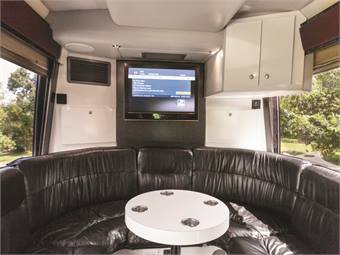
It also features its “Experience” coaches, which are ideal for professional sports teams and corporate accounts.
Niche market development
To continue diversifying its business portfolio, DATTCO began exploring the wedding industry about three years ago.
“One of our employees in sales essentially serves as our wedding planner as well,” Worthington explains. “He goes to about four bridal shows a year, has developed contacts in the wedding industry and works with a couple of websites that direct business our way.”
Again, the operation’s diverse fleet of vehicles makes it an ideal fit for this niche market.
“If you put it all together, we are able to offer just about anything to this market,” Worthington says. “We have used some of our activity buses to shuttle wedding attendees to and from local hotels, used our ‘Experience’ coaches or party buses to transport the wedding party; and used our motorcoaches to provide transportation to groups traveling to other cities, such as New York or Boston, to attend weddings.”
Worthington says although the wedding season typically covers the months of April to October, the operation has seen steady growth over the last three years, with much of the business acquired focused on shuttling guests to and from hotels or from the ceremony to the reception.
Finally, to further respond to its customer’s needs, DATTCO simply puts them first. Worthington says if there is an amenity or onboard feature requested by one of its regular clients, the operation will add it to the vehicle or vehicles it uses to provide services for that client.
The operation also has a rule to never turn down a customer, even if it is completely booked and has to rent a vehicle from another provider.
“It really means a lot to the customer and pays off very often with their loyalty to our company,” says Worthington. “Our theory is if we say no to them, they may go somewhere else and realize they are happy sticking with that company from now on.”
More Management

METRO Opens Submissions for 2026 Motorcoach Awards
Nominations are now being accepted for METRO Magazine’s Operator of the Year and Innovative Operator of the Year awards.
Read More →
New York MTA Advances Final Contract for Second Avenue Subway Expansion
Contract Four is the largest in the Second Avenue Subway Phase 2 project and includes construction of station infrastructure, tracks, and signals for the subway expansion, MTA officials said. Work on Contract Four will begin in 2027.
Read More →
Transit Agencies Highlight Safety Gains at National Summit
Leaders from 15 major transit systems shared crime-reduction results and safety initiatives while discussing the role of continued federal support.
Read More →

NITA Names New Leadership, Expands Reduced-Fare Program at First Board Meeting
The new regional transit authority appointed its first board chair and interim executive director while extending reduced fares across CTA, Metra, and Pace for eligible riders.
Read More →
Beyond the Checklist: A Structured Approach to Transit Maintenance
Reliability-Centered Maintenance helps transit agencies move beyond routine checklists to focus limited resources on the assets and failures that have the greatest impact on safety, reliability, and service.
Read More →
APTA 2026 Nominating Committee Selects Leadership Slate, Names Chair and Vice Chair Nominees
Leadership changes will help shape the association’s priorities and its representation of the transportation industry during the 2026–2027 term.
Read More →
DART Launches Major Security, Fare Enforcement Initiative
The 90-day demonstration will deploy coordinated security teams at five light rail stations while testing controlled access and gathering data to guide future investments.
Read More →
Advancing Fare Collection Through Technology and Innovation
Learn about delivering 1300 gates at 91 stations while managing fare evasion. Explore the large scale deployment, solution customization and real-world results that affect the region. Prepare for deployment in your region now.
Read More →
Game Day in Motion: Moving Millions During the 2026 World Cup
Between packed transit stations and team motorcoaches, see how agencies and operators across North America tackled the transportation demands of the 2026 FIFA World Cup.
Read More →
Surface Transportation Extension Averts Shutdown, Leaves Transit Funding Gap
The stopgap keeps federal transportation programs moving, but missing advance funding could complicate the transit and rail projects agencies are planning next.
Read More →