



New app provides trip info for 11 Seattle agencies
Puget Sound Trip Planner app—available for Apple and Android mobile devices—allows riders to plan a trip that covers many transportation choices, including buses, rail, ferries, streetcars and water taxis

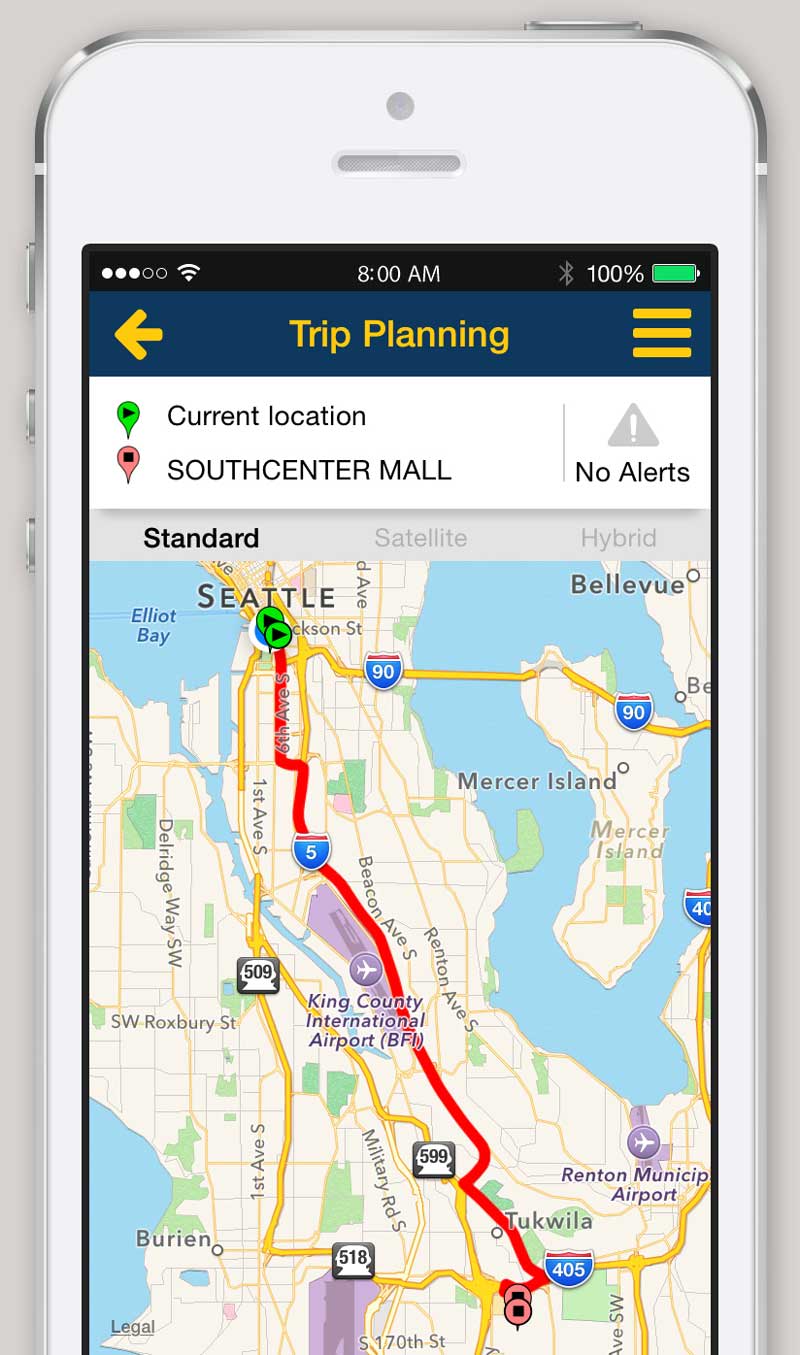
Delivering an initiative to better coordinate transportation services across the Puget Sound region, King County Executive and Sound Transit Chair Dow Constantine announced the launch of a free smartphone app that makes it easier for riders to plan trips with 11 local transit agencies.
Puget Sound Trip Planner app—available for Apple and Android mobile devices—allows riders to plan a trip that covers many transportation choices, including buses, rail, ferries, streetcars and water taxis. It merges popular features available on existing trip planners and offers real-time predictions for bus arrivals.
Last year, Constantine instructed Metro and Sound Transit to increase joint planning and service integration, which is already delivering results. The regional trip planner app is part of a series of rider improvements cited in the “Getting There Together” report. Transit riders will be able to:
Plan trips for King County Metro, Sound Transit, Washington State Ferries, Pierce Transit, Community Transit, Everett Transit, Intercity Transit, King County Water Taxi, Snoqualmie Valley Transportation, Seattle Streetcar and Monorail.
View a map or list of nearby bus stops.
See when the next bus is coming via a “Next departures” feature that shows real-time arrival information for Metro and Metro-operated Sound Transit routes.
Customize trip plan preferences, including transportation mode, walking distance, and more, as well as use popular landmarks, addresses or personal contacts to plan a trip.
See a map that shows bus locations for the routes where estimated times are available.
Access route schedules for all transit agencies in the region.
Create point-to-point schedules within a route.
Search by route or headway sign.
The Puget Sound Trip Planner is one product among a continuing effort to improve innovative and high-tech options for transit riders. Metro and Sound Transit are also developing a pilot project to test mobile-ticketing technology, which will allow riders to pay fares using their smartphones.
By mid-2016, the agencies will launch cellular service in the Downtown Seattle Transit Tunnel and University Link tunnels that will allow riders to receive continuous cell service while riding buses and trains in the tunnels.
More Management

METRO Opens Submissions for 2026 Motorcoach Awards
Nominations are now being accepted for METRO Magazine’s Operator of the Year and Innovative Operator of the Year awards.
Read More →
New York MTA Advances Final Contract for Second Avenue Subway Expansion
Contract Four is the largest in the Second Avenue Subway Phase 2 project and includes construction of station infrastructure, tracks, and signals for the subway expansion, MTA officials said. Work on Contract Four will begin in 2027.
Read More →
Transit Agencies Highlight Safety Gains at National Summit
Leaders from 15 major transit systems shared crime-reduction results and safety initiatives while discussing the role of continued federal support.
Read More →

NITA Names New Leadership, Expands Reduced-Fare Program at First Board Meeting
The new regional transit authority appointed its first board chair and interim executive director while extending reduced fares across CTA, Metra, and Pace for eligible riders.
Read More →
Beyond the Checklist: A Structured Approach to Transit Maintenance
Reliability-Centered Maintenance helps transit agencies move beyond routine checklists to focus limited resources on the assets and failures that have the greatest impact on safety, reliability, and service.
Read More →
APTA 2026 Nominating Committee Selects Leadership Slate, Names Chair and Vice Chair Nominees
Leadership changes will help shape the association’s priorities and its representation of the transportation industry during the 2026–2027 term.
Read More →
DART Launches Major Security, Fare Enforcement Initiative
The 90-day demonstration will deploy coordinated security teams at five light rail stations while testing controlled access and gathering data to guide future investments.
Read More →
Advancing Fare Collection Through Technology and Innovation
Learn about delivering 1300 gates at 91 stations while managing fare evasion. Explore the large scale deployment, solution customization and real-world results that affect the region. Prepare for deployment in your region now.
Read More →
Game Day in Motion: Moving Millions During the 2026 World Cup
Between packed transit stations and team motorcoaches, see how agencies and operators across North America tackled the transportation demands of the 2026 FIFA World Cup.
Read More →
Surface Transportation Extension Averts Shutdown, Leaves Transit Funding Gap
The stopgap keeps federal transportation programs moving, but missing advance funding could complicate the transit and rail projects agencies are planning next.
Read More →