



San Francisco board to improve service, access
SFMTA will approve a 7% Muni service increase; free Muni for moderate to low-income seniors and people with disabilities; additional funding for transit vehicle cleanliness and appearance; and the elimination of telephone and on-line computer transaction fees.

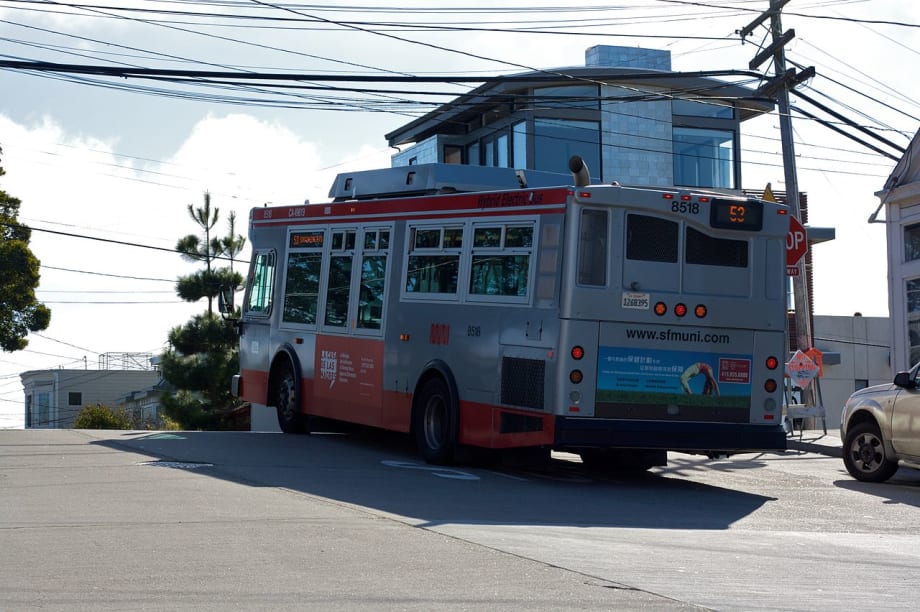
Marcin Wichary
Marcin Wichary
The board of directors for the San Francisco Municipal Transportation Agency (SFMTA), which manages all surface transportation in the city, including the Municipal Railway (Muni), approved a 7% Muni service increase; free Muni for moderate to low-income seniors and people with disabilities; additional funding for transit vehicle cleanliness and appearance; and the elimination of telephone and on-line computer transaction fees.
“In my State of the City address, I called upon the SFMTA to expand free Muni to low-income seniors and people with disabilities, and I thank the board of directors for answering this call today,” said Mayor Ed Lee. “Also today, I call upon the private sector to partner with us, once again, and help fund this vital service that supports our City’s most vulnerable.”
A generous grant from Google Inc., allowed the board to approve the continuation of free Muni for low and moderate income youth through fiscal year 2016. As well, the SFMTA board approved extending this program to include seniors and people with disabilities effective March 1, 2015. The program is available on Clipper only.
Through careful review of the SFMTA’s financial health, the board voted to reaffirm their 2014 commitment to deliver a 10% service increase by spring 2016. This approval means more frequent, faster, and safer Muni service over the next year and a half.
The 7% approval follows a 3% service increase for the current fiscal year. These service increases, part of Muni Forward, represent the first major evaluation of San Francisco’s mass transit system in three decades and will redirect finite public resources where they are needed most. The changes, some major and some minor, seek to reduce crowding, improve reliability, and enhance system-wide neighborhood connectivity and access to regional transit through new routes, expanded limited-stop service and schedule adjustments.
The first service increases role out on at the end of January and include a new bus route, with additional increases set to arrive in spring 2015, fall 2015 and winter 2016.
Finally, in another bold step, the SFMTA board allocated $1.8 million to maintain the quality of SFMTA’s fleet; part of an ongoing commitment to both improve the customer experience and increase customer safety while riding Muni.
Together, with enhanced maintenance practices, this investment will help protect the city’s taxpayer’s recent investment in new vehicles by dedicating $600,000 in funding to clean Muni vehicles through the close of fiscal year 2015, with an additional $1.2 million reserved for vehicle cleaning through fiscal year 2016.
This funding will allow the SFMTA to add additional staff to increase vehicle cleaning intervals and remove graffiti and tagging in a timely manner and create a better, safer Muni ride for our customers.
More Management

METRO Opens Submissions for 2026 Motorcoach Awards
Nominations are now being accepted for METRO Magazine’s Operator of the Year and Innovative Operator of the Year awards.
Read More →
New York MTA Advances Final Contract for Second Avenue Subway Expansion
Contract Four is the largest in the Second Avenue Subway Phase 2 project and includes construction of station infrastructure, tracks, and signals for the subway expansion, MTA officials said. Work on Contract Four will begin in 2027.
Read More →
Transit Agencies Highlight Safety Gains at National Summit
Leaders from 15 major transit systems shared crime-reduction results and safety initiatives while discussing the role of continued federal support.
Read More →

NITA Names New Leadership, Expands Reduced-Fare Program at First Board Meeting
The new regional transit authority appointed its first board chair and interim executive director while extending reduced fares across CTA, Metra, and Pace for eligible riders.
Read More →
Beyond the Checklist: A Structured Approach to Transit Maintenance
Reliability-Centered Maintenance helps transit agencies move beyond routine checklists to focus limited resources on the assets and failures that have the greatest impact on safety, reliability, and service.
Read More →
APTA 2026 Nominating Committee Selects Leadership Slate, Names Chair and Vice Chair Nominees
Leadership changes will help shape the association’s priorities and its representation of the transportation industry during the 2026–2027 term.
Read More →
DART Launches Major Security, Fare Enforcement Initiative
The 90-day demonstration will deploy coordinated security teams at five light rail stations while testing controlled access and gathering data to guide future investments.
Read More →
Advancing Fare Collection Through Technology and Innovation
Learn about delivering 1300 gates at 91 stations while managing fare evasion. Explore the large scale deployment, solution customization and real-world results that affect the region. Prepare for deployment in your region now.
Read More →
Game Day in Motion: Moving Millions During the 2026 World Cup
Between packed transit stations and team motorcoaches, see how agencies and operators across North America tackled the transportation demands of the 2026 FIFA World Cup.
Read More →
Surface Transportation Extension Averts Shutdown, Leaves Transit Funding Gap
The stopgap keeps federal transportation programs moving, but missing advance funding could complicate the transit and rail projects agencies are planning next.
Read More →