



New app integrates all available L.A. transportation options
The Go LA app, powered by Xerox, captures the universe of transportation options and computes the shortest, cheapest, and most sustainable way to get to your destination.

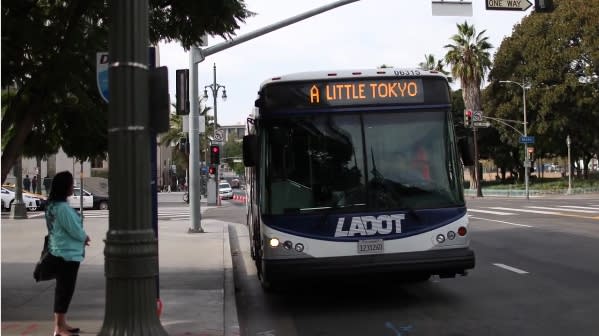

The City of Los Angeles is introducing the Go LA app, powered by Xerox, a solution that integrates all the available methods of getting around the second-largest metro area in the U.S. Unlike other efforts to improve the daily commute, the Go LA app captures the universe of transportation options and computes the shortest, cheapest, and most sustainable way to get to your destination. The City of Los Angeles is piloting the app in partnership with Xerox to provide travelers with optimized transportation choices to simplify urban mobility.
"The Go LA app will help Angelenos get where they want to go by connecting smart technology with infrastructure," said Los Angeles Mayor Eric Garcetti. "Go LA gives users the opportunity to move around in smarter, faster, cheaper, and greener ways by linking them to all the transportation options available to them — from freeways to Metro to bike routes — while also providing the city with useful data to help us make policy decisions that benefit residents."
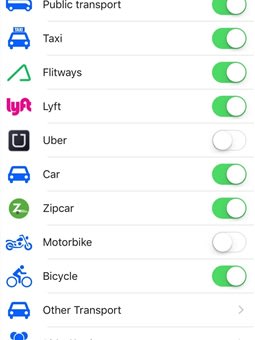
How Go LA works for residents, visitors
The app aggregates and calculates the time, cost, carbon footprint, and health benefits from walking, biking, driving your own car, parking, taking public transit, as well as the emerging private transportation options — such as Lyft, Zipcar, FlitWays and Uber — giving users a variety of ways to reach their destination. Discovering user needs for combining public and private transportation options, Xerox researchers designed and delivered this smart city solution.
“There are individual apps for public transit, car sharing and other transportation options but the Go LA app captures the array of options in a hyper-local way, mixing and matching both public and private transportation options,” said David Cummins, senior VP, Mobility Solutions, Xerox. “Beyond the seamless travel experience for citizens, Go LA will help the city glean important information they can use to advance their transportation systems.”
The app takes an individual’s destination and desired arrival time, and calculates the different routes available, categorized by “sooner,” “cheaper,” and “greener.” Details provided include length of trip, price, number of calories burned, and how much carbon dioxide is released into the air – allowing users to choose the best option to meet their needs. As the app learns more about its user’s individual travel preferences, it will eventually recommend and highlight personalized commuting options. Customers can also save trips they take often, like from home to work, in their “My Rides” area of the app.

Guidance for City Planners
The destination and preferred travel mode data is anonymously shared with the city to deliver insights on how people travel around the region. This information is useful as cities look to redesign and update the travel systems while optimizing capital spend.
“Our city has many centers. People are commuting in all directions at all times by many modes,” said Seleta Reynolds, GM, Los Angeles Department of Transportation. “Xerox’s work could help us learn where to improve infrastructure for people who walk, roll, bike, take transit, and drive — it’s invaluable insight to help make Los Angeles more livable and enjoyable.”
What’s coming next?
Xerox is working with its partners to integrate booking and payments into the app so users can coordinate their entire trip with a single click of a button. Future versions of the app will also include ridesharing so that users can carpool with people traveling in the same direction, as well as destination parking information. After enough data is collected, users will also be able to create a profile where they can set goals related to their personal fitness, financials and time, and track them within the app.
The Go LA app is now available for iOS and Android systems in the Apple and Google Play stores at www.golaapp.com. A customized version of this app will be rolled out by the City of Denver in February 2016.
More New Mobility

From Hardware to Digital Partner: Luminator Charts Its Next Chapter
CEO Magnus Friberg discusses Luminator’s shift toward becoming a digital partner, the growing importance of software and interoperability, and how AI can help agencies improve operations and passenger experience.
Read More →
Biz Briefs: Alstom Lands Canadian Contract, LYT to Supply California TSP, and More
In METRO's latest installment, we take a look at recent news from Complete Coach Works, Beep, FlixBus, and more partnerships making headlines across the transportation sector.
Read More →
CharterUP’s Armir Harris on Technology, AI, and the Future of Group Mobility
In a recent episode of METROspectives, CharterUP Founder/CEO Armir Harris discussed the company’s evolution from an online charter bus marketplace into a technology platform supporting public- and private-sector mobility and much more.
Read More →
Jacksonville’s NAVI Project Charts a New Course for Autonomous Public Transportation
Through its NAVI program, JTA is showing how autonomous vehicles, intelligent infrastructure, and coordinated operations can work together to deliver everyday public transportation.
Read More →
Biz Briefs: Luminator Marks Milestone and More
From manufacturers and suppliers to transit agencies and motorcoach operators, these updates offer a snapshot of the projects, partnerships and business moves driving the industry forward.
Read More →
New Tricks for Old Bureaucracies: Joshua Schank on Making Transit Innovation Stick
Former LA Metro Chief Innovation Officer Joshua Schank discusses why good ideas aren't enough, how transit agencies can overcome resistance to change, and why today's challenges demand more innovation.
Read More →
How DART's GoPass Is Redefining Regional Mobility
Serving 14 transit agencies, GoPass simplifies multimodal travel by allowing riders to plan, pay for, and manage an entire trip through one app.
Read More →
Biz Briefs: OCTA Taps Clean Energy for Hydrogen Station, Stadler to Supply Via Rail Vehicles, and More
From manufacturers and suppliers to transit agencies and motorcoach operators, these updates offer a snapshot of the projects, partnerships and business moves driving the industry forward.
Read More →CharterUP Expands Into New Mobility and Autonomous Transportation
Vice President of New Mobility Stephen Joos discusses how CharterUP is leveraging its nationwide transportation network, technology platform, and autonomous vehicle partnerships to expand into workforce mobility, campus shuttles, and transit solutions.
Read More →
METRO Magazine Announces 2026 Innovative Solutions Awards Winners
Projects Recognized for Advancing Mobility Through Technology, Accessibility, Workforce Innovation, and Operational Excellence
Read More →