



Los Angeles DOT turns to Snapchat to market bus services
The agency created a geofilter allowing any user of Snapchat in the area to select the LADOT Transit filter showcasing LADOT Transit’s DASH and Commuter Express buses.

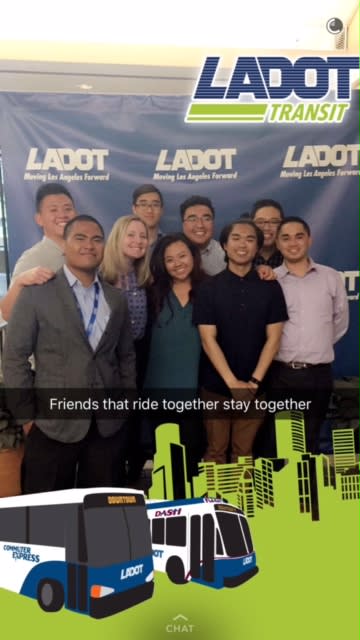
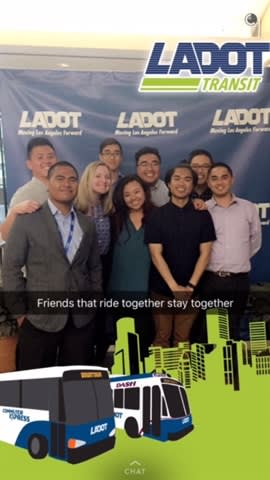
Los Angeles' LADOT Transit, the transit services group of the City of Los Angeles Department of Transportation, opened its new Customer Service Center downtown by pioneering the use of the social media application, Snapchat.
Snapchat is the fastest growing social media application now trending in the eight to 24 age group.
LADOT Transit created a geofilter allowing any user of Snapchat in the area to select the LADOT Transit filter showcasing LADOT Transit’s DASH and Commuter Express buses. The geofilter in the application creates a form of electronic postcard that captures a moment with the user and the LADOT Transit brand.
LADOT Transit pioneered the concept to make transit relevant to a younger demographic that constitutes a significant portion of the ridership of its DASH services. LADOT Transit is the first transit provider in Southern California to utilize the Snapchat social application to market its services.
More Management

Utilimarc Launches SmartReplace to Optimize Fleet Replacement Decisions
AI-powered SmartReplace helps fleets prioritize vehicle replacements, model budget scenarios, and build more defensible long-term strategies.
Read More →
APTA Honors 2026 Award Winners, Hall of Fame Inductees at TRANSform & EXPO
Innovations in autonomous and zero-emission transportation, standout transit systems, and industry leadership took center stage among this year's honorees.
Read More →
7 Ways to Build a Better Transit Internship Program
Lessons from DRPA/PATCO’s approach to creating a meaningful internship experience—and developing the next generation of transportation professionals.
Read More →
Scenes from APTA TRANSform & EXPO 2026
Transit leaders, manufacturers, and industry professionals gathered in Chicago to explore new technologies, share ideas, and discuss the future of public transportation.
Read More →
Building Stronger Leaders, More Resilient Transit Teams
Dr. Carol Parker Walsh discusses leadership development, employee retention, workplace culture, and preparing transit’s workforce for AI and automation.
Read More →
APTA 2026 TRANSform & EXPO Kicks Off in Chicago
After 45 years, APTA returns to Chicago with a focus on next-generation fleets, AI, connected transit networks, and the funding strategies shaping public transportation’s future.
Read More →
New York MTA Warns Federal Tariffs Could Add $1 Billion to Rolling Stock Costs
The agency said tariffs on specialized imported components could reduce the purchasing power of its $23 billion investment in new subway cars, railcars, and buses.
Read More →
From the Show Floor: What Happened at APTA TRANSform & EXPO 2026
See the latest product launches, partnerships, technology updates, and transit industry announcements from APTA TRANSform & EXPO in Chicago.
Read More →
How Valley Metro Is Balancing Transit Growth With the Rider Experience
The APTA award-winning agency is pairing rapid system expansion with investments in workforce, safety, technology, and the fundamentals of transit service.
Read More →
Bus Tech Talk: Keeping Transit Technicians Ahead of the Technology Curve
In this episode of Bus Tech Talk, Complete Coach Works’ Business Development Manager Mark Hollenbeck and METRO’s Executive Editor Alex Roman sit down with Obed Mejia, Senior Technical Trainer for Bus Maintenance, at LA Metro to discuss how rapidly evolving bus technology is changing the maintenance shop — and the skills technicians need to keep pace.
Read More →