




RELATED: Public transit crucial to connecting unemployed with jobs
Frequent, fast service is top factor for transit success, report says
Transit agencies should strive to grow all-purpose riders, who take transit regularly for multiple purposes, as they are the most reliable and financially efficient customers to serve.
July 12, 2016
Genfare
3 min to read
Genfare
Developing transit in walkable areas and offering frequent, fast bus and rail service is the key to increasing urban transit ridership, according to a new report released today.
The report, “Who's on Board 2016: What Today's Riders Teach Us About Transit That Works,” was conducted by TransitCenter, a foundation dedicated to improving urban mobility.
The latest edition of the study offers several core findings to inform how government agencies and elected officials approach transportation, land use, and development policy:
The most important “first mile/last mile” solution is walking. The majority of transit riders, including 80 percent of all-purpose riders, typically walk to transit. This finding underscores the importance of putting transit stations in busy, walkable neighborhoods; building offices and housing within walking distance of transit; and providing more and safer pedestrian routes to transit.
The two most important determinants of rider satisfaction with transit are service frequency and travel time. The availability of information and conditions at the station or stop were also important, suggesting that real-time information and shelters are important amenities for transit agencies to provide. On the other hand, power outlets and Wifi were rated the least important items out of a list of 12 potential service improvements.
There are three common patterns of transit use: occasional riders who take transit once in a while, commuters who take transit regularly but only for work, and all-purpose riders who take transit regularly for multiple purposes. Transit agencies should strive to grow this third category of rider, as they are the most reliable and financially efficient customers to serve. All-purpose riders are more prevalent where it’s easy to walk to transit, and where transit is frequent and provides access to many destinations.
Transit riders are sensitive to transit quality, not “captive” to transit. For decades, transportation professionals have talked about two kinds of transit riders: car-owning “choice riders” who use transit when it meets their needs, and carless “captive riders” who will use transit regardless of its quality. Who’s On Board finds that the “captivity” of car-less riders is severely overstated. People who live and work near better transit ride transit more often, whether or not they own cars. When transit becomes functionally useless, there are very few people who will continue to use it; agencies can take no one for granted.
The study offers several recommendations for local governments and transit agencies to improve transit service, including creating dedicated lanes to reduce travel time, improving frequency on routes with high ridership potential, and zoning to concentrate development around transit corridors.
“There’s no magic bullet for transit, but there are some simple rules. Make it easy for people to walk to transit, put it close to important destinations, and make transit frequent, fast, and reliable,” said Steven Higashide, Senior Program Analyst for TransitCenter. “Transit lines that don’t follow these rules – like commuter rail with parking lots at every station or slow streetcars that don’t connect to other transit – tend to perform poorly. Frequent transit networks in walkable neighborhoods reduce reliance on cars, spark economic growth, and create vibrant urban places.”
“[The study] shows that discussions about transit often ignore what really drives transit ridership. In Houston, we bucked the trend by redesigning our entire local bus network to improve frequency and travel time — and total ridership is up more than 10 percent,” said Christof Spieler, a Houston METRO board member and senior lecturer at Rice University.
The report draws on results from three focus groups and a survey of 3,000 people in 17 U.S. metropolitan areas with varying levels of transit development and ridership. It builds on the findings from TransitCenter’s first Who’s On Board report released in 2014 — the largest-ever attitudinal survey of transit riders — which showed that Americans from coast to coast think about and use public transit in remarkably similar and often unexpected ways.
More Management
COTA Launches First Customer Experience Action Plan to Improve Transit Service
The new plan outlines improvements to service reliability, accessibility, communication, and the overall rider experience across Central Ohio's transit system.
Read More →
LA Metro September Ridership Climbs 3.9%, Led by Rail Growth
The agency recorded more than 27.2 million boardings, with rail ridership increasing 12.4% year over year and the D Line posting the largest gains.
Read More →
Utilimarc Launches SmartReplace to Optimize Fleet Replacement Decisions
AI-powered SmartReplace helps fleets prioritize vehicle replacements, model budget scenarios, and build more defensible long-term strategies.
Read More →
APTA Honors 2026 Award Winners, Hall of Fame Inductees at TRANSform & EXPO
Innovations in autonomous and zero-emission transportation, standout transit systems, and industry leadership took center stage among this year's honorees.
Read More →
7 Ways to Build a Better Transit Internship Program
Lessons from DRPA/PATCO’s approach to creating a meaningful internship experience—and developing the next generation of transportation professionals.
Read More →
Scenes from APTA TRANSform & EXPO 2026
Transit leaders, manufacturers, and industry professionals gathered in Chicago to explore new technologies, share ideas, and discuss the future of public transportation.
Read More →
Building Stronger Leaders, More Resilient Transit Teams
Dr. Carol Parker Walsh discusses leadership development, employee retention, workplace culture, and preparing transit’s workforce for AI and automation.
Read More →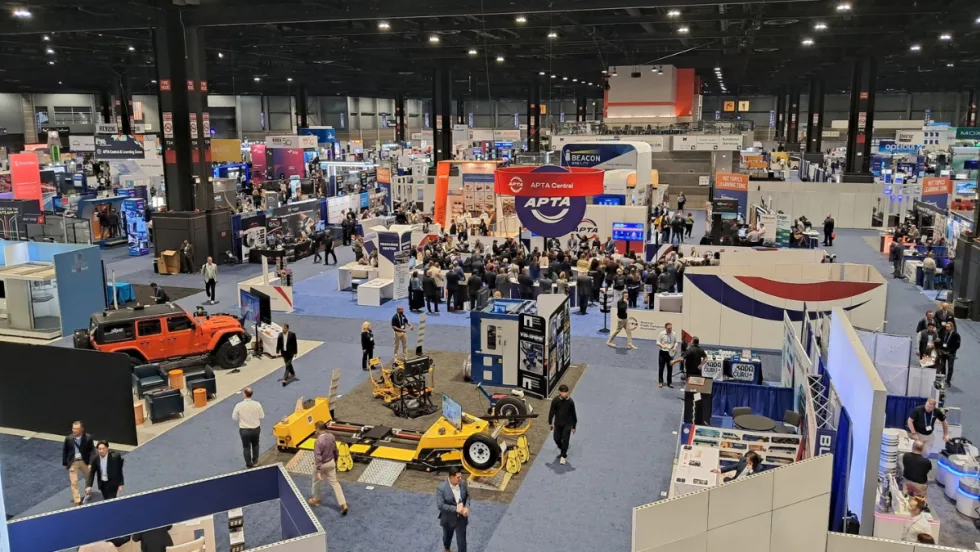
APTA 2026 TRANSform & EXPO Kicks Off in Chicago
After 45 years, APTA returns to Chicago with a focus on next-generation fleets, AI, connected transit networks, and the funding strategies shaping public transportation’s future.
Read More →
New York MTA Warns Federal Tariffs Could Add $1 Billion to Rolling Stock Costs
The agency said tariffs on specialized imported components could reduce the purchasing power of its $23 billion investment in new subway cars, railcars, and buses.
Read More →
From the Show Floor: What Happened at APTA TRANSform & EXPO 2026
See the latest product launches, partnerships, technology updates, and transit industry announcements from APTA TRANSform & EXPO in Chicago.
Read More →