



Rebrand, improved service boosts EMBARK’s stature in the community
EMBARK realigned much of its bus system and improved weekday frequencies.

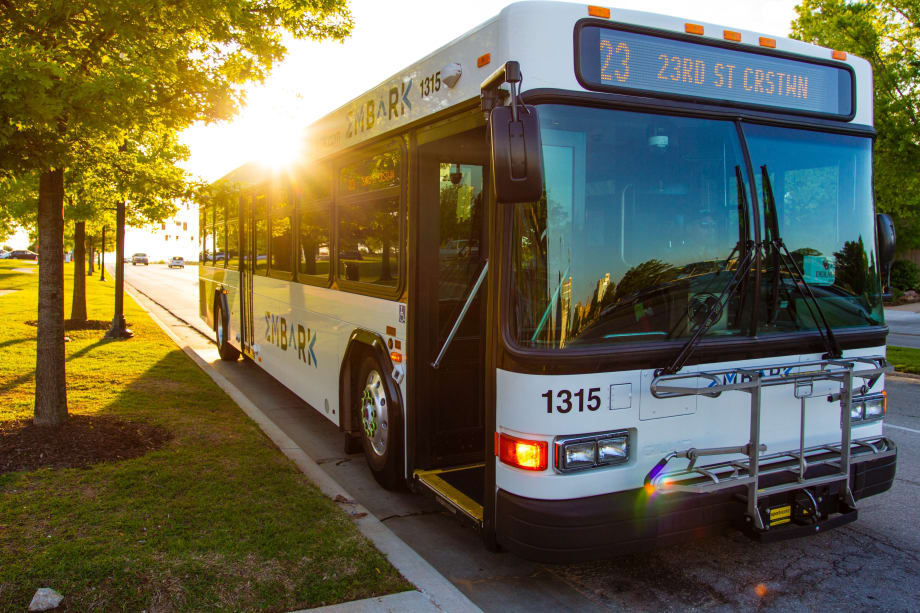
Serving Oklahoma City for more than 50 years, the Central Oklahoma Transportation and Parking Authority began exploring rebranding a few years ago, but held off on making the switch.
“We knew from some of our research and survey data that we didn’t have a lot of name recognition in the community, which led us to look at options,” explains Jason Ferbrache, director/administrator for the authority. “The marketing staff and our board began working on rebranding several years before we actually launched it, because, at the time, we didn’t really have anything different to offer our customers.”
In 2012, the authority hired Nelson/Nygaard to conduct, review and evaluate the operating efficiency of the bus system and make recommendations for improvements without costing the authority any additional resources.
In the spring of 2014, the new brand was born, EMBARK, which also included a realignment of much of the bus system and improved weekday frequencies, with buses on its most popular routes coming every 30 minutes.
In addition to the improved service, EMBARK also removed and replaced more than 2,000 bus stop signs and poles, introduced real-time travel information and added clock-face headways for faster transfer times.
“With the successful launch of the initial round of enhancements it really opened the door and allowed us to make additional enhancements, like adding night service on two routes for the first time, which the customers really embraced right away,” Ferbrache says. He adds that the success of that service has led to the addition of night service on two more routes, enabling those in the community who work at night to not only reach their jobs, but also use the service to get back home.
In addition, EMBARK is also on a quest to become more sustainable, with the agency now on the path to convert its fleet to compressed natural gas (CNG) as its current fleet reaches the end of its useful life. The agency currently has six New Flyer CNG Xcelsiors and hopes to add several more by 2018.
“Currently, about 30 percent of our fleet right now is beyond it’s useful life,” Ferbrache explains. “Our plan is to get caught up with our procurement schedule, so it’s highly possible that in a year-and-a-half that 30 percent of our fleet will be converted to CNG.”
All of this and more has led to EMBARK’s ridership growing year over year for the last three years, as well as being named APTA’s Outstanding Public Transportation System (providing four million or fewer annual passenger trips) for 2016.
“The rebranding effort was part of a broader effort to just improve transit in Oklahoma City, and we feel like we couldn’t have done one without the other,” Ferbrache says.
More Management

METRO Opens Submissions for 2026 Motorcoach Awards
Nominations are now being accepted for METRO Magazine’s Operator of the Year and Innovative Operator of the Year awards.
Read More →
New York MTA Advances Final Contract for Second Avenue Subway Expansion
Contract Four is the largest in the Second Avenue Subway Phase 2 project and includes construction of station infrastructure, tracks, and signals for the subway expansion, MTA officials said. Work on Contract Four will begin in 2027.
Read More →
Transit Agencies Highlight Safety Gains at National Summit
Leaders from 15 major transit systems shared crime-reduction results and safety initiatives while discussing the role of continued federal support.
Read More →

NITA Names New Leadership, Expands Reduced-Fare Program at First Board Meeting
The new regional transit authority appointed its first board chair and interim executive director while extending reduced fares across CTA, Metra, and Pace for eligible riders.
Read More →
Beyond the Checklist: A Structured Approach to Transit Maintenance
Reliability-Centered Maintenance helps transit agencies move beyond routine checklists to focus limited resources on the assets and failures that have the greatest impact on safety, reliability, and service.
Read More →
APTA 2026 Nominating Committee Selects Leadership Slate, Names Chair and Vice Chair Nominees
Leadership changes will help shape the association’s priorities and its representation of the transportation industry during the 2026–2027 term.
Read More →
DART Launches Major Security, Fare Enforcement Initiative
The 90-day demonstration will deploy coordinated security teams at five light rail stations while testing controlled access and gathering data to guide future investments.
Read More →
Advancing Fare Collection Through Technology and Innovation
Learn about delivering 1300 gates at 91 stations while managing fare evasion. Explore the large scale deployment, solution customization and real-world results that affect the region. Prepare for deployment in your region now.
Read More →
Game Day in Motion: Moving Millions During the 2026 World Cup
Between packed transit stations and team motorcoaches, see how agencies and operators across North America tackled the transportation demands of the 2026 FIFA World Cup.
Read More →
Surface Transportation Extension Averts Shutdown, Leaves Transit Funding Gap
The stopgap keeps federal transportation programs moving, but missing advance funding could complicate the transit and rail projects agencies are planning next.
Read More →