



San Diego MTS opens $38M bus ops, maintenance facility
The facility, which was built to LEED Silver standards, will be home to 120 clean-burning CNG buses.

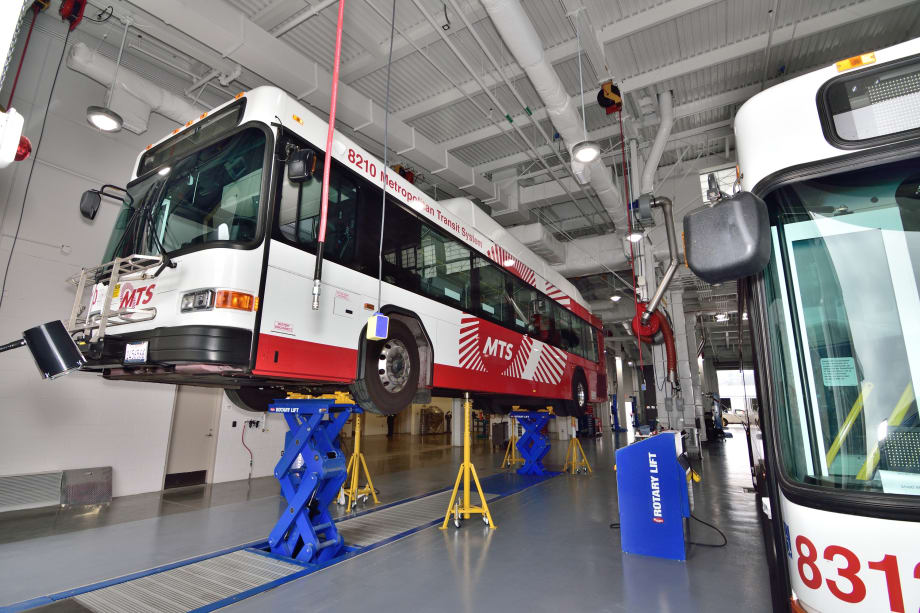
The San Diego Metropolitan Transit System (MTS) celebrated the grand opening of the East County Bus Operations & Maintenance Facility, furthering the agency’s role in improving regional air quality. The facility, which was built to LEED Silver standards, will be home to 120 clean-burning CNG buses.
“MTS is focused on improving all facets of our business to improve efficiency, reliability, passenger amenities and the air we breathe,” said MTS CEO Paul Jablonski. “The new East County Bus Operations & Maintenance Facility helps us achieve all those goals.”
A new CNG fueling station on site will allow MTS to replace diesel-fueled buses with CNG-fueled buses, which provide a 50% reduction in NOx emissions, an 85% reduction in particulate matter pollution, and an 89% decrease in CO emissions.
The 34,500-square-foot maintenance building and 10,275-square-foot administrative building sit on 5.5 acres. It was built at a cost of $38 million from MTS funds, a Federal Transit Administration competitive grant secured by MTS, Transit Development Act (state), and State Transit Assistance Program funds. The construction contractor was Clark Construction.
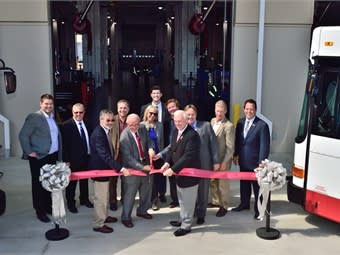
(From L to R): Mark Schumann, Clark Construction; Duane Eskierka, Transdev; Councilman Tony Ambrose, City of El Cajon; MTS Boardmember George Gastil (City of Lemon Grove); Harry Mathis, MTS Board Chair; Leann Files, Office of Assemblyman Brian Jones; Jeff Domenech, Office of State Senator Joel Anderson; Eric Lund, San Diego East Chamber of Commerce; Ron Roberts, SANDAG Chair; Paul Jablonski, MTS Chief Executive Officer; Mike Woiwode, MTS Boardmember (City of Coronado); Gary Gallegos, SANDAG Executive Director.
The new facility serves East County’s urbanized area along the Interstate 8 corridor, as well as rural and unincorporated areas in the county. It employs 115 bus operators and 14 mechanics, who will provide bus service for more than four million riders annually. Its energy-efficient designs and equipment include on-site renewable energy, LED lighting, reflective windows, water use reduction techniques, drought-tolerant landscaping, and temperature control technology. All these features will help the facility secure LEED Silver status by the U.S. Green Building Council.
In addition to the East County facility, MTS has several sites from which it operates fixed-route bus service including Chula Vista, Kearny Mesa and East Village.
More Management

The Business Voice Behind Public Transportation
As chair of APTA’s Business Members Board of Governors, Ray Melleady explains how more than 850 business members are partnering with transit agencies to advance funding, innovation, and industry-wide collaboration.
Read More →
New York’s CDTA Service Rebalancing Boosts Productivity, On-Time Performance
Despite a slight dip in ridership, the agency’s FY2026 results show its service rebalancing strategy is helping the agency carry more riders per service hour while improving reliability.
Read More →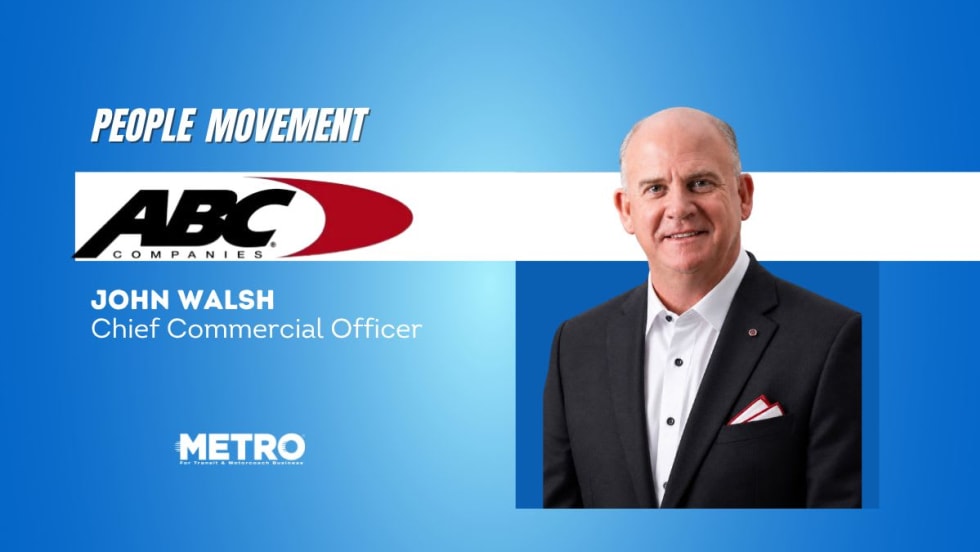
People Movement: ABC Names John Walsh as Chief Commercial Officer
In this edition, METRO also covers recent appointments and announcements at the DART, STV, and more, showcasing the individuals helping to shape the future of transportation.
Read More →
From Surviving to Thriving: Building Stronger Transportation Organizations
Bus Business Consultants founder Brian Dickson shares lessons on leadership, organizational health, and creating options for long-term success in a changing transportation industry.
Read More →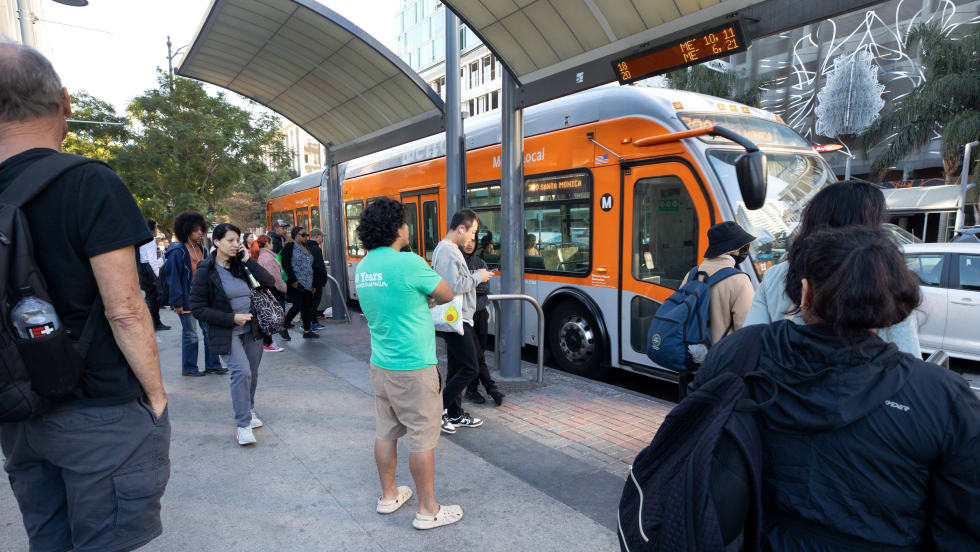
LA Metro Ridership Continues Growth as Rail Gains Accelerate
New rail connections and major events help drive continued ridership gains, with Metro recording its eighth consecutive month of year-over-year rail growth.
Read More →
TransDASH Summit Focuses on Measuring What Matters in Transit
Transit agencies unveil a national performance platform designed to benchmark customer experience, safety, community value, and other outcomes.
Read More →
Jacksonville’s NAVI Project Charts a New Course for Autonomous Public Transportation
Through its NAVI program, JTA is showing how autonomous vehicles, intelligent infrastructure, and coordinated operations can work together to deliver everyday public transportation.
Read More →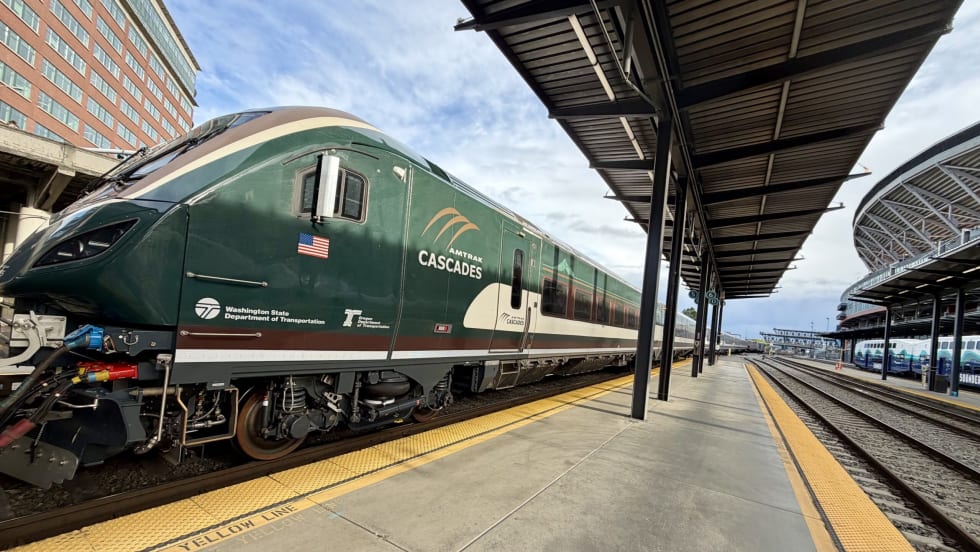
FRA Announces $5.3B in Rail Investments, Including $2B for Amtrak
Funding will support grade-crossing improvements, infrastructure upgrades, and new Amtrak equipment in 23 states.
Read More →
Finding the ‘Happy Medium’: Optimizing Maintenance Without Sacrificing Reliability
The key to maintenance optimization isn’t doing less work—it’s doing the right work at the right time on the right assets.
Read More →
People Movement: MARTA Drops Interim Tag on GM/CEO Hunt and More
In this edition, METRO covers recent appointments and announcements at the FMCSA, HDR, SilverRide, and more, showcasing the individuals helping to shape the future of transportation.
Read More →