




RELATED: Looming Bus Capital Crisis Fuels Fight for Dedicated Investment
Report focuses on economic growth spurred through ARRA investment
The new report reviews the metrics for success for that funding in all sectors of the nation’s transportation systems as well as the long-term impact those dollars made on improving the lives of Americans across the country.
January 11, 2017

2 min to read
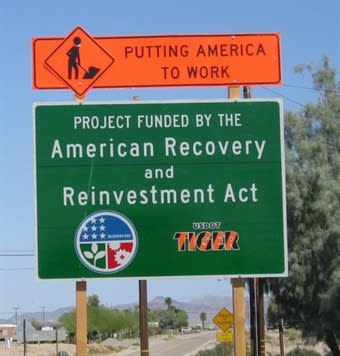
On Tuesday, the U.S. Department of Transportation released a new report introduced by Vice President Joe Biden, “Shovel Worthy: What the Recovery Act Taught Us About Investing in Our Nation’s Infrastructure,” to review the impact of the American Recovery and Reinvestment Act (Recovery Act) in advancing economic recovery and job creation after the worst recession since the Great Depression.
“Investment in America’s transportation network during the economic crisis was a critical part of the President’s effort to stabilize the economy. This report shows that the investments not only delivered what was expected, it delivered far more,” said Transportation Secretary Anthony Foxx. “The Recovery Act pioneered a new model for investing in game changing projects and transformed the way that the Department delivers projects, setting a new standard for providing transparency and accountability to the American taxpayer.”
The Recovery Act invested more than $48 billion in transportation infrastructure during the country’s severe economic crisis to help create jobs, boost economic growth, and reduce a substantial backlog of transportation maintenance projects that would sustain or improve the conditions of roads, bridges, transit facilities, and other infrastructure assets.
The new report reviews the metrics for success for that funding in all sectors of the nation’s transportation systems as well as the long-term impact those dollars made on improving the lives of Americans across the country, including:
Nearly 42,000 miles of roads were rebuilt. Over 2,700 bridges were strengthened and bridge quality improved over twice as much during the six years after the implementation of the Recovery Act.
Recovery Act-related transit investments constructed or rehabilitated 850 new facilities and provided nearly 12,000 new buses and nearly 700 new railcars.
About 800 airport improvement projects addressing repairs to runways, airport facilities, and air traffic tower needs.
Businesses have added 15.8 million jobs since early 2010, with the longest streak of total job growth on record.
Since its peak during the recession, the unemployment rate has been cut by more than half and now stands at 4.7 percent, reaching that level far sooner than expected.
“Using modern technology and tracking tools that focused on transparency and accountability of taxpayer dollars, the majority of Recovery Act funds were structured to immediately prioritize ‘shovel ready’ projects such as fixing roads and bridges, which helped to clear a long backlog of unfinished projects,” said Shoshana M. Lew, CFO/asst., secretary, budget and programs. “Beyond these measurable and lasting benefits, the Recovery Act is a model that will continue to inform and influence future investments in our transportation system.”
More Management

METRO Opens Submissions for 2026 Motorcoach Awards
Nominations are now being accepted for METRO Magazine’s Operator of the Year and Innovative Operator of the Year awards.
Read More →
New York MTA Advances Final Contract for Second Avenue Subway Expansion
Contract Four is the largest in the Second Avenue Subway Phase 2 project and includes construction of station infrastructure, tracks, and signals for the subway expansion, MTA officials said. Work on Contract Four will begin in 2027.
Read More →
Transit Agencies Highlight Safety Gains at National Summit
Leaders from 15 major transit systems shared crime-reduction results and safety initiatives while discussing the role of continued federal support.
Read More →

NITA Names New Leadership, Expands Reduced-Fare Program at First Board Meeting
The new regional transit authority appointed its first board chair and interim executive director while extending reduced fares across CTA, Metra, and Pace for eligible riders.
Read More →
Beyond the Checklist: A Structured Approach to Transit Maintenance
Reliability-Centered Maintenance helps transit agencies move beyond routine checklists to focus limited resources on the assets and failures that have the greatest impact on safety, reliability, and service.
Read More →
APTA 2026 Nominating Committee Selects Leadership Slate, Names Chair and Vice Chair Nominees
Leadership changes will help shape the association’s priorities and its representation of the transportation industry during the 2026–2027 term.
Read More →
DART Launches Major Security, Fare Enforcement Initiative
The 90-day demonstration will deploy coordinated security teams at five light rail stations while testing controlled access and gathering data to guide future investments.
Read More →
Sponsored•September 9, 2026
Advancing Fare Collection Through Technology and Innovation
Learn about delivering 1300 gates at 91 stations while managing fare evasion. Explore the large scale deployment, solution customization and real-world results that affect the region. Prepare for deployment in your region now.
Read More →
Game Day in Motion: Moving Millions During the 2026 World Cup
Between packed transit stations and team motorcoaches, see how agencies and operators across North America tackled the transportation demands of the 2026 FIFA World Cup.
Read More →
Surface Transportation Extension Averts Shutdown, Leaves Transit Funding Gap
The stopgap keeps federal transportation programs moving, but missing advance funding could complicate the transit and rail projects agencies are planning next.
Read More →