



Laketran GM Jurkowski announces plan to retire
Under his tenure, Laketran passed two local sales tax levies in 2003 and 2013, which safeguarded the future of the agency through the passage of a permanent levy.

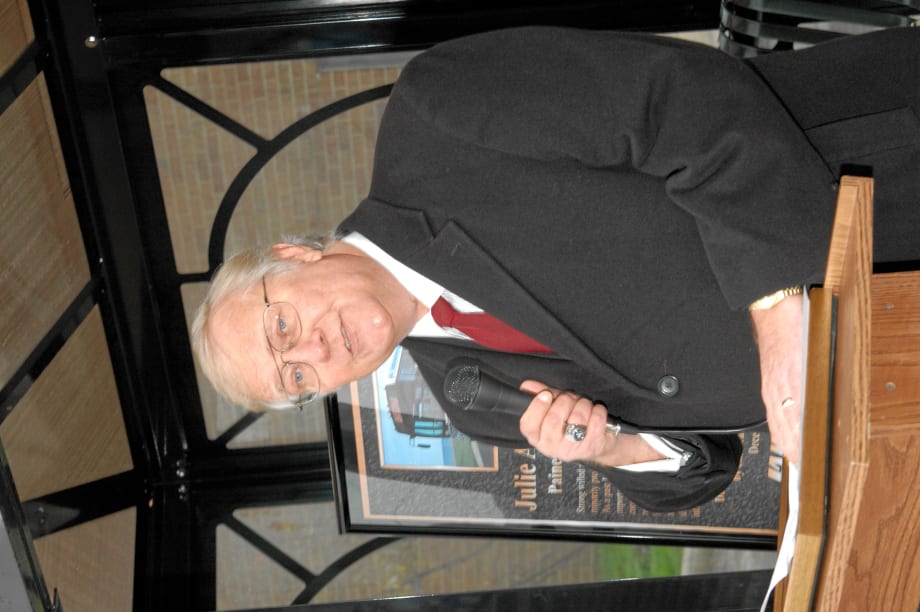
Ray Jurkowski

Ray Jurkowski
Laketran GM Raymond Jurkowski announced that he plans to retire at the end of his employment contract on July 31, 2017.
Jurkowski has served as Laketran’s GM since May 2003. During his tenure, Laketran has carried over 10 million passengers on its local fixed-route, dial-a-ride and Cleveland commuter park-n-ride services.
While at Laketran, Jurkowski has overseen the investment in modern technology to improve the operational efficiency, cost-effectiveness and customer access to vital information. Over the years, Laketran has implemented GPS-enabled Automatic Vehicle Location to track the movement of all its buses, introduced “real-time arrival” information, and revamped its antiquated fare collection system with state-of-art electronic registering fareboxes to offer customers the convenience of paying their fares with smart card technology.
Under Jurkowski’s leadership, Laketran passed two local sales tax levies in 2003 and 2013, which safeguarded the future of the agency through the passage of a permanent levy.
He also dedicated his time to strategically prepare Laketran for the future. From 2012-2013, Laketran engaged in the largest public outreach effort surveying the Lake County community to gather input on what transit riders, residents, students, business owners, and stakeholders wanted to see for the future of public transportation in our community. He developed Laketran’s 10-year plan, Access To Opportunity 2014-2023, to provide a roadmap to develop public transit services to better connect residents with jobs, training, education, and healthcare with special emphasis on meeting the transportation needs of seniors and people with disabilities.
Prior to joining the transit agency, Jurkowski served as the Deputy Commissioner of Transportation in Westchester County, N.Y. (1977- 1987) and was instrumental in developing one of the first public-private transit systems in the country. In 1987, Jurkowski went to St. Louis to join the team that introduced light rail in Missouri and Illinois, and in 1998 he joined the Southeastern Pennsylvania Transportation Authority as the assistant GM of Organizational Development.
Laketran’s Board President Brian Falkowski credits Jurkowski as the chief architect in crafting Laketran’s Financial Recovery Plan to bring back transit services eliminated to mitigate the loss of sales tax revenue following the Great Recession.
According to Paul Miller, Board VP, “Ray passionately pursued improving customer amenities. Under his leadership, Laketran developed and upgraded key transit centers to facilitate the seamless transfer of passengers from one bus route to another, constructed passenger bus shelters all throughout Lake County, installed Ride Guides at major bus stops and developed Laketran’s first system-wide transit map.”
Donna McNamee, Laketran’s most senior Trustee and past Board President when Jurkowski was hired credits Jurkowski’s shared industry experience in funding transit, coupled with his recognition of Laketran’s successful history in serving seniors and people with disabilities along with his example in protecting critical Dial-a-Ride service with her ability to successfully champion their transportation challenges at the state and national levels.
Jean Sency, Laketran’s Budget Chair, credits Jurkowski for developing a culture that recognized Laketran’s greatest asset is its employees and fostering a true partnership with Laketran’s labor union, UAW Local 1834.
Over the years, Laketran has been the recipient of many transit safety, marketing, financial and audit awards as well as being recognized twice by the American Public Transportation Association as the “Outstanding Transit System” among its peer group.
Board President Falkowski will soon be appointing a search committee of Board Trustees to find Laketran’s next GM.
More Management

METRO Opens Submissions for 2026 Motorcoach Awards
Nominations are now being accepted for METRO Magazine’s Operator of the Year and Innovative Operator of the Year awards.
Read More →
New York MTA Advances Final Contract for Second Avenue Subway Expansion
Contract Four is the largest in the Second Avenue Subway Phase 2 project and includes construction of station infrastructure, tracks, and signals for the subway expansion, MTA officials said. Work on Contract Four will begin in 2027.
Read More →
Transit Agencies Highlight Safety Gains at National Summit
Leaders from 15 major transit systems shared crime-reduction results and safety initiatives while discussing the role of continued federal support.
Read More →

NITA Names New Leadership, Expands Reduced-Fare Program at First Board Meeting
The new regional transit authority appointed its first board chair and interim executive director while extending reduced fares across CTA, Metra, and Pace for eligible riders.
Read More →
Beyond the Checklist: A Structured Approach to Transit Maintenance
Reliability-Centered Maintenance helps transit agencies move beyond routine checklists to focus limited resources on the assets and failures that have the greatest impact on safety, reliability, and service.
Read More →
APTA 2026 Nominating Committee Selects Leadership Slate, Names Chair and Vice Chair Nominees
Leadership changes will help shape the association’s priorities and its representation of the transportation industry during the 2026–2027 term.
Read More →
DART Launches Major Security, Fare Enforcement Initiative
The 90-day demonstration will deploy coordinated security teams at five light rail stations while testing controlled access and gathering data to guide future investments.
Read More →
Advancing Fare Collection Through Technology and Innovation
Learn about delivering 1300 gates at 91 stations while managing fare evasion. Explore the large scale deployment, solution customization and real-world results that affect the region. Prepare for deployment in your region now.
Read More →
Game Day in Motion: Moving Millions During the 2026 World Cup
Between packed transit stations and team motorcoaches, see how agencies and operators across North America tackled the transportation demands of the 2026 FIFA World Cup.
Read More →
Surface Transportation Extension Averts Shutdown, Leaves Transit Funding Gap
The stopgap keeps federal transportation programs moving, but missing advance funding could complicate the transit and rail projects agencies are planning next.
Read More →