




RELATED: INIT launches Portland-Vancouver virtual ticketing app
Nashville MTA taps INIT for electronic fare management project
INIT will implement EMV-capable smart fare validators on approximately 270 vehicles.
May 15, 2018
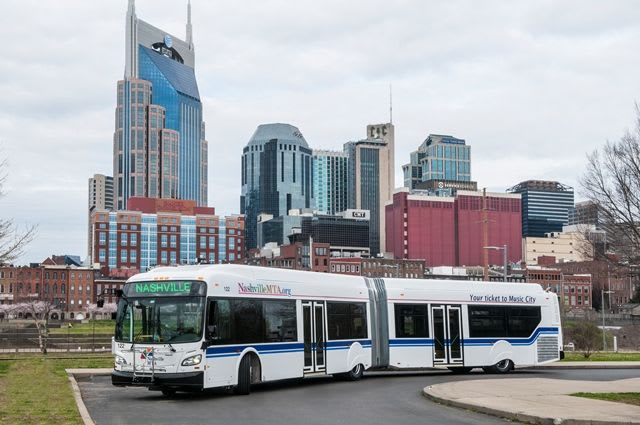
Nashville Metropolitan Transit Authority (MTA) has selected INIT Innovations in Transportation Inc. for the design, delivery and installation of their Next Generation Fare System. Photo: Nashville MTA
2 min to read
Nashville Metropolitan Transit Authority (MTA) has selected INIT Innovations in Transportation Inc. for the design, delivery and installation of their Next Generation Fare System. Photo: Nashville MTA
Nashville Metropolitan Transit Authority (MTA) has selected INIT Innovations in Transportation Inc. for the design, delivery and installation of their Next Generation Fare System (NGFS). The contract includes the setup of a mobile ticketing app from Bytemark and an account-based electronic fare and back-office revenue management system from INIT.
INIT will implement EMV-capable smart fare validators on approximately 270 vehicles. Additionally, eight full-service INIT Ticket Vending Machines (TVM) for acceptance of cash, credit or debit payments will be installed. The new fare structure will be in service across MTA’s fixed-route buses and AccessRide paratransit vans.
MTA’s future plans include the installation of INIT TVM’s with built-in security cameras and proximity validators for Gray Line Buses and Music City Star Trains operated by the Regional Transportation Authority of Middle Tennessee (RTA).
Nashville passengers will benefit from more convenient fare options, faster boardings, and the ability to view or manage their account transactions and balances at any time.
“By placing the option to purchase or reload your fare in the palm of your hand, using public transit to get around Nashville will become that much more of a logical and convenient choice,” Nashville MTA CEO, Steve Bland, said. “This exciting new innovation is a big step for Nashville and will work to help our riders move smarter in 2018 by making transit easier to use.”
The project will be implemented using an open architecture design meaning MTA will be able to integrate both new and existing partners easily. For example, the INIT EFM system will incorporate MTA’s current fare box providers for a fully integrated solution. This model is demonstrated in all of their EFM projects, including those in Tampa, Fla. (RWG), the Portland-Vancouver Metropolitan Area (TriMet), Honolulu, Hawaii (HART) and Grand Rapids, Mich. (The Rapid).
INIT’s back-office processing software, MOBILEvario, serves as the core intelligence for MTA’s new account-based system. It processes fare transactions in real-time, recognizes and processes revenues and automates reconciliations.
The full NGFS roll out to the public will occur over the course of 2019 and early 2020.
More Management

METRO Opens Submissions for 2026 Motorcoach Awards
Nominations are now being accepted for METRO Magazine’s Operator of the Year and Innovative Operator of the Year awards.
Read More →
New York MTA Advances Final Contract for Second Avenue Subway Expansion
Contract Four is the largest in the Second Avenue Subway Phase 2 project and includes construction of station infrastructure, tracks, and signals for the subway expansion, MTA officials said. Work on Contract Four will begin in 2027.
Read More →
Transit Agencies Highlight Safety Gains at National Summit
Leaders from 15 major transit systems shared crime-reduction results and safety initiatives while discussing the role of continued federal support.
Read More →

NITA Names New Leadership, Expands Reduced-Fare Program at First Board Meeting
The new regional transit authority appointed its first board chair and interim executive director while extending reduced fares across CTA, Metra, and Pace for eligible riders.
Read More →
Beyond the Checklist: A Structured Approach to Transit Maintenance
Reliability-Centered Maintenance helps transit agencies move beyond routine checklists to focus limited resources on the assets and failures that have the greatest impact on safety, reliability, and service.
Read More →
APTA 2026 Nominating Committee Selects Leadership Slate, Names Chair and Vice Chair Nominees
Leadership changes will help shape the association’s priorities and its representation of the transportation industry during the 2026–2027 term.
Read More →
DART Launches Major Security, Fare Enforcement Initiative
The 90-day demonstration will deploy coordinated security teams at five light rail stations while testing controlled access and gathering data to guide future investments.
Read More →
Sponsored•September 9, 2026
Advancing Fare Collection Through Technology and Innovation
Learn about delivering 1300 gates at 91 stations while managing fare evasion. Explore the large scale deployment, solution customization and real-world results that affect the region. Prepare for deployment in your region now.
Read More →
Game Day in Motion: Moving Millions During the 2026 World Cup
Between packed transit stations and team motorcoaches, see how agencies and operators across North America tackled the transportation demands of the 2026 FIFA World Cup.
Read More →
Surface Transportation Extension Averts Shutdown, Leaves Transit Funding Gap
The stopgap keeps federal transportation programs moving, but missing advance funding could complicate the transit and rail projects agencies are planning next.
Read More →