




RELATED: King County named 'best' large transit system by APTA
COTA named outstanding mid-sized public transit agency, by APTA
A transit system redesign, and fleet-wide Wi-Fi access for riders were among the achievements considered by APTA.
August 17, 2018
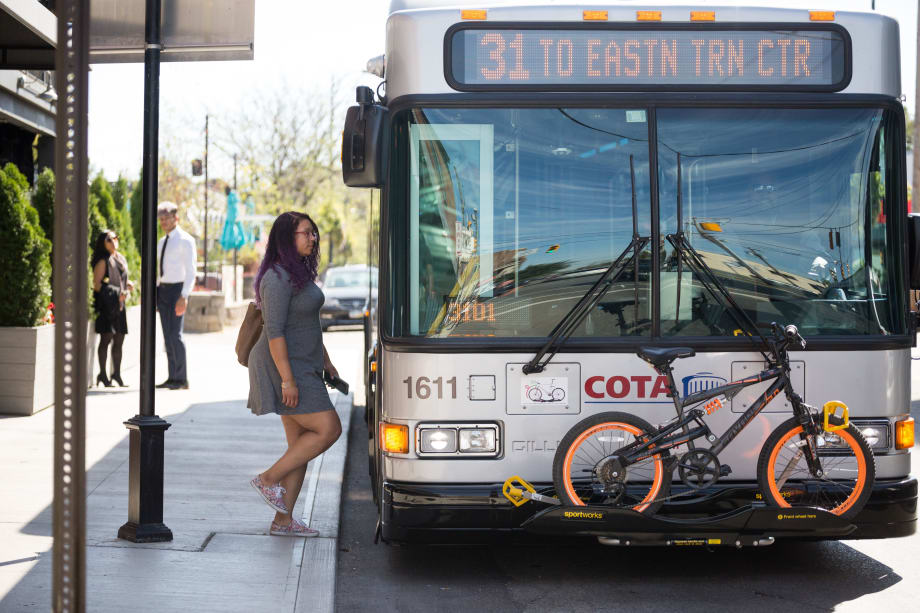
COTA received APTA's Outstanding Public Transit Award for 2018 in the category for systems with an annual ridership of more than 4 million and fewer than 20 million passenger trips. Photo: COTA
2 min to read
COTA received APTA's Outstanding Public Transit Award for 2018 in the category for systems with an annual ridership of more than 4 million and fewer than 20 million passenger trips. Photo: COTA
The Central Ohio Transit Authority (COTA) received the Outstanding Public Transportation System Achievement Award, recognizing COTA as a “best of the best” operation among transit organizations in North America. The award, which was announced in front of nearly 700 attendees at COTA’s Annual Luncheon, which took place Aug. 16, 2018, is given to transit systems that have demonstrated excellence in mobility efficiency and effectiveness by the American Public Transportation Association (APTA).
COTA’s commitment to safety across the organization, the May 2017 transit system redesign, and fleet-wide Wi-Fi access for riders were among the achievements considered by APTA.
“This national recognition validates our message — we are committed to innovation and accelerating solutions to support Central Ohio. I am so proud of the entire COTA team for being leaders in the industry, and especially for bringing forward best-in-class technology and building collaborations to better serve our community,” said COTA President/CEO Joanna Pinkerton. “We are honored to be named among our top-performing peers. We look forward to the work ahead leading advancements into the next era of mobility.”
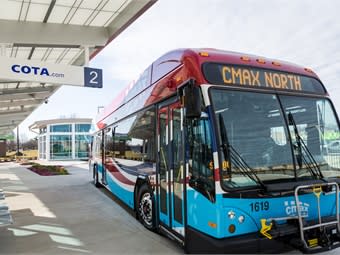
COTA's transit system redesign, and fleet-wide Wi-Fi access for riders were among the achievements considered by APTA. Photo: COTA
APTA annually recognizes public transit agencies with the outstanding system achievement awards. COTA received the award in the category for systems with an annual ridership of more than 4 million and fewer than 20 million passenger trips. In 2017, COTA had 18.7 million passenger trips.
Notable achievements APTA considered from COTA’s award nomination:
Safety: Investment in enhanced safety measurers reducing workplace injuries;
Efficiency: Undertook historic transit system redesign, making service more direct and efficient;
Innovation: Launched 4G Wi-Fi access for riders across entire fleet;
Sustainability: Transitioning fleet to compressed natural gas to reduce environmental footprint;
Workforce: Commitment to continuing education and leadership development;
Equity: Providing access to opportunities for minorities and women.
“I congratulate Central Ohio Transportation Authority (COTA) for winning APTA’s top public transit system award in North America for medium-sized systems,” said APTA President and CEO Paul P. Skoutelas. “COTA’s many achievements and its vision for greater mobility in the Columbus region are helping redefine public transportation as the backbone of an increasingly interconnected, multi-modal transportation network.”
More Management

METRO Opens Submissions for 2026 Motorcoach Awards
Nominations are now being accepted for METRO Magazine’s Operator of the Year and Innovative Operator of the Year awards.
Read More →
New York MTA Advances Final Contract for Second Avenue Subway Expansion
Contract Four is the largest in the Second Avenue Subway Phase 2 project and includes construction of station infrastructure, tracks, and signals for the subway expansion, MTA officials said. Work on Contract Four will begin in 2027.
Read More →
Transit Agencies Highlight Safety Gains at National Summit
Leaders from 15 major transit systems shared crime-reduction results and safety initiatives while discussing the role of continued federal support.
Read More →

NITA Names New Leadership, Expands Reduced-Fare Program at First Board Meeting
The new regional transit authority appointed its first board chair and interim executive director while extending reduced fares across CTA, Metra, and Pace for eligible riders.
Read More →
Beyond the Checklist: A Structured Approach to Transit Maintenance
Reliability-Centered Maintenance helps transit agencies move beyond routine checklists to focus limited resources on the assets and failures that have the greatest impact on safety, reliability, and service.
Read More →
APTA 2026 Nominating Committee Selects Leadership Slate, Names Chair and Vice Chair Nominees
Leadership changes will help shape the association’s priorities and its representation of the transportation industry during the 2026–2027 term.
Read More →
DART Launches Major Security, Fare Enforcement Initiative
The 90-day demonstration will deploy coordinated security teams at five light rail stations while testing controlled access and gathering data to guide future investments.
Read More →
Sponsored•September 9, 2026
Advancing Fare Collection Through Technology and Innovation
Learn about delivering 1300 gates at 91 stations while managing fare evasion. Explore the large scale deployment, solution customization and real-world results that affect the region. Prepare for deployment in your region now.
Read More →
Game Day in Motion: Moving Millions During the 2026 World Cup
Between packed transit stations and team motorcoaches, see how agencies and operators across North America tackled the transportation demands of the 2026 FIFA World Cup.
Read More →
Surface Transportation Extension Averts Shutdown, Leaves Transit Funding Gap
The stopgap keeps federal transportation programs moving, but missing advance funding could complicate the transit and rail projects agencies are planning next.
Read More →