




RELATED: Metrolink's PTC now interoperable with freight operator
Metrolink honors memory of those killed, injured in 2008 train crash
Ten years ago, a Metrolink passenger train collided head-on with a Union Pacific freight train in the Chatsworth area.
September 13, 2018
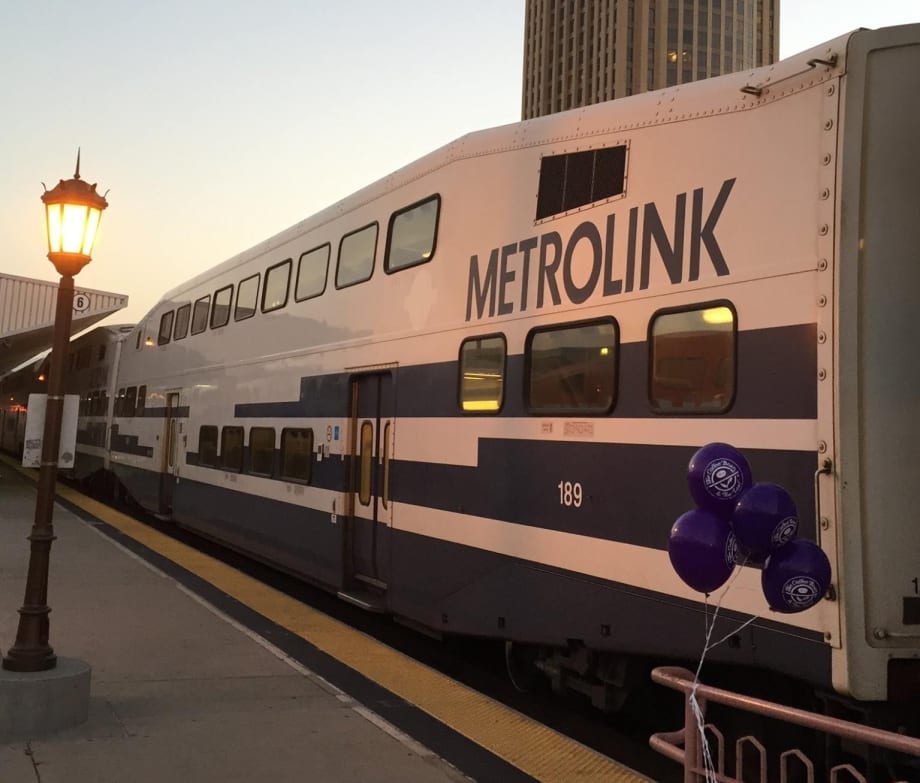
Ten years ago, a Metrolink passenger train collided head-on with a Union Pacific freight train in the Chatsworth area of the San Fernando Valley. Photo: Metrolink
4 min to read
Ten years ago, a Metrolink passenger train collided head-on with a Union Pacific freight train in the Chatsworth area of the San Fernando Valley. Photo: Metrolink
Today, the Metrolink Board of Directors, employees, regional partners and law enforcement agencies honored and remembered the 25 people who lost their lives and the more than 100 who were injured in the Chatsworth incident on Sept. 12, 2008 during a ceremony at Los Angeles Union Station. Metrolink also dedicated a safety exhibit to the victims and first responders in the Union Station passenger waiting area.
Ten years ago, a Metrolink passenger train collided head-on with a Union Pacific freight train in the Chatsworth area of the San Fernando Valley. An investigation found the cause of the crash was the Metrolink engineer being distracted by texting on his cell phone and passing through a red “stop” signal.
“Today is a solemn day during which we remember those who died, those who were injured and their families,” said Metrolink Vice-Chair Brian Humphrey. “Today is also a day when we can point to the transformative changes that have occurred since then that give us confidence to say that such a tragedy will never happen again.”
Within days of the crash, elected officials in Washington, D.C., began drafting new regulations and laws to protect rail passengers. In its final form, the federal law mandated new safety measures such as Positive Train Control (PTC) to prevent over-speeding, running through signals and train-on-train collisions. PTC is mandated on all rail systems by the end of 2018 and Metrolink had it installed systemwide in June 2015.
“It’s been 10 years since the deadly Metrolink collision in Chatsworth, which killed 25 people and injured more than 100," said FRA Administrator Ronald L. Batory. It was this accident which thrusted Positive Train Control in the national spotlight. Weeks later, the Rail Safety Improvement Act of 2008 was signed into law. Since that day, Metrolink has been a leader among commuter railroads – installing, implementing and successfully operating PTC across its network. They are one of a handful of railroads that have this safety technology in operation on its trains today. In those same 10 years, the FRA has diligently worked with all 41 railroads to meet the Congressional mandate. These actions include awarding more than $2.5 billion in grants and loans to fund PTC. Today’s anniversary is a reminder to all railroads why we need to keep the momentum going and get PTC fully implemented.”
PTC is a Global Positioning System (GPS)-based technology that combines with wireless radio and computing technology to send up-to-date visual and audible information to notify crew members when a train must be slowed or stopped.
As part of its commemoration today, Metrolink installed an interactive memorial display and safety exhibit in the passenger waiting area at Union Station. The installation pays homage to the people who were killed and injured, their families and first responders. As a tribute to their enduring legacy, the display includes an interactive experience with a PTC simulator and descriptions of many other safety improvements on the Metrolink system.
The rail safety exhibit is made possible through sponsorship by Wabtec (www.wabtec.com), Metrolink’s partner in PTC integration. Other sponsors include Rail Pros (www.railpros.com), LTK Engineering Services (www.ltk.com), Pacific Railway Enterprises Inc. (www.pacrail.com), and RSE Corp. (www.rsecorp.com).
In addition to PTC, Metrolink purchased Hyundai Rotem Cab Cars featuring Crash Energy Management, a state-of-the-art collision-absorption technology, and installed inward and outward facing cameras to monitor aspects of rail operations.
“Safety is Metrolink’s top priority and maintaining that dedication takes daily focus. Along with employing cutting-edge safety technology, developing a safety culture with a ‘safety first’ mindset is absolutely vital.” said Los Angeles County Supervisor and Metrolink Director Kathryn Barger.
As part of adopting a culture of safety, Metrolink introduced new technologies and safety innovations in the months and years following the Chatsworth Incident. However, the agency faced challenges adopting the technologies due to the low number of experts qualified to install the system.
“At the time we were working on PTC, there were not many people in the country we could call upon for guidance for installation and operation,” said Metrolink CEO Art Leahy. “In many cases, Metrolink personnel had to write the book for processes that are now industry standard.”
As a way to pass on hard-acquired expertise to industry peers, Metrolink regularly offers free “open houses” that are given quarterly to help improve rail safety nationwide.
Looking back on the past decade, former Los Angeles Mayor Antonio Villaraigosa who led the city’s immediate and long-term responses to the crash, said the road to rail safety seems like a straight line, but there were many obstacles.
“We had battles from many quarters about the cost, effectiveness, privacy and other issues. But we had tremendous leadership from elected officials, a dedicated Board and staff, and the memory of that terrible day to keep us focused on our final goal…to build the most modern and safest rail system in the world,” Villaraigosa said.
More Management

METRO Opens Submissions for 2026 Motorcoach Awards
Nominations are now being accepted for METRO Magazine’s Operator of the Year and Innovative Operator of the Year awards.
Read More →
New York MTA Advances Final Contract for Second Avenue Subway Expansion
Contract Four is the largest in the Second Avenue Subway Phase 2 project and includes construction of station infrastructure, tracks, and signals for the subway expansion, MTA officials said. Work on Contract Four will begin in 2027.
Read More →
Transit Agencies Highlight Safety Gains at National Summit
Leaders from 15 major transit systems shared crime-reduction results and safety initiatives while discussing the role of continued federal support.
Read More →

NITA Names New Leadership, Expands Reduced-Fare Program at First Board Meeting
The new regional transit authority appointed its first board chair and interim executive director while extending reduced fares across CTA, Metra, and Pace for eligible riders.
Read More →
Beyond the Checklist: A Structured Approach to Transit Maintenance
Reliability-Centered Maintenance helps transit agencies move beyond routine checklists to focus limited resources on the assets and failures that have the greatest impact on safety, reliability, and service.
Read More →
APTA 2026 Nominating Committee Selects Leadership Slate, Names Chair and Vice Chair Nominees
Leadership changes will help shape the association’s priorities and its representation of the transportation industry during the 2026–2027 term.
Read More →
DART Launches Major Security, Fare Enforcement Initiative
The 90-day demonstration will deploy coordinated security teams at five light rail stations while testing controlled access and gathering data to guide future investments.
Read More →
Sponsored•September 9, 2026
Advancing Fare Collection Through Technology and Innovation
Learn about delivering 1300 gates at 91 stations while managing fare evasion. Explore the large scale deployment, solution customization and real-world results that affect the region. Prepare for deployment in your region now.
Read More →
Game Day in Motion: Moving Millions During the 2026 World Cup
Between packed transit stations and team motorcoaches, see how agencies and operators across North America tackled the transportation demands of the 2026 FIFA World Cup.
Read More →
Surface Transportation Extension Averts Shutdown, Leaves Transit Funding Gap
The stopgap keeps federal transportation programs moving, but missing advance funding could complicate the transit and rail projects agencies are planning next.
Read More →