



Passenger rail, bus service boosts real estate values, report finds
The report explored seven metropolitan regions, including Boston, Los Angeles, and Seattle, that provide access to heavy rail, light rail, commuter rail, and BRT.

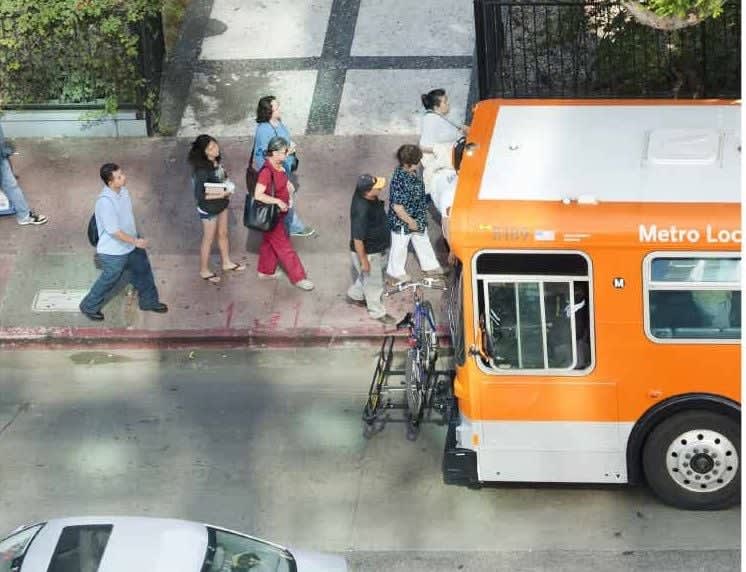
The seven sample areas were examined by residential and commercial sales performance, rent, neighborhood characteristics, local government interventions, and housing affordability for properties near transit.
L.A. Metro
The seven sample areas were examined by residential and commercial sales performance, rent, neighborhood characteristics, local government interventions, and housing affordability for properties near transit.
L.A. Metro
Neighborhoods located within one-half mile of public transit services outperformed those in areas farther from public transit based on several factors, according to a report released by the American Public Transportation Association (APTA) and the National Association of Realtors®.
“The Real Estate Mantra – Locate Near Public Transportation” highlighted the critical role public transportation plays in determining real estate values, revealing that commercial and residential real estate market sales thrive when residents have mobility options close by.
The report explored seven metropolitan regions, including Boston, Los Angeles, and Seattle, that provide access to heavy rail, light rail, commuter rail, and bus rapid transit. Residential properties within these areas had a higher median sale price of 4% to 24% between 2012 and 2016, the report found. Commercial property values also experienced gains in the studied cities, where four of the regions saw median sales price per square foot increase between five and 42 percentage points in areas close to public transit.
Data also showed that residents of transit-oriented areas experience lower transportation costs, have higher access to jobs and are less likely to own cars. Transportation costs in transit-oriented areas are significantly lower than other regions, with an average annual savings of $2,500 to $4,400 for the typical household. One in four households near transit do not own a vehicle, according to the study.
The seven sample areas were examined by residential and commercial sales performance, rent, neighborhood characteristics, local government interventions, and housing affordability for properties near transit.
“Access to public transportation is a hugely valuable community amenity that increases the functionality and attractiveness of neighborhoods, making nearby communities more desirable places to live, work, and raise a family,” said NAR 2019 First VP Charlie Oppler, who spoke at a press conference held during APTA’s TRANSform Conference in New York. “The results of our report, conducted over multiple years alongside the American Public Transportation Association, should reiterate to policymakers at all levels of government the importance of investing in modern, efficient infrastructure that facilitates growth and helps our nation keep pace in a rapidly evolving world.”
To read the full study, click here.
More Management

Bus Tech Talk: Keeping Transit Technicians Ahead of the Technology Curve
LA Metro’s Obed Mejia discusses technician training, evolving maintenance technology, fleet replacement, and strategies for getting the most out of today’s transit fleets.
Read More →
Why Simulating Pedestrian Movement Has Become Essential for Modern Rail Stations
Pedestrian microsimulation is helping rail planners identify bottlenecks, test station designs, and prepare complex transit hubs for growing passenger volumes.
Read More →
People Movement: Holly Arnold Joins Transdev and More
In this edition, we also cover recent appointments and announcements at Pace, CamTran, MCI, and more, showcasing the individuals helping to shape the future of transportation.
Read More →

NITA Launches New Era of Regional Transit in Chicago
The new authority replaces the RTA and brings CTA, Metra, and Pace under a strengthened regional framework for funding, planning, fares, safety, and service coordination.
Read More →
How World Cup Mobility Put Transit and Motorcoaches to the Test
Behind the seamless trips were months of planning, multimodal partnerships, and lessons agencies and operators can carry into the next mega-event.
Read More →
DART Introduces Dashboard to Track Ridership Data
The initial release represents the first phase of DART’s efforts to expand access to ridership information. Additional dashboard features, data, and functionality will be introduced in future phases.
Read More →
SEPTA Breaks Ground on $44M Accessibility Upgrade at 11th Street Station
The project will add elevators and other upgrades to make the busy L station fully ADA accessible, with a yearlong closure expected to accelerate construction and save up to $3 million.
Read More →
FTA Opens $610M for Transit Fleet Modernization
Propane autogas gives transit agencies a reliable, funding-eligible option for fleet upgrades.
Read More →
NJ TRANSIT Explores Unified Real-Time Customer Communications Platform
The agency is gathering industry input on AI, real-time data, and integrated communications technology as it prepares to procure a system that delivers faster, more consistent transit updates across every customer channel.
Read More →
RTD Launches NextRide App to Consolidate Trip Planning, Fares, Security Reporting
The app expands on RTD’s existing NextRide web application and allows customers to view real-time vehicle locations and service alerts, purchase and store digital fares, and access customer support.
Read More →