



FMCSA Begins Query Into Hours-of-Service
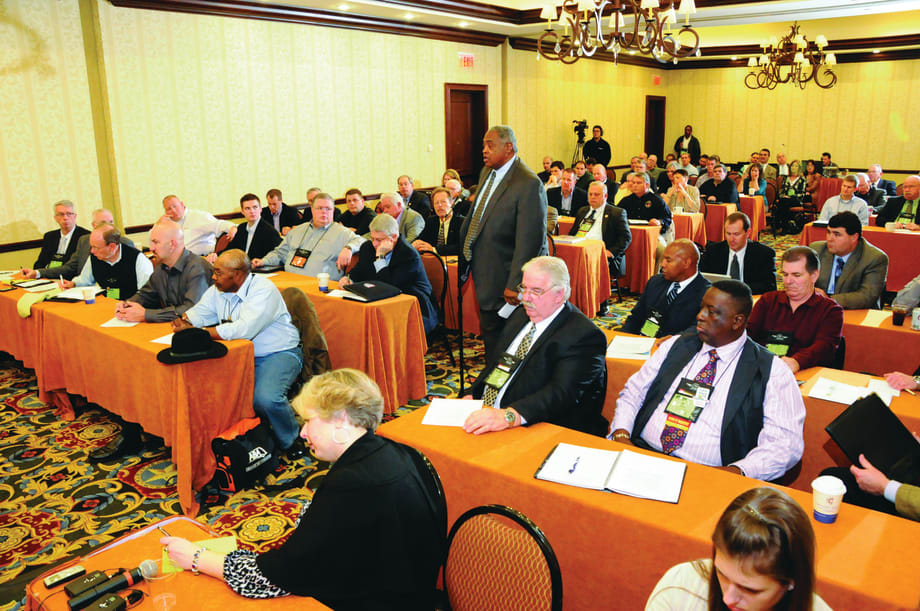
As part of the U.S. Department of Transportation’s quest to make motorcoach travel safer, the FMCSA has begun conducting listening sessions to solicit concepts, ideas and information. The first such session was held at the ABA’s Marketplace in January.
Courtesy ABA
Courtesy ABA
Continuing its three-pronged quest to raise the bar to enter the motorcoach industry, maintain high safety standards and remove high-risk operators from the road, the Federal Motor Carrier Safety Administration (FMCSA) is now holding public listening sessions to solicit concepts, ideas and information on hours-of-service (HOS) requirements for motorcoach drivers.
The first such session was held at the American Bus Association's (ABA) Marketplace 2012 in Grapevine, Texas in January. Through the sessions, the FMCSA is seeking data and answers relating to the following issues and questions as it considers development of a rulemaking on the following requirements:
1. Driving Time - Information or data that examine fatigue and safety differences associated with different driving time periods.
2. Duty Time/Driving Window - Information on patterns of work for motorcoach drivers.
3. Time-On-Task (TOT) Function - Information on methods for evaluating fatigue associated with motorcoach operators' actual driving time, including suggestions for estimating TOT effects, especially where it might obtain data on exposure and other motorcoach driver characteristics that would enable the FMCSA to estimate how or whether crash risk varies over successive hours of daily driving.
4. Cumulative Fatigue - Information on the effects of cumulative fatigue during the work week, particularly scientific studies or data that would allow evaluation of cumulative fatigue and its impact on workplace safety, motorcoach driver safety performance and productivity.
"The FMCSA advises us that they have no preconceived notions where they want to head with this, so I believe they are taking a thoughtful approach," says Ken Presley, VP, industry relations, for the United Motorcoach Association (UMA). "[The FMCSA] certainly understands the diversity of the many types of operations out there. Even though the industry is small, there's a huge difference between schedule service, charter and tours."
HOS requirements for motorcoach operators have not been substantially revised in several decades. The FMCSA did not include changes to the motorcoach HOS requirements in its April Final Rule (68 FR 22456) concerning HOS requirements for truck drivers or in several revisions of that rule, because it lacked "sufficient data on motorcoach operations to form the basis of a rulemaking."
"In 2003, when the truck HOS regulations were changed and Annette Sandberg was the administrator of FMCSA, she left us with the old rules because she said they had no research to indicate there was a problem as they sat," says Norm Littler, ABA's VP, safety, security and regulatory programs. "We had an exemplary safety record, so they just left them as is."
Littler adds that the FMCSA's focus to make changes to HOS rules for the motorcoach industry stems from pressure being placed by the National Transportation Safety Board (NTSB), Congress, safety advocates and unions.[PAGEBREAK]
Should rule be changed?
The first two listening sessions - one in the morning, one in the afternoon — that took place at ABA's Marketplace were very well attended, with operators and industry officials providing FMCSA with their opinions on the HOS rules, in general, and whether they should or should not be changed at all.
"The long and short of it is at the end [the FMCSA] polled those that attended, asking if they should make changes to the HOS rules," explains Littler. "A resounding 85 percent said 'no.'"
A major reason for the overwhelming opinion against making changes is that for those operators that are legitimate, operating within the existing rules is not an issue, says Littler.
"We don't see any problems with the HOS rules, if you are dealing with companies that are compliant," he says. "Companies that are not compliant, or choose not to follow the HOS, are the ones that cause problems. Similarly, you run into problems if drivers refuse to rest when they are given the opportunity to rest."
In fact, those in the industry are quick to point out that if you look at the motorcoach accidents over the last 10 or 12 years where fatigue was an issue, nearly all of the companies involved were operating either unsafely or illegally and were, therefore, not operating in compliance with the HOS regulations.
During the listening session in January, Buddy Young, owner of Capitol Bus Lines in West Columbia, S.C., reiterated the need to continue battling "rogue" operators that are giving the industry a bad name.
"Many of us in South Carolina work hard to develop good practices to stay within the rules. It's frustrating to see those companies who work hard to circumvent those rules continue to operate," he testified. "It takes away the general public's faith in what we do and it makes it difficult for us to convince them that we are good operators."
What's next?
At this point, it is difficult to say what will come after the FMCSA is finished conducting its listening sessions. If the feedback ultimately leads to the agency going through the rulemaking process, the motorcoach industry is still a very long time away from seeing any changes, says Littler.
Before a Final Rule is ultimately released, the FMCSA would likely publish an Advance Notice of Proposed Rulemaking, which is a series of questions that they would ask for public comment on. Once they close the public comment portion, the FMCSA would then have to wade through those comments before composing a rough draft of what the rule would look like, which goes back up for public comment in a Notice of Proposed Rulemaking before the final rule is actually written.
The FMCSA also funded and is currently awaiting a report written by Dr. Gregory Belenky, research professor at Pullman-based Washington State University, on the topic of fatigue and hours of duty. The report is expected to be released by the FMCSA in late February, early March.
Littler says that the FMCSA may be wary to release new HOS rules for the motorcoach industry given the issues it has faced with the trucking industry.
"They are particularly gun shy over HOS rulemaking," he says. "The truck rule has been released four times and gone through four lawsuits. We are expecting it to be five very soon."
More Motorcoach

METRO Opens Submissions for 2026 Motorcoach Awards
Nominations are now being accepted for METRO Magazine’s Operator of the Year and Innovative Operator of the Year awards.
Read More →
Biz Briefs: Alstom Lands Canadian Contract, LYT to Supply California TSP, and More
In METRO's latest installment, we take a look at recent news from Complete Coach Works, Beep, FlixBus, and more partnerships making headlines across the transportation sector.
Read More →
Biz Briefs: RIPTA Unveils New Frontrunners, Clevland RTA Adds New Siemens, and More
In METRO's latest installment, we take a look at recent news from Siemens, Prevost, Dodge, and more partnerships making headlines across the transportation sector.
Read More →
People Movement: Holly Arnold Joins Transdev and More
In this edition, we also cover recent appointments and announcements at Pace, CamTran, MCI, and more, showcasing the individuals helping to shape the future of transportation.
Read More →
ABA Report: Motorcoach Travel Generates $161.6B Economic Impact
The 2025 analysis finds motorcoach travel supported nearly 900,000 jobs and generated $28 billion in federal, state, and local taxes.
Read More →
CharterUP’s Armir Harris on Technology, AI, and the Future of Group Mobility
In a recent episode of METROspectives, CharterUP Founder/CEO Armir Harris discussed the company’s evolution from an online charter bus marketplace into a technology platform supporting public- and private-sector mobility and much more.
Read More →
People Movement: ABC Names John Walsh as Chief Commercial Officer
In this edition, METRO also covers recent appointments and announcements at the DART, STV, and more, showcasing the individuals helping to shape the future of transportation.
Read More →
From Surviving to Thriving: Building Stronger Transportation Organizations
Bus Business Consultants founder Brian Dickson shares lessons on leadership, organizational health, and creating options for long-term success in a changing transportation industry.
Read More →
Biz Briefs: Luminator Marks Milestone and More
From manufacturers and suppliers to transit agencies and motorcoach operators, these updates offer a snapshot of the projects, partnerships and business moves driving the industry forward.
Read More →
ABAF Study Reveals Growing Insurance Crisis for Motorcoach Operators
Preliminary findings show 98% of operators faced premium increases over the past five years, while shrinking insurer participation is putting added pressure on businesses and customers.
Read More →