



Fleets Growing, Business Strong for Motorcoach Top 50
With an increase of 2,052 vehicles compared with 2013, 79% and 63% of respondents plan on adding new or used vehicles, respectively, in the coming year. Meanwhile, business is up at 81% of the operations surveyed, a significant increase from last year’s reported 62%.
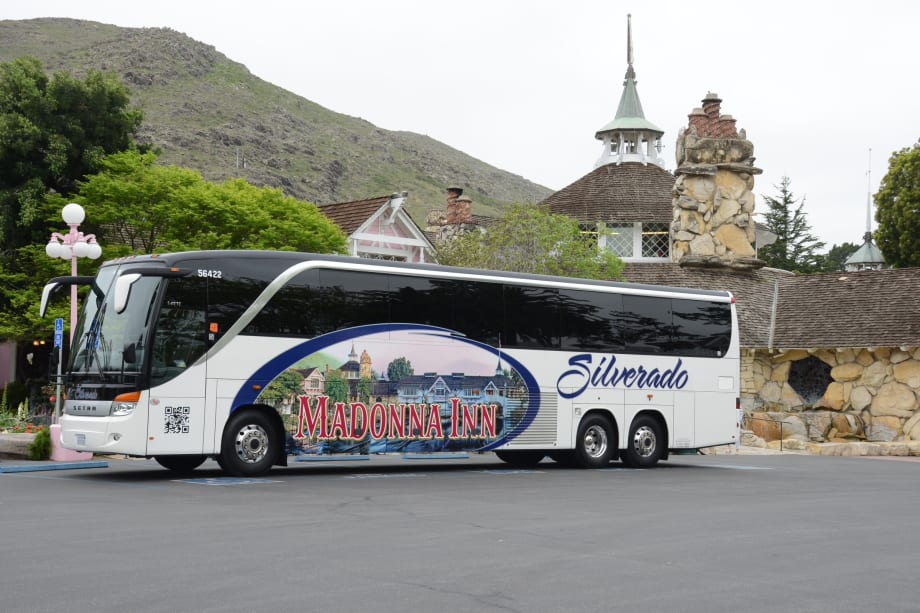
Silverado Stages, San Luis Obispo, Calif. (No. 21)
Silverado Stages, San Luis Obispo, Calif. (No. 21)
With the total amount of vehicles growing by 9%, compared to last year, the latest installment of METRO’s Top 50 Motorcoach operators survey looking back at 2014 features no movement in the top five, but adds nine new operators to the list.
Meant to provide an annual snapshot of the industry, the survey expanded its scope once again, growing its list of respondents by about 20%, with the amount of vehicles reported by the Top 50 totaling 24,319, compared to last year’s 22,267. Of the vehicles reported, 9,764, or 40%, are motorcoaches; constituting the same fleet percentage as last year.
Again, First Group America, with its crop of Greyhound motorcoaches, tops the list, followed by Coach USA/Coach Canada, Horizon Coach Lines, Academy Bus Companies and Pacific Western Group of Companies, who round out the top five. With the addition of Calif.’s Sun Diego Charter Co., All Aboard America Holdings, jumped from No. 11 in 2013 to No. 6 in 2014, adding 258 vehicles along the way.
Three of the 10 new operators on this year’s list actually crack the top 20 — Wolfforth, Texas’ Kings Highway; Old Town, Maine’s Cyr Bus Lines; and Gray Line of Minnesota — bringing with them a total of 704 vehicles. All in all, 24 U.S. states and five Canadian provinces are represented in this year’s Top 50.
Increasing business, fleet size
Overall, 81% of this year’s 104 total respondents report an increase in business, compared to last year’s 62%, with 14% reporting no change and 5% reporting that business is down, representing a change from last year’s 27% and 11%, respectively.
Seventy-nine percent of respondents reported they plan on purchasing an estimated 696 new vehicles in 2015, with top supplier choices being Prevost, Motor Coach Industries, Temsa, and ABC Companies/Van Hool. Meanwhile, 63% of respondents say they plan on purchasing approximately 151 used vehicles in the coming year. Only 30% of those combined vehicle purchases reported are firm. Additionally, 72% of respondents said they are exploring purchasing a refurbished coach instead of purchasing brand new, with 34% saying they already own refurbished vehicles.
To battle increased fuel and other costs, 85% of respondents reported they increased their rates, compared to 72% last year, with fuel surcharges coming in second at 61%, followed by staff downsizing (4%), service reductions (4%), and controlling idling/fuel usage (2%), which all showed 10% decreases in popularity from the previous survey.
To help increase business, 65% of operators say they have begun contracting with private companies, followed by obtaining more school contracts (54%), obtaining more government contracts (44%) and partnering with other providers (35%).
Although the percentage was down somewhat from the previous year, word of mouth (57%) continues to be the top marketing practice for motorcoach operators, followed by the Internet (18%) and social media (10%). In fact, several operators reported that it was a goal of theirs to increase their Web presence both last year and looking ahead to the coming year.
RELATED:Top 50 Motorcoach Fleets in Photos
Training, innovations
Seventy-four percent of operators say they instituted additional driver training over the course of the year, with increased safety training topping the list (43%), followed closely by customer service (34%), with government regulations training, including Hours of Service and handling ADA customers, coming in at 14%.
At more than 90%, other coach companies are the top competition for this year’s respondents, with 39% of operators reporting that hiring/retaining drivers is their biggest challenge, followed by dealing with increased competition and equipment issues with 13% and 10%, respectively.
When asked about recent innovations implemented at their operations, a large majority reported adding GPS, Wi-Fi, 110-volt outlets and satellite TV. Other innovations mentioned included purchasing smaller-sized equipment, adding wheelchair lifts, exploring alternative fuels, and moving to a peak/off-peak tiered rate structure.
METRO would like to thank all of the motorcoach operators around the U.S. and Canada who responded to this year’s survey. If your operation would like to receive next year’s survey, or you have suggestions to improve our survey, please contact us at info@metro-magazine.com.
For the full Top 50 listings, click here.
More Motorcoach

From Surviving to Thriving: Building Stronger Transportation Organizations
Bus Business Consultants founder Brian Dickson shares lessons on leadership, organizational health, and creating options for long-term success in a changing transportation industry.
Read More →
Report: Canadian Motorcoach Industry Generates $4.4B in Economic Impact
The 2025 Motorcoach Economic Impact Report finds motorcoach travel supported nearly 25,000 jobs and generated $980 million in federal, provincial, and local taxes.
Read More →
Prevost Opens Expanded Chicago-Area Service Center
The $8.1 million Elk Grove Village investment nearly triples facility space while adding service capacity, parts storage, and customer amenities.
Read More →
People Movement: Dan Dipert Coaches Adds Third-Generation Leader, Keolis Names New Valley Metro VP/GM, and More
In this edition, we also cover recent appointments and announcements at the Wabtec, SilverRide, HNTB, and more, showcasing the individuals helping to shape the future of transportation.
Read More →
METRO Opens Submissions for 2026 Motorcoach Awards
Nominations are now being accepted for METRO Magazine’s Operator of the Year and Innovative Operator of the Year awards.
Read More →
Biz Briefs: Alstom Lands Canadian Contract, LYT to Supply California TSP, and More
In METRO's latest installment, we take a look at recent news from Complete Coach Works, Beep, FlixBus, and more partnerships making headlines across the transportation sector.
Read More →
Biz Briefs: RIPTA Unveils New Frontrunners, Clevland RTA Adds New Siemens, and More
In METRO's latest installment, we take a look at recent news from Siemens, Prevost, Dodge, and more partnerships making headlines across the transportation sector.
Read More →
People Movement: Holly Arnold Joins Transdev and More
In this edition, we also cover recent appointments and announcements at Pace, CamTran, MCI, and more, showcasing the individuals helping to shape the future of transportation.
Read More →
ABA Report: Motorcoach Travel Generates $161.6B Economic Impact
The 2025 analysis finds motorcoach travel supported nearly 900,000 jobs and generated $28 billion in federal, state, and local taxes.
Read More →
CharterUP’s Armir Harris on Technology, AI, and the Future of Group Mobility
In a recent episode of METROspectives, CharterUP Founder/CEO Armir Harris discussed the company’s evolution from an online charter bus marketplace into a technology platform supporting public- and private-sector mobility and much more.
Read More →