



How Motorcoach Pricing Tactics Help Boost the Bottom Line
While a demand/yield pricing model helps keep an operator’s eye on their bottom line, many in the industry focus on selling their operation as a service rather than a commodity.


Even with business slowly but steadily increasing, many in the motorcoach industry must still walk the pricing tightrope. Even though many operators tout their great safety record; positive customer feedback on sites including Yelp; and high-quality equipment to land jobs, many admit the main factor driving most customer decisions is price.
“We always explain to customers what sets us apart from the competition, but many times people don’t really care; they are just looking for the cheapest price,” says Maurice Vargas, owner of Space Tours LLC in Orlando, Fla.
With that in mind, many in the industry are charging more during peak times and less during their off-peak season to help maintain a steady flow of business throughout the year. And, while many operators say they are willing to match their competitors’ prices within reason, many say it is more important to let them know why their prices are higher, stressing the age-old adage “you get what you pay for.”
Lowballing trending down
While still an industry concern, lowballers, or operators who will slash prices to land work, are on the decline.
“Lowballing is all relative and it’s typically relative to the operating environment the operator works in. There are still lowballers out there, but it appears as if the practice isn’t as prevalent as it used to be,” explains United Motorcoach Association President/CEO Vic Parra. “What we are hearing is that business is improving, which would suggest prices are rising because there’s greater demand for services. That is a factor that never goes away — supply and demand — and right now demand is good.”
With that said, operators in competitive markets are in fact still dealing with lowballers and continue to struggle, according to Space Tours’ Vargas.
“Lowball operators are really driving the industry to its knees here,” he explains. “In the beginning, I always tried to keep my prices the same, but now I have to go lower and lower if I want the business.”
Vargas adds that even though he will lower his prices to win contracts, he finds it imperative to never go low enough that he doesn’t turn a profit on the trip.
Outside of areas where competition is high, operators agree that they are seeing fewer lowball operators, particularly the type that would both work for cheap and operate older equipment that may not have been safe for the road in years.
“With the FMCSA’s safety crackdowns, we are seeing more unscrupulous carriers being taken out of the market, and therefore, seeing less and less lowball pricing,” says Matt Eyre, president of Eyre Bus, Tour & Travel in Glenelg, Md.
“In our particular market, lowballing has decreased because demand has gone through the roof in the last couple of years,” adds Ryan Benjamin, director, charter sales and services, for Golden, Colo.’s Premier Charters. “There just isn’t much of an opportunity to cut prices, and even if somebody does get undercut for a particular job, nobody is losing sleep over it because they will most likely fill those buses anyways.”
Even with price slashing trending downward, operators agree the practice continues to hurt the industry because it confuses, and sometimes strands, potential customers.
“One of the results of lowballing is that we have come across operators who will cut prices to get a job, but immediately let the client go when something bigger and better comes along,” says Benjamin. “Meanwhile, the original client that booked at that low rate will end up with no service, and then when they go back on the market to shop, they find out they have to pay $200 to $300 more, because that is what the trip actually costs.”
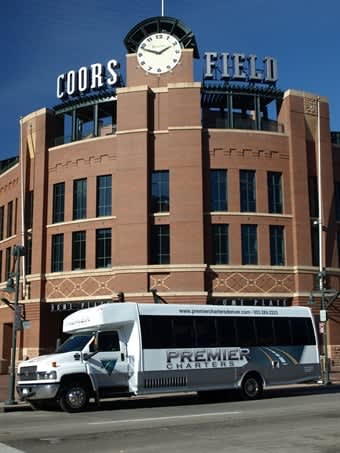
Colorado’s Premier Charters charges more during peak and less during non-peak times, while also touting what makes them stand out from the competition.
Demand/Yield
One practice many operators have found that helps remedy the need to battle lowballers is the idea of demand/yield pricing — which simply put charges customers more when an operation is typically busy and less when it is slow.
Benjamin explains Premier Charters uses a “sliding scale” for pricing trips, charging more during the busy skiing and wedding months as well as on weekends versus weekdays.
“We’re not talking about gouging or cranking up the rates ridiculously, but obviously, weekends, for example, are busier than weekdays,” he says, adding that the company will discount its rates or even adjust its minimums during off-peak times.
“We know during our off-peak times, we are not going to get the rates we would get in the summertime, and we want to do everything we can to fill those spots when we aren’t as busy,” he says.
The ability to charge on a sort of sliding scale enables operators to both stay busy and keep its eye on the big picture, explains Parra.
“The residual of an operator’s pricing practices should be on margin and not just moving the bus,” he says. “If an operator determines they are going to charge a low price in the winter when things are slow, but know they will make it up in the spring when it’s busy, that is fine. It’s the bottom line that matters, and the pricing has to help the operator get to the bottom line; that’s the key.”
With that in mind, Parra adds that is of paramount importance that operators always price a trip accordingly so that they meet their desired profit margin — typically at least 10% is the industry standard.
Charging the appropriate prices throughout the year will also enable operators to lower prices and remain competitive when the work isn’t there; the flexibility to work with a return client on a price that meets both the operator and the clients’ needs; or match a competitor’s price when the job is desirable.
Staying firm, selling reputation
In short, Premier’s Benjamin says it is important to weigh all the costs associated with moving an operation’s vehicle — insurance, labor, maintenance, etc. — and price the trip accordingly without adjusting to beat another operator’s rates.
"We have a policy to match anybody’s bid if there is a written estimate and the safety record and equipment is comparable to ours,” he says. “If all things are equal and it is a job we want, we may consider re-bidding, but it is pretty rare.”
What Benjamin explains cuts to the heart of the matter, which is selling your operation and all it has to offer then let the customer decide if price is the only thing that matters to them.
“We try to explain to the customer that we offer a higher-quality product that we will stand behind,” says Eyre. “If customers do their homework before booking with a carrier and check out things such as their FMCSA safety scores and Yelp reviews, they are able to see a carrier’s true colors and can make their decision based on reputation more than price.”
Benjamin adds that his team will speak to a customer to identify what is important to them and then sell them on all of the things that makes Premier worth the price, including their late model equipment, superior customer service and solid safety record, as well as 24/7 access to him and his sales assistant.
Most importantly, Benjamin says, it is imperative that an operator sells themselves and the services they provide, versus taking the job at a lower price because they need the work.
“You don’t need to give away free samples to get somebody to come back,” he says. “You can’t take a loss on a job because the client is going to expect the same rate in the future, and then, wonder why you did it for so cheap three months ago but are charging them more now. You have to believe in yourself and what you offer.”
More Motorcoach

People Movement: Dan Dipert Coaches Adds Third-Generation Leader, Keolis Names New Valley Metro VP/GM, and More
In this edition, we also cover recent appointments and announcements at the Wabtec, SilverRide, HNTB, and more, showcasing the individuals helping to shape the future of transportation.
Read More →
METRO Opens Submissions for 2026 Motorcoach Awards
Nominations are now being accepted for METRO Magazine’s Operator of the Year and Innovative Operator of the Year awards.
Read More →
Biz Briefs: Alstom Lands Canadian Contract, LYT to Supply California TSP, and More
In METRO's latest installment, we take a look at recent news from Complete Coach Works, Beep, FlixBus, and more partnerships making headlines across the transportation sector.
Read More →
Biz Briefs: RIPTA Unveils New Frontrunners, Clevland RTA Adds New Siemens, and More
In METRO's latest installment, we take a look at recent news from Siemens, Prevost, Dodge, and more partnerships making headlines across the transportation sector.
Read More →
People Movement: Holly Arnold Joins Transdev and More
In this edition, we also cover recent appointments and announcements at Pace, CamTran, MCI, and more, showcasing the individuals helping to shape the future of transportation.
Read More →
ABA Report: Motorcoach Travel Generates $161.6B Economic Impact
The 2025 analysis finds motorcoach travel supported nearly 900,000 jobs and generated $28 billion in federal, state, and local taxes.
Read More →
CharterUP’s Armir Harris on Technology, AI, and the Future of Group Mobility
In a recent episode of METROspectives, CharterUP Founder/CEO Armir Harris discussed the company’s evolution from an online charter bus marketplace into a technology platform supporting public- and private-sector mobility and much more.
Read More →
People Movement: ABC Names John Walsh as Chief Commercial Officer
In this edition, METRO also covers recent appointments and announcements at the DART, STV, and more, showcasing the individuals helping to shape the future of transportation.
Read More →
From Surviving to Thriving: Building Stronger Transportation Organizations
Bus Business Consultants founder Brian Dickson shares lessons on leadership, organizational health, and creating options for long-term success in a changing transportation industry.
Read More →
Biz Briefs: Luminator Marks Milestone and More
From manufacturers and suppliers to transit agencies and motorcoach operators, these updates offer a snapshot of the projects, partnerships and business moves driving the industry forward.
Read More →