



Top 50 Motorcoach Fleets Focused on Growing Business, Recruiting Drivers
While finding drivers and maintenance personnel is still a real issue for operators, many have not only used the web to revamp their approach to recruit drivers, but also market their operations to increase utilization rates. New for 2018, this year’s list is ranked by most motorcoaches, rather than most vehicles as it has in the past.

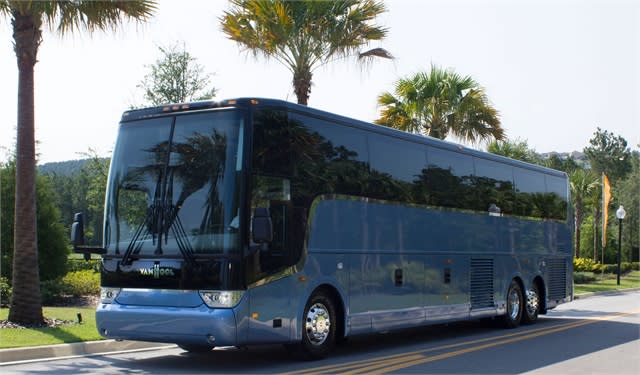
Recruiting, hiring, and retaining drivers continues to be the biggest challenge facing motorcoach operations today, according to 85% of respondents to this year’s METRO Top 50 Motorcoach Survey. Additionally, 35% report they are having an issue finding qualified maintenance personnel, while 35% say their biggest challenge is costs, including those associated with employees as well as the growing costs to recruit, hire, and train new employees.
Overall, 22,681 vehicles were reported by this year’s Top 50, with 9,697, or 43%, of the vehicles reported motorcoaches — a slight increase of 430 motorcoaches compared to last year’s numbers. One key note for this year’s Top 50 list and the increase in motorcoaches is that METRO is now ranking its Top 50 based on the total number of motorcoaches rather than total vehicles. The choice for the change was based on feedback from operators.
Business numbers
Seventy-six percent of this year’s respondents reported an increase in business, with 21% reporting there was no change, and 3% saying business was down. The largest growth reported was 26%, while the largest decrease was 20%.
Meanwhile, 94% of respondents plan on purchasing an estimated 476 new vehicles in 2018, with top supplier choices including ABC Companies/Van Hool, Motor Coach Industries, and Temsa. Additionally, 33% of respondents plan on purchasing a possible 47 used units in the coming year. Both of those numbers are down slightly from last year.
To help increase business, 60% of operators have contracted with private companies, followed by obtaining government contracts (55%); obtaining school contracts (45%); partnering with other providers (33%); and diversifying into other types of business, including paratransit (15%). Additional ways operators are growing business, included the acquisition of other companies, organically through higher fleet utilization, and increased marketing.
Eighty-nine percent of operators say their main source of competition is other motorcoach companies, followed by personal automobiles (28%), trains (17%), and airlines (14%). While taxis and TNCs gained traction last year at 30%, only 6% of operators in this year’s survey feel that they are a source of competition.
Word-of-mouth is still the preferred method of marketing for 49% of respondents, followed by social media (20%) and internet advertising (17%) — both of which were up three percentage points from last year. Meanwhile, 56% of respondents report that they have increased their marketing efforts on social media, with an additional 24% saying they have increased their internet advertising efforts.
Challenges, innovations
As of early December, when the survey was conducted, 94% of respondents had already implemented Electronic Logging Devices (ELDs), which was set to become mandatory for operators Dec. 18, 2017.
According to the FMCSA, the implementation of ELDs will result in an annual net benefit of more than $1 billion — largely by reducing the amount of required industry paperwork. It will also increase the efficiency of roadside law enforcement personnel in reviewing driver records. Strict protections are included that will protect commercial drivers from harassment.
On an annual average basis, the ELD Final Rule is estimated to save 26 lives and prevent 562 injuries resulting from crashes involving large commercial motor vehicles.
When asked about challenges faced when implementing ELDs, the consensus response was the time associated with the installation of the devices, as well as the amount of training necessary for staff.
Some operators also noted that they didn’t feel ELDs were necessary. Along those lines, 41% of respondents take issue with the federal government’s oversight of the industry. When asked why, some noted ELDs as the most recent overstep by government in attempting to police motorcoach operators.
Additional issues with federal oversight included the CSA scoring system, which many operators noted is unfair because it often punishes good operators for minor issues.
“FMCSA’s compliance methods/tactics do little to increase safety,” noted one operator. “It is all about keeping score by finding violations and collecting fines.”
Outside of implementing ELDs, operators are still adding new innovations and finding new ways to do business.
When asked what new innovations they have added in the last year, some mentioned that they have updated their websites and began focusing on Search Engine Optimization (SEO) to organically generate traffic on those revamped websites. Many also added that they are focusing more on social media outlets, such as Facebook and Twitter, for advertising and recruiting drivers, mechanics, and other talent.
Other innovations added by operators included mobile ticketing platforms, Wi-Fi, satellite TVs, and the implementation of on-board media servers that enable customers to watch movies or play video games from their own device.
In addition to using social media to attract more drivers, motorcoach operations said they are also actively holding events, such as job fairs, to find talent, as well as implementing referral and new- hire incentive bonuses and instituting improved overall benefits packages.
Another way some operators are handling the driver and maintenance shortage is by instituting their own in-house training programs, with some even offering training and help for those interested in attaining their CDL.
As for training, 80% of operators said they have increased their training efforts, focusing on customer service, increased safety, ADA regulations, and simulators.
METRO would like to thank all of the motorcoach operators around the U.S. and Canada who responded to this year’s survey. With the revamp in ranking, we are sure some operators may have been missed. If your operation would like to receive next year’s survey, or you have suggestions to improve our survey, please contact us at info@metro-magazine.com.
More Motorcoach

Biz Briefs: Alstom Lands Canadian Contract, LYT to Supply California TSP, and More
In METRO's latest installment, we take a look at recent news from Complete Coach Works, Beep, FlixBus, and more partnerships making headlines across the transportation sector.
Read More →
Biz Briefs: RIPTA Unveils New Frontrunners, Clevland RTA Adds New Siemens, and More
In METRO's latest installment, we take a look at recent news from Siemens, Prevost, Dodge, and more partnerships making headlines across the transportation sector.
Read More →
People Movement: Holly Arnold Joins Transdev and More
In this edition, we also cover recent appointments and announcements at Pace, CamTran, MCI, and more, showcasing the individuals helping to shape the future of transportation.
Read More →
ABA Report: Motorcoach Travel Generates $161.6B Economic Impact
The 2025 analysis finds motorcoach travel supported nearly 900,000 jobs and generated $28 billion in federal, state, and local taxes.
Read More →
CharterUP’s Armir Harris on Technology, AI, and the Future of Group Mobility
In a recent episode of METROspectives, CharterUP Founder/CEO Armir Harris discussed the company’s evolution from an online charter bus marketplace into a technology platform supporting public- and private-sector mobility and much more.
Read More →
People Movement: ABC Names John Walsh as Chief Commercial Officer
In this edition, METRO also covers recent appointments and announcements at the DART, STV, and more, showcasing the individuals helping to shape the future of transportation.
Read More →
From Surviving to Thriving: Building Stronger Transportation Organizations
Bus Business Consultants founder Brian Dickson shares lessons on leadership, organizational health, and creating options for long-term success in a changing transportation industry.
Read More →
Biz Briefs: Luminator Marks Milestone and More
From manufacturers and suppliers to transit agencies and motorcoach operators, these updates offer a snapshot of the projects, partnerships and business moves driving the industry forward.
Read More →
ABAF Study Reveals Growing Insurance Crisis for Motorcoach Operators
Preliminary findings show 98% of operators faced premium increases over the past five years, while shrinking insurer participation is putting added pressure on businesses and customers.
Read More →
Motorcoach Market Remains Flat Amid Shift in Buying Patterns
Q2 sales totaled 514 units, up slightly from 2025, as operators favored pre-owned equipment and public-sector purchases increased.
Read More →