



Calif.’s Big Blue Bus honored for shelter design
The shelter design is clean and unobtrusive, and was created to enhance the city of Santa Monica's coastal look and feel. The new stops will be fabricated with recycled and locally sourced materials wherever possible.

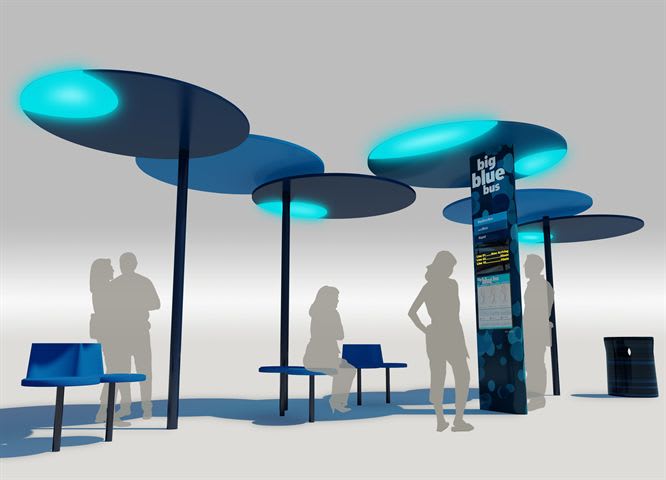
The Big Blue Bus' shelter design called "The Blue Spots," is clean and unobtrusive, and was designed to enhance the city's coastal look and feel. The new bus stop structures will utilize a modular system flexible enough to adapt to various sized locations and rider volumes. Photo courtesy of Lorcan O'Herlihy Architects.
[IMAGE]BBB-LOHA-Bus-Stop-Prog-Rendering-6.jpg[/IMAGE] The Los Angeles chapter of the American Institute of Architects (AIA) awarded its "Next LA" Citation Award for Architecture to the new Big Blue Bus shelter and bus stop redevelopment program. The award honors excellence in design by Los Angeles architects for projects not yet built.
"This is a very meaningful award, especially because one of the goals for this project was to create something totally unique," said Dan Dawson, customer relations manager for the Big Blue Bus. "These new stops will make riding public transit a better experience by offering passengers a whole new level of enhanced information and comfort."
Lorcan O'Herlihy Architects (LOHA) was chosen to work with Big Blue Bus and city staff to come up with a Santa Monica-inspired design that would also incorporate real-time information, solar lighting, updated maps and other desired amenities for riders. The final design, called "The Blue Spots," is clean and unobtrusive, and was designed to enhance the city's coastal look and feel. The new bus stop structures will utilize a modular system flexible enough to adapt to various sized locations and rider volumes.
As part of LOHA's research, each stop's unique orientation was carefully analyzed so seating could be positioned for maximum sun protection for waiting passengers. Since the shelters will utilize slender poles instead of the typical multiple sided structures found at most stops, passengers requiring special access, such as wheelchairs, will find the stops very easy to use. Businesses located near the bus stops will also benefit from the minimal structures, as store windows and signage will not be blocked.
All 360 bus stops throughout Santa Monica, and various other stops located around Los Angeles serviced by the Big Blue Bus, will be updated. New features at each stop will include:
A Big Blue Bus system map.
A local map showing places to visit within walking or biking distance.
A timetable and route map of lines stopping at that location.
Estimated travel times to key points along the route.
An ID number that allows for real time bus arrivals via cell phone.
A shelter canopy.
Medium and high volume stops will also receive:
Signs that broadcast real time bus arrival information
Seating (select low volume stops may also receive seating).
Trash and recycling containers.
Solar LED lighting that illuminates the structure and waiting area.
In keeping with the city of Santa Monica's commitment to a cleaner environment, the new stops will be fabricated with recycled and locally sourced materials wherever possible. Federal Transit Administration and stimulus funds were the primary sources of funding for the project's $6.9 million budget.
Construction of the new stops is expected to begin during the first quarter of 2011.
More Bus
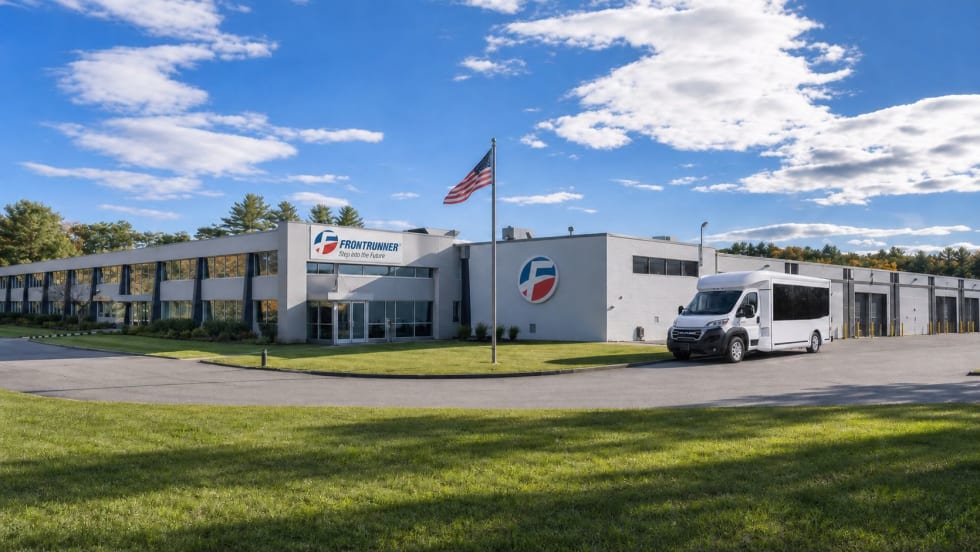
Frontrunner Bus Group Expands with New Massachusetts Headquarters
The significantly larger facility will provide the infrastructure needed to support the company’s growing workforce, advanced technologies, and expanding product line.
Read More →
Joshua Schank on Transportation Innovation, Risk, and the Future of Mobility
In this edition of METROspectives, Joshua Schank discusses lessons from launching LA Metro’s Office of Extraordinary Innovation, the challenges of advancing new mobility technologies, and much more.
Read More →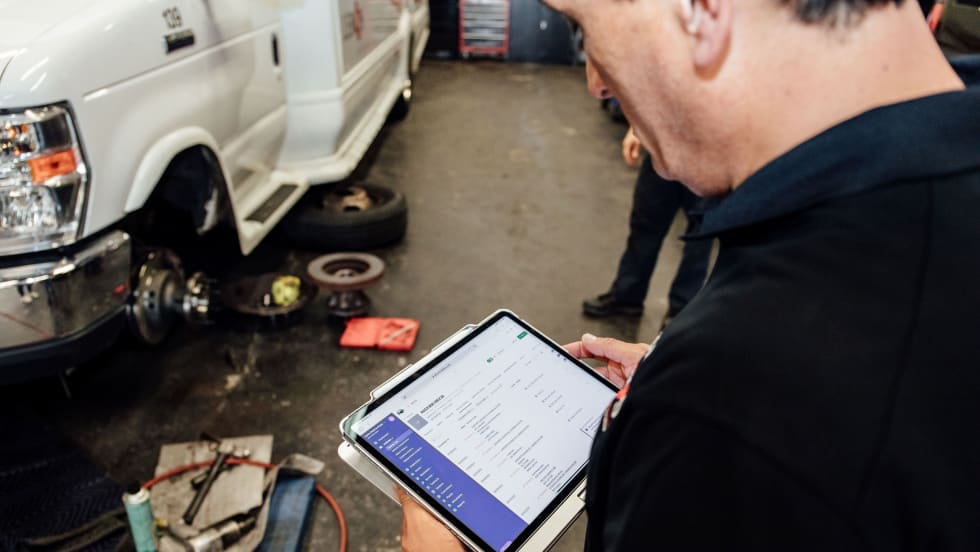
Reinventing Fleet Maintenance with Real-time Visibility and AI
Transit leaders need to know what needs fixing, where to look, who is responsible, when work is completed, and what it costs without having to chase information across disconnected systems.
Read More →
SamTrans Sets Priorities for Potential Connect Bay Area Revenue
The board-approved framework allocates future funding to maintaining service, rider improvements, equity initiatives, and infrastructure repairs.
Read More →
When Routine Fails: How Public Transit Must Adapt for the World Cup
The 2026 FIFA World Cup will test transit agencies’ ability to manage unpredictable travel patterns, making real-time data and operational flexibility critical to moving millions of visitors efficiently.
Read More →
Photo Highlights from APTA's 2026 Mobility Conference
The photo gallery captures scenes from the conference, including the International Bus Roadeo, exhibit hall activities, the Bus Showcase, and much more.
Read More →
Chicago's NITA Act Moves Into Next Phase as Service Improvements Begin
Rider-focused improvements will begin rolling out across the system immediately as CTA, Metra, and Pace increase service this summer in the six-county region.
Read More →
Philadelphia's SEPTA Approves Annual Transit Service Plan
Between 2021 and 2024, SEPTA held more than 200 public meetings — including 144 in-person sessions — throughout the SEPTA service region.
Read More →
A True Low-Floor Minibus Design Delivers Better Accessibility and Efficiency for Everyone
As transit demands evolve, so should your fleet. Download the whitepaper to see how the Low-Floor Frontrunner Minibus compares to traditional options.
Read More →
WMATA Debuts 'Fares Pay for Service' Awareness Campaign
The campaign was highlighted during a media event at the Paul S. Sarbanes Transit Center in Silver Spring, where WMATA’s GM/CEO Randy Clarke joined Metro Transit Police officers, WMATA management team, board members, and staff to expand fare enforcement and customer education efforts on Metro Bus routes throughout the region.
Read More →