



Report: Proximity to jobs crucial to light rail development
Findings show proximity to existing employment centers and downtown areas to be important factors driving development along transit lines. While transit improvements were a factor, the impetus for development was more strongly related to longer-term efforts to revitalize the center cities.

A new study, which examines real estate development patterns along three recently built light rail lines, found proximity to existing employment centers and downtowns to be important factors driving development along transit lines.
The study, “Rails to Real Estate: Development Patterns along Three New Transit Lines," released by the Center for Transit-Oriented Development (CDOT), should help local planners and others considering new transit lines to maximize the benefits of new transit investments and foster transit oriented development.
The three transit lines are the Hiawatha Line in the Minneapolis-St. Paul region in Minnesota, the Southeast Corridor in the Denver region in Colorado, and the Blue Line in the Charlotte region in N.C.
The analysis considers development patterns with regard to factors such as proximity to downtowns and major employment centers; the location and extent of vacant or “underutilized” property suitable for development or redevelopment; block patterns that influence “walkability,” and transit connectivity and household incomes.
“Setting realistic expectations about the scale, timing and location of private investment along new transit lines is especially critical where new development is expected to help pay for needed transit improvements, neighborhood amenities, or other community benefits,” said Nadine Fogarty, principal with Strategic Economics and primary author of the report.
All three transit lines experienced a tremendous amount of new development. Charlotte’s Blue Line had the most development, with approximately 9.8 million square feet of new space between 2005 and 2009.
The study found proximity to existing employment centers and downtowns to be important factors driving development along transit lines. While transit improvements were a factor, the impetus for development was more strongly related to longer-term efforts to revitalize the center cities, as well as shifting market demand that favors central locations with urban amenities, shopping and entertainment.
All three corridors offer significant areas of development opportunity that represent unmet potential for TOD, according to the study. But, investments in neighborhood infrastructure and amenities are critical for unlocking the potential for TOD, especially in areas where land use patterns were previously automobile dependent.
“This study marks an important step in understanding the impact of transit investments in three regions, and the implications for other communities looking to transit investments as a source of long-term economic prosperity and competitiveness. We need to make transit investments that unlock the potential for TOD, but we need to make them in the right places,” said Sam Zimbabwe, Director of the Center for Transit-Oriented Development.
The findings of this report have implications for value capture strategies that attempt to harness property value increases near transit to help offset the costs of transit investments, or to help finance other needed improvements along transit corridors. Due to the uneven nature of development patterns near transit and the need for strategic investments, the study suggests a corridor-level approach to value capture may be very useful because value created in a strong market locations can help fund needed improvements and enable development elsewhere in the corridor.
Rails to Real Estate was prepared by the CDOT, the only national nonprofit effort dedicated to providing best practices, research and tools to support equitable market-based development in pedestrian-friendly communities near public transportation. CTOD is a partnership of two national nonprofit organizations — Reconnecting America and the Center for Neighborhood Technology — and a research and consulting firm, Strategic Economics.
More Rail

The Invisible Infrastructure of Passenger Flow
What a seat reservation system on Austria’s Railjet trains reveals about the future of rider experience, and why U.S. agencies should pay attention.
Read More →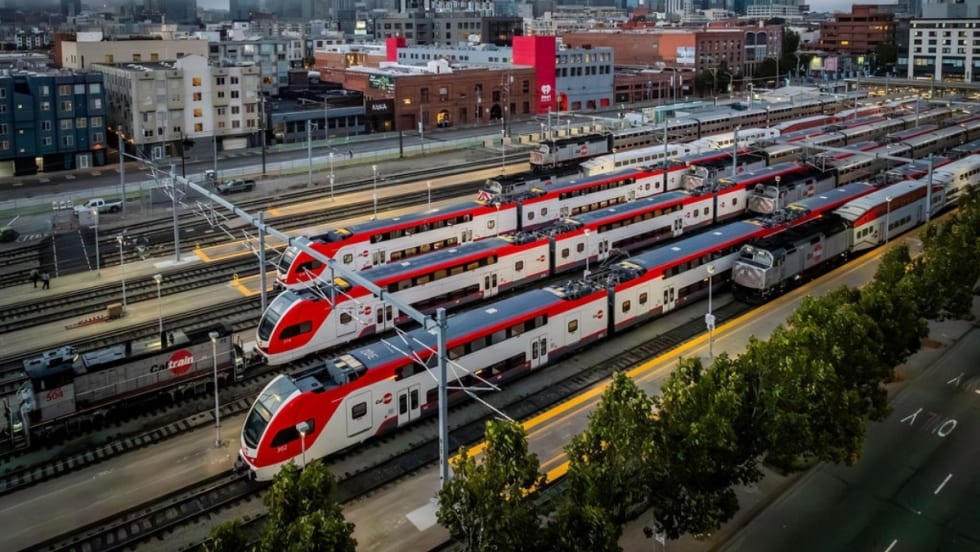
Caltrain Board Approves FY27 Budget, Endorses Efficiency Measures
The move ensures Caltrain service will continue operating as usual in the near term, but long-term financial challenges remain for the rail agency absent a new revenue source.
Read More →
Alstom Acquires Delaware Site to Support Amtrak NextGen Acela Fleet
The company is investing more than $55 million to acquire and improve the property and will employ approximately 100 people at this site once it is operational.
Read More →
When Routine Fails: How Public Transit Must Adapt for the World Cup
The 2026 FIFA World Cup will test transit agencies’ ability to manage unpredictable travel patterns, making real-time data and operational flexibility critical to moving millions of visitors efficiently.
Read More →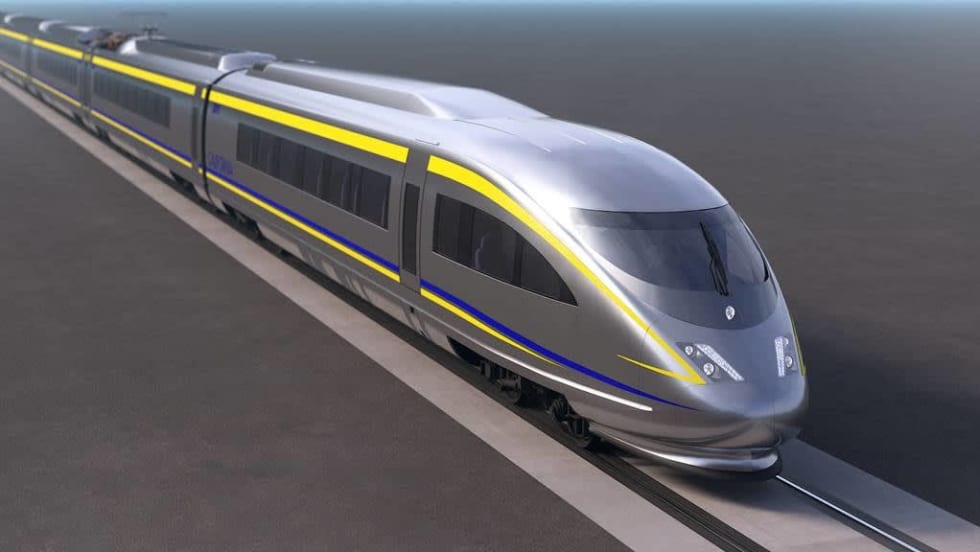
California Selects Team for Nation’s First True High-Speed Rail Track and Systems Contract
The board action follows completion of track installation at the 150-acre southern railhead in Kern County, which will serve as the staging and distribution hub for high-speed track and systems installation.
Read More →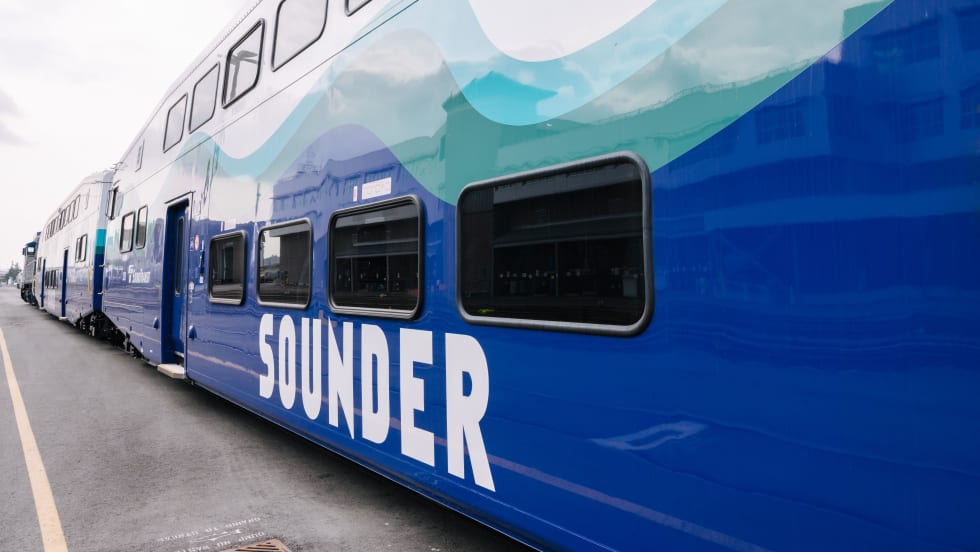
Seattle's Sound Transit Launches New Sounder Railcars into Service
Alstom manufactured all the cars under a $46.5 million contract and came into service in anticipation of summer crowds for soccer and baseball.
Read More →
Alstom Partners With Universities to Build Rail Talent Pipeline
The partnerships include a new engineering scholarship fund at Alfred State College in Western New York and collaborations with transportation centers at the University of Pennsylvania and New York University.
Read More →
Chicago's NITA Act Moves Into Next Phase as Service Improvements Begin
Rider-focused improvements will begin rolling out across the system immediately as CTA, Metra, and Pace increase service this summer in the six-county region.
Read More →
Seattle’s Sound Transit Adopts Updated ST3 System Plan
The updated system plan incorporates cost savings across the agency, including new revenue sources and financial policies, to set the agency on a sustainable path for the future.
Read More →
Inside Look: EMBARK Expands Fare-Free Transit Program Through New Public-Private Partnership
The OKC transit agency says sponsorship helps subsidize the Third Friday Free initiative while reducing barriers for first-time riders and boosting ridership across buses, streetcars, and river cruises.
Read More →