



Report: More transportation upgrades needed for economic recovery
The economic recession has only provided a temporary respite from the growing congestion problem, according to a new study. When the economic growth returns, the average commuter is estimated to see an additional three hours of delay by 2015 and 7 hours by 2020.

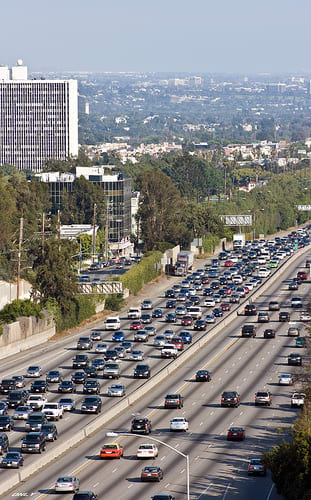
Los Angeles traffic on I405. Photo credit H4NUM4N via Flickr.

While traffic problems have stagnated along with the economy, an annual study suggests that too little progress is being made toward ensuring that the nation's transportation system will be able to keep up with job growth when the economy does return.
The 2011 Urban Mobility Report, published by the Texas Transportation Institute at Texas A&M University, illustrates congested conditions in 2010 on a number of levels:
The amount of delay endured by the average commuter was 34 hours, up from 14 hours in 1982.
The cost of congestion is more than $100 billion, nearly $750 for every commuter in the U.S.
“Rush hour” is six hours of not rushing anywhere.
Congestion is becoming a bigger problem outside of “rush hour,” with about 40 percent of the delay occurring in the mid-day and overnight hours, creating an increasingly serious problem for businesses that rely on efficient production and deliveries.
The economic recession has only provided a temporary respite from the growing congestion problem. When the economic growth returns, the average commuter is estimated to see an additional three hours of delay by 2015 and 7 hours by 2020. By 2015, the cost of gridlock will rise from $101 billion to $133 billion — more than $900 for every commuter, and the amount of wasted fuel will jump from 1.9 billion gallons to 2.5 billion gallons — enough to fill more than 275,000 gasoline tanker trucks.
“If you invest in roads and transit, you get better service and access to more jobs,” says Tim Lomax, one of the study's authors. “Traffic management and demand management should be part of the mix, too. Generally speaking, mobility investments in congested areas have a high return rate.”
That connection was well illustrated in the 1960s, when the nation experienced its longest uninterrupted expansion in history, fueled in part by federal investment in the Interstate Highway System.
The interstate highway system grew rapidly from the late 1950s to the mid-1980s and the U.S. economy grew along with it. Since then, growth in the interstate system has virtually stopped.
“The only way U.S. companies have been able to keep their products competitive in the face of increasing traffic congestion and rising transportation costs is to squeeze every ounce of efficiency they can out of their supply chain, says TTI Research Scientist David Ellis. “But there is a limit to efficiency and without additional transportation capacity, transportation costs will increase significantly. The result will be higher prices and lost jobs.”
The UMR uses traffic volume data from the states and traffic speed data from INRIX, a leading private-sector provider of travel time information. The combination produces a thorough and detailed illustration of traffic problems in 439 U.S. urban areas.
The report underscores the traffic-economy connection that was outlined in another study published in June by the Texas 2030 Committee – It's About Time: Investing in Transportation to Keep Texas Economically Competitive. Although the study focused on Texas, the implications are the same in every state. The typical commuter feels the impact of congestion in the form of stress and wasted time. But for manufacturers and shippers that wasted time has a direct bottom line impact. Efficiency suffers, prices go up, and employment weakens.
“Congestion does more than choke our highways, it chokes our economy, making it harder to buy what we need and harder to keep or find a job,” Lomax says. “That's a bad thing – especially when our economic recovery is so fragile.”
The most economical and effective congestion solutions involve traditional road building and transit use, combined with traffic management strategies such as signal coordination and rapid crash removal, and demand management strategies like telecommuting and flexible work hours. Land use and development patterns can play a positive role, as well.
The researchers stress that there is no single best way to fix the problems. The best solutions, they say, will come from efforts that have meaningful involvement from everyone concerned – agencies, businesses and travelers.
A copy of the full report, along with data tables and other supporting materials, can be found here.
The Texas Transportation Institute, headquartered in College Station, Texas, is an agency of The Texas A&M University System.
More Bus
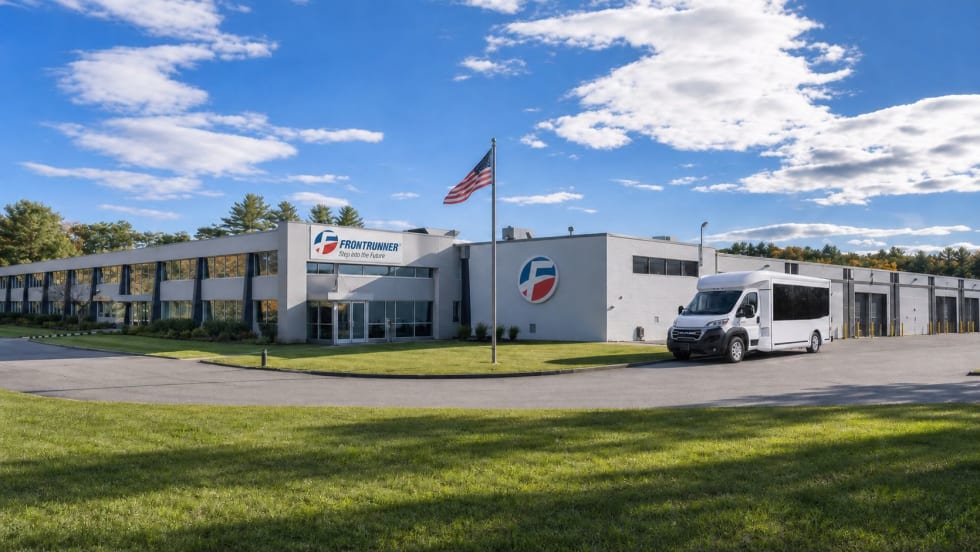
Frontrunner Bus Group Expands with New Massachusetts Headquarters
The significantly larger facility will provide the infrastructure needed to support the company’s growing workforce, advanced technologies, and expanding product line.
Read More →
Joshua Schank on Transportation Innovation, Risk, and the Future of Mobility
In this edition of METROspectives, Joshua Schank discusses lessons from launching LA Metro’s Office of Extraordinary Innovation, the challenges of advancing new mobility technologies, and much more.
Read More →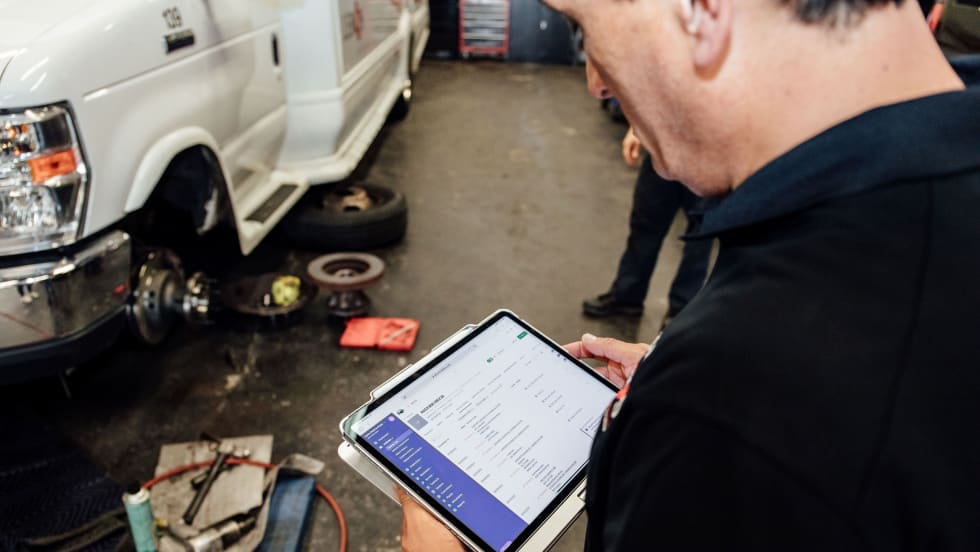
Reinventing Fleet Maintenance with Real-time Visibility and AI
Transit leaders need to know what needs fixing, where to look, who is responsible, when work is completed, and what it costs without having to chase information across disconnected systems.
Read More →
SamTrans Sets Priorities for Potential Connect Bay Area Revenue
The board-approved framework allocates future funding to maintaining service, rider improvements, equity initiatives, and infrastructure repairs.
Read More →
When Routine Fails: How Public Transit Must Adapt for the World Cup
The 2026 FIFA World Cup will test transit agencies’ ability to manage unpredictable travel patterns, making real-time data and operational flexibility critical to moving millions of visitors efficiently.
Read More →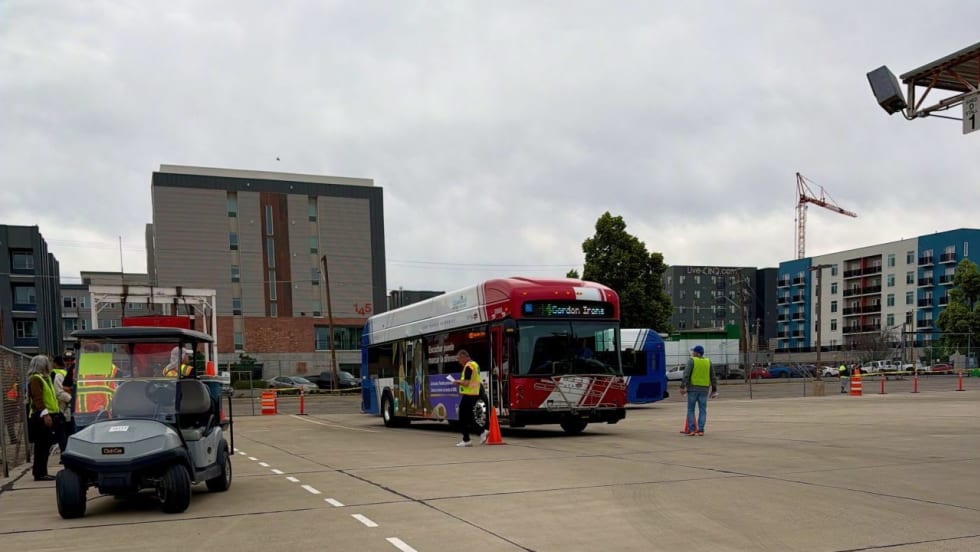
Photo Highlights from APTA's 2026 Mobility Conference
The photo gallery captures scenes from the conference, including the International Bus Roadeo, exhibit hall activities, the Bus Showcase, and much more.
Read More →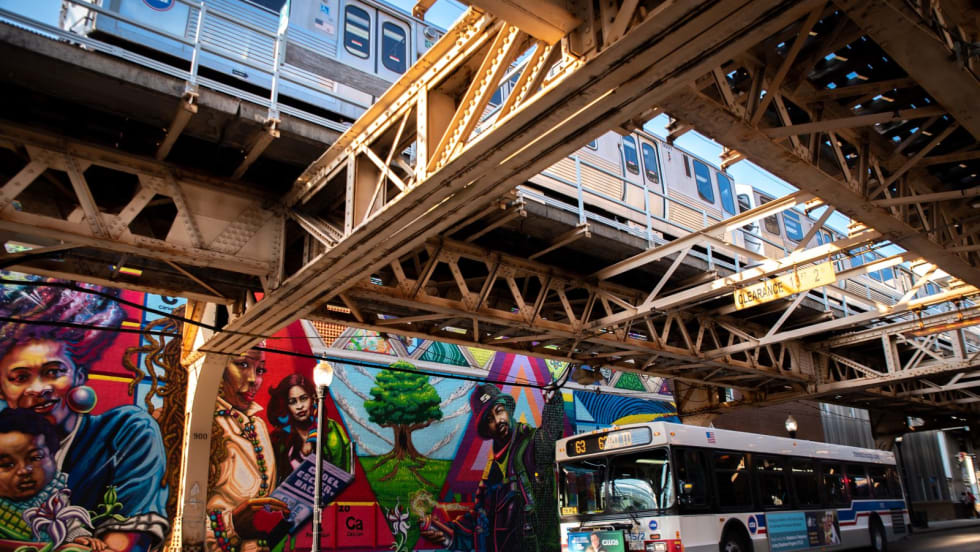
Chicago's NITA Act Moves Into Next Phase as Service Improvements Begin
Rider-focused improvements will begin rolling out across the system immediately as CTA, Metra, and Pace increase service this summer in the six-county region.
Read More →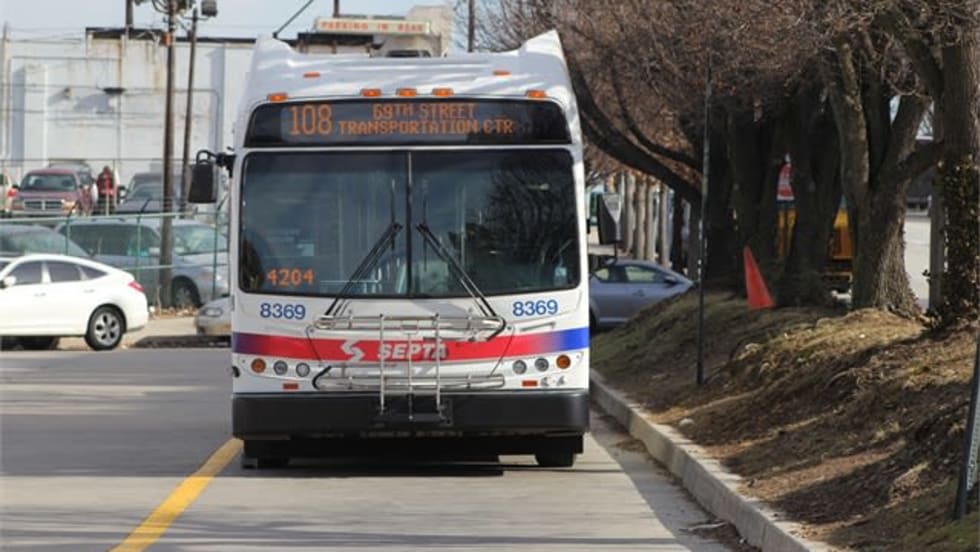
Philadelphia's SEPTA Approves Annual Transit Service Plan
Between 2021 and 2024, SEPTA held more than 200 public meetings — including 144 in-person sessions — throughout the SEPTA service region.
Read More →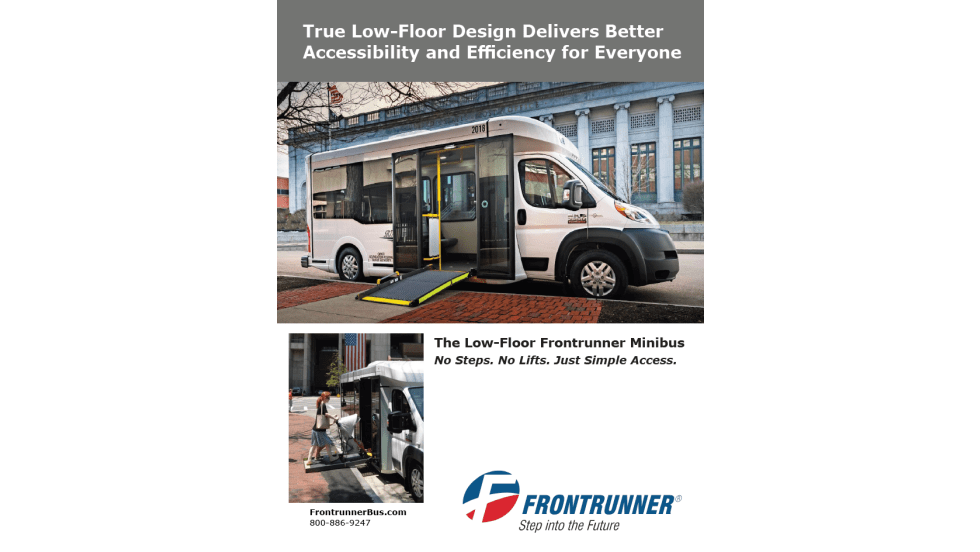
A True Low-Floor Minibus Design Delivers Better Accessibility and Efficiency for Everyone
As transit demands evolve, so should your fleet. Download the whitepaper to see how the Low-Floor Frontrunner Minibus compares to traditional options.
Read More →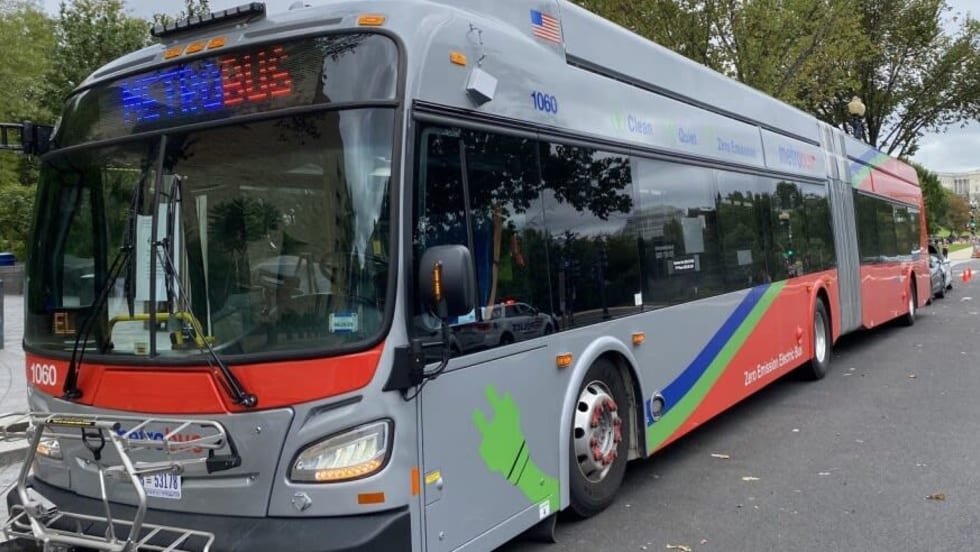
WMATA Debuts 'Fares Pay for Service' Awareness Campaign
The campaign was highlighted during a media event at the Paul S. Sarbanes Transit Center in Silver Spring, where WMATA’s GM/CEO Randy Clarke joined Metro Transit Police officers, WMATA management team, board members, and staff to expand fare enforcement and customer education efforts on Metro Bus routes throughout the region.
Read More →