



LADOT unveils MCI alternative-fueled commuter coaches
The new buses will be used on LADOT's "Commuter Express" service and replace 95 older, diesel powered buses. The nearly $67 million purchase also makes the fleet 100% CNG driven, joining its 200 "DASH" shuttle buses, which are already 100% alternatively propelled.

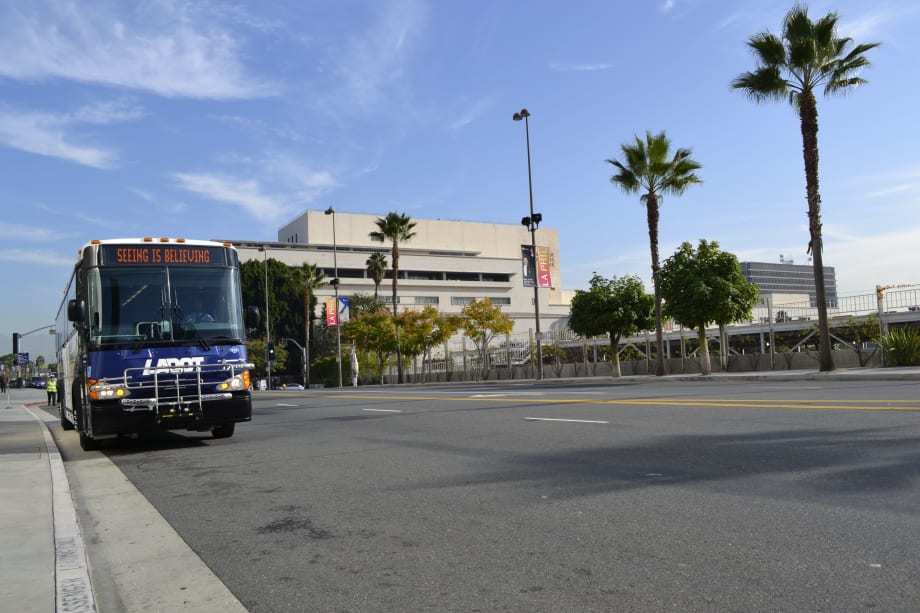
On Wednesday, the Los Angeles Department of Transportation (LADOT) celebrated the arrival of the first of 95 new Motor Coach Industries (MCI) Commuter Coaches, powered by compressed natural gas (CNG), with a ceremony outside of the Disney Concert Hall.
The new buses will be used on LADOT's "Commuter Express" service and replace 95 older, diesel powered buses. The nearly $67 million purchase also makes LADOT's Commuter Express fleet 100% CNG driven, joining its 200 "DASH" shuttle buses, which are already 100% alternatively propelled.
"Angelenos have made it clear that they want transportation choices," said Los Angeles Councilmember and Chair of the city's transportation committee, Bill Rosendahl, who was joined at the ceremony by fellow councilmember Jan Perry and officials from both LADOT and MCI. "They don't want to have to jump in a car for every trip they make. These new clean, green, comfortable buses are delivering an attractive alternative to the automobile."
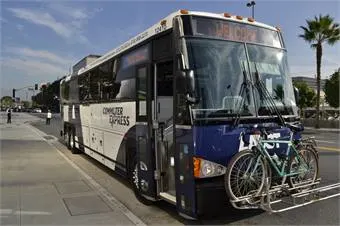
The new buses, which also feature three bike racks for a true multimodal ride, are the only over-the-road style commuter coaches available that meet requirements set by the Federal Transit Administration (FTA), the California Air Resource Board and the South Coast Air Quality Management District for public transit operators.
"These new Commuter Express buses will give customers a convenient and comfortable alternative to driving," said LADOT GM Jaime de la Vega. "They also are part of the City of Los Angeles' on-going commitment to greening our transportation system."
In addition to running cleaner, the buses also have an increased seating capacity, holding up to 49 passengers compared with 43 to 45 on the old vehicles. Each bus also features reclining cushioned seats, individual reading lights and air flow control for improved passenger comfort.
LADOT secured $48,451,041 in FTA grant funding, for 79 of the 95 buses, or approximately 72% of the total cost of $66,975,000. Sixteen of the buses paid for using ARRA funding.
The new buses will be introduced into service by LADOT starting Dec. 5, 2011.
More Bus

People Movement: Dan Dipert Coaches Adds Third-Generation Leader, Keolis Names New Valley Metro VP/GM, and More
In this edition, we also cover recent appointments and announcements at the Wabtec, SilverRide, HNTB, and more, showcasing the individuals helping to shape the future of transportation.
Read More →
New York MTA Plans Largest Bus Fleet Upgrade in More Than a Decade
The agency is seeking manufacturers for 650 new CNG buses to replace aging vehicles, improve reliability, and advance its broader fleet modernization strategy.
Read More →
Building a Flexible Path to Transit Electrification
John Hroncich discusses BAE Systems’ modular and scalable approach, lessons learned from decades of real-world operations, and how agencies can identify electrification strategies that fit their fleets.
Read More →
Bus Tech Talk: Keeping Transit Technicians Ahead of the Technology Curve
LA Metro’s Obed Mejia discusses technician training, evolving maintenance technology, fleet replacement, and strategies for getting the most out of today’s transit fleets.
Read More →
Biz Briefs: RIPTA Unveils New Frontrunners, Clevland RTA Adds New Siemens, and More
In METRO's latest installment, we take a look at recent news from Siemens, Prevost, Dodge, and more partnerships making headlines across the transportation sector.
Read More →
People Movement: Holly Arnold Joins Transdev and More
In this edition, we also cover recent appointments and announcements at Pace, CamTran, MCI, and more, showcasing the individuals helping to shape the future of transportation.
Read More →
The High Cost of Transit Buses: Industry Leaders Look to Procurement Reform
Transit leaders and policymakers examine how standardized bus designs, streamlined procurement, and predictable funding could help agencies stretch budgets and deliver better service.
Read More →
The Business Voice Behind Public Transportation
As chair of APTA’s Business Members Board of Governors, Ray Melleady explains how more than 850 business members are partnering with transit agencies to advance funding, innovation, and industry-wide collaboration.
Read More →
From Surviving to Thriving: Building Stronger Transportation Organizations
Bus Business Consultants founder Brian Dickson shares lessons on leadership, organizational health, and creating options for long-term success in a changing transportation industry.
Read More →
Finding the ‘Happy Medium’: Optimizing Maintenance Without Sacrificing Reliability
The key to maintenance optimization isn’t doing less work—it’s doing the right work at the right time on the right assets.
Read More →