



MCI's 6000th unit rolls off E/J line
The new MCI J4500s feature a new, smooth, wide-ride suspension, electronic stability control, fire suppression system, tire-pressure monitoring and the newest clean-diesel engine technology.

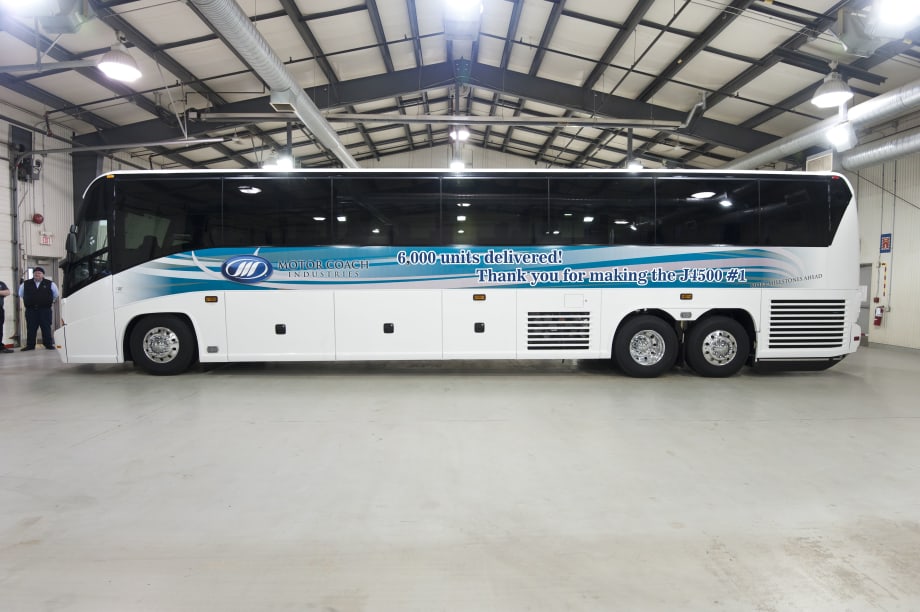
"Everyone at MCI has an important role in providing our customers with industry leading, quality coaches," said Bryan Couch, MCI VP/GM, operations. "Achieving this milestone coincides with our J4500 coach ranking as North America's best-selling intercity coach, a distinction it has enjoyed for seven years running. We take great pride in this accomplishment. We appreciate the trust our customers place in MCI models to transport their passengers in comfort, safety and reliability and the confidence they have knowing that MCI will continue to innovate and build the coaches best suited to their needs."
The Shriners and all MCI customers should notice a new trend of continuous improvement, according to the company. Internally, MCI has a number of Business Excellence programs underway including the MCI Reliability Team — a management-level taskforce emphasizing the importance and rigorous standards of quality and reliability throughout MCI's product line.
The new MCI J4500s feature a new, smooth, wide-ride suspension, electronic stability control, fire suppression system, tire-pressure monitoring and the newest clean-diesel engine technology.
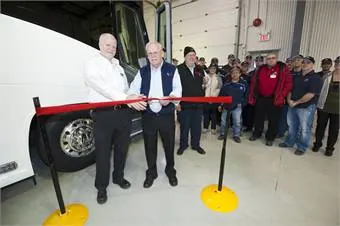
Bryan Coach (left) MCI VP/GM, operations marks milestone of 6000th coach of the e/j assembly line with Shriner Care
executive Jim Harrison.
Based in Burnaby, B.C., the Shriners of British Columbia and Yukon operate what is now a fleet of five Shriners Care Cruisers; all MCI models that include three J4500s, an E4500 and a 102C.
The J4500s used by the Shriners Care Cruisers program require special features to transport sick children, including medical chairs that can fully recline as well as assist a patient to a standing position; wide, accessible lavatories; galleys; docking space for stretchers; hospital beds or couches; and additional HVAC equipment to make sure the coach can maintain a constant 72-degree interior even in the coldest Canadian winters. The floors are also heavily carpeted so children can play during their ride.
More Bus

New York MTA Plans Largest Bus Fleet Upgrade in More Than a Decade
The agency is seeking manufacturers for 650 new CNG buses to replace aging vehicles, improve reliability, and advance its broader fleet modernization strategy.
Read More →
Building a Flexible Path to Transit Electrification
John Hroncich discusses BAE Systems’ modular and scalable approach, lessons learned from decades of real-world operations, and how agencies can identify electrification strategies that fit their fleets.
Read More →
Bus Tech Talk: Keeping Transit Technicians Ahead of the Technology Curve
LA Metro’s Obed Mejia discusses technician training, evolving maintenance technology, fleet replacement, and strategies for getting the most out of today’s transit fleets.
Read More →
Biz Briefs: RIPTA Unveils New Frontrunners, Clevland RTA Adds New Siemens, and More
In METRO's latest installment, we take a look at recent news from Siemens, Prevost, Dodge, and more partnerships making headlines across the transportation sector.
Read More →
People Movement: Holly Arnold Joins Transdev and More
In this edition, we also cover recent appointments and announcements at Pace, CamTran, MCI, and more, showcasing the individuals helping to shape the future of transportation.
Read More →
The High Cost of Transit Buses: Industry Leaders Look to Procurement Reform
Transit leaders and policymakers examine how standardized bus designs, streamlined procurement, and predictable funding could help agencies stretch budgets and deliver better service.
Read More →
The Business Voice Behind Public Transportation
As chair of APTA’s Business Members Board of Governors, Ray Melleady explains how more than 850 business members are partnering with transit agencies to advance funding, innovation, and industry-wide collaboration.
Read More →
From Surviving to Thriving: Building Stronger Transportation Organizations
Bus Business Consultants founder Brian Dickson shares lessons on leadership, organizational health, and creating options for long-term success in a changing transportation industry.
Read More →
Finding the ‘Happy Medium’: Optimizing Maintenance Without Sacrificing Reliability
The key to maintenance optimization isn’t doing less work—it’s doing the right work at the right time on the right assets.
Read More →
LA Metro, City of West Hollywood, and Partners Advance Smarter Bus Lane Enforcement
The award-winning partnership combines AI-powered detection with human oversight to improve bus reliability, accessibility, and enforcement efficiency.
Read More →