



NTSB releases statements on Hours of Service, driver cell phone ban
Says FMCSA and states need to partner on HOS to ensure compliance, the industry needs to support the rule with comprehensive Fatigue Risk Management Systems, and that the U.S. DOT should have gone further in prohibiting interstate truck and bus drivers from using hand-held cell phones while operating their vehicles.

National Transportation Safety Board (NTSB) Deborah Hersman released statements on a new Federal Motor Carrier Safety Administration (FMCSA) Hours of Service (HOS) rule and a new rule on cell phone use for commercial drivers:
“For more than two decades, the NTSB has called for changes in HOS rules for commercial drivers. In that time, a final HOS rule has been stuck in a perpetual traffic circle of rulemaking actions, legal challenges, and court decisions. I applaud Transportation Secretary Ray LaHood and FMCSA Administrator Anne Ferro for their leadership and determination in finalizing this HOS rule and hope that it will result in forward progress on safety.
The NTSB has investigated too many highway crashes involving commercial vehicles in which we identified the driver's fatigue as a contributing factor to the accident. [The] new rule is an important step forward, but without a strong program by FMCSA and its State partners to ensure compliance with these new HOS requirements, it will only be as good as the paper it is written on. We encourage FMCSA to continue its work on a number of fronts, including its proposed rule for mandatory use of Electronic On-Board Recorders (EOBRs), which offer the most promising technology for monitoring HOS compliance for all carriers.
Addressing fatigue is not the sole responsibility of the DOT. The industry needs to support this rule with comprehensive Fatigue Risk Management Systems that reduce the risk of fatigue through education and diagnosis and treatment of sleep disorders. Drivers need to be rested and ready when they take to the highways so that everyone arrives at their destination safely.”
“The [U.S Department of Transportation’s (U.S. DOT) new rule prohibiting interstate truck and bus drivers from using hand-held cell phones while operating their vehicles is another positive step forward in improving safety on our nation's roadways.
However, given what we've seen in our accident investigations, and as we commented in the NPRM, we think that the U.S. DOT should have gone further. Research shows there is no safety benefit to the use of hands-free cell phone devices. When at the wheel of a 40-ton vehicle, driving safely should be the driver's only focus.
As early as 2006, the NTSB was concerned about the impact of distracted driving on commercial drivers when we investigated a crash involving an experienced motorcoach driver, distracted on his hands-free cell-phone, failed to move to the center lane and struck the underside of an arched stone bridge on the George Washington Parkway in Alexandria, Va. Eleven of the 27 high school students on board his bus were injured. As a result, we made a recommendation to prohibit the use of cell phones, hand-held or hands-free, by commercial drivers with a passenger endorsement.
Earlier this fall, following the investigation of a 2010 crash in Munfordville, Ky., a truck-tractor crossed the median of I-44 and struck a 15-passenger van killing 11 people, the NTSB called for a complete ban on the use of cell phones by all drivers holding a commercial driver's license, except in emergencies. According to interviews conducted after the crash, the truck driver normally used a hands-free device.
And just last week, after concluding an investigation of a highway accident that killed two and injured 38, the NTSB called on the 50 states and the District of Columbia to ban the nonemergency use of portable electronic devices for all drivers.
We are witnessing a disturbing trend in accident and incident investigations — the ever-present cell phone poses an insidious danger when it comes to cognitive distractions behind the wheel.”
More Motorcoach

Reinventing Fleet Maintenance with Real-time Visibility and AI
Transit leaders need to know what needs fixing, where to look, who is responsible, when work is completed, and what it costs without having to chase information across disconnected systems.
Read More →
ABA's Ferguson Testifies in Support of BUS Act, National Standards for Bus Operators
The BUSES Act would create a nationwide framework preventing state and local governments from enforcing bus idling restrictions of less than 15 minutes, a threshold consistent with existing Environmental Protection Agency guidance.
Read More →
A True Low-Floor Minibus Design Delivers Better Accessibility and Efficiency for Everyone
As transit demands evolve, so should your fleet. Download the whitepaper to see how the Low-Floor Frontrunner Minibus compares to traditional options.
Read More →
2026 METRO Buyer’s Guide & Directory
Searching for the right vehicles, technology, equipment, or services for your public transit or motorcoach operation? This industry guide brings together manufacturers and suppliers from across the transportation market — all in one place. Download it to connect with the companies that help agencies and operators improve mobility, enhance operations, and move their organizations forward.
Read More →
ABA Foundation’s 2025 Motorcoach Census Highlights Industry Growth, 77K Jobs
Conducted annually by Tourism Economics, the study found that 1,769 companies operating 49,543 motorcoaches are based in the US, while 122 companies operating 1,425 motorcoaches are located in Canada.
Read More →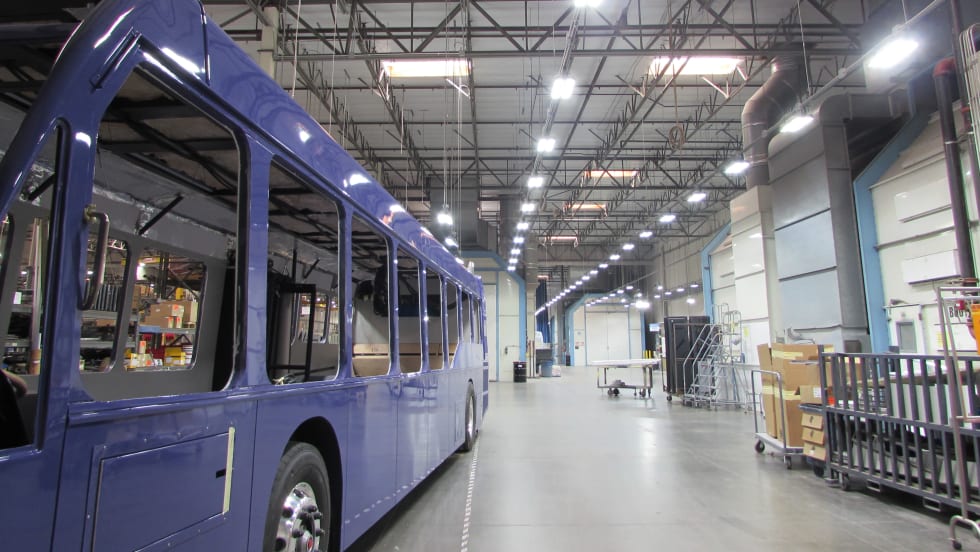
ENC Lands Additional 10-Bus Order From Academy Bus
The latest purchase brings Academy Bus’ AXESS fleet orders to 35 vehicles as ENC continues expanding its heavy-duty transit lineup.
Read More →
American Bus Association Files Lawsuit Against NYC Over Bus Idling Rules
The lawsuit, filed in the U.S. District Court for the Southern District of New York, challenges the City’s use of its Citizens Air Complaint program.
Read More →
Avoiding Mid-Season Breakdowns: A Fleet Readiness Q&A
John Hatman, COO of Master’s Transportation, breaks down the priorities, warning signs and common mistakes fleet managers should address now to stay ahead of summer demand.
Read More →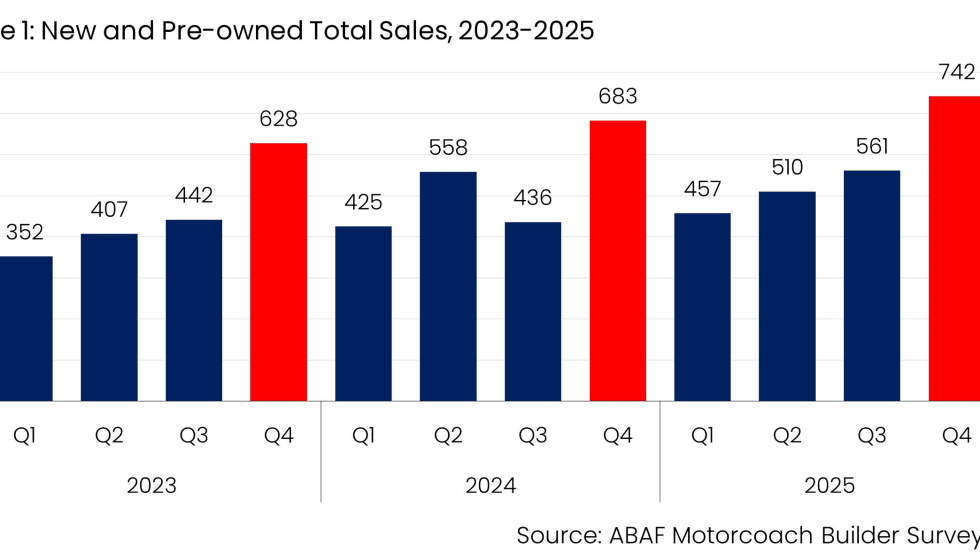
ABA Report: Motorcoach Sales Tick Up in Q1 2026 as Market Stabilizes
The Foundation produces the report each quarter, using data collected from surveys of major motorcoach manufacturers that sell vehicles in the US and Canada.
Read More →
How the Motorcoach Industry Supports Disaster Response and National Preparedness
Fred Ferguson, president and CEO of the American Bus Association (ABA), discussed how the industry prepares for emergencies, the growing recognition of motorcoaches as critical infrastructure, and steps operators can take to strengthen disaster readiness.
Read More →