



Top 10 states for LEED green buildings
The District of Columbia leads the nation, with more than 31 square feet of LEED-certified space per person in 2011, with Colorado being the leading state, with 2.74 square feet per person in 2011.

The U.S. Green Building Council (USGBC) released its 2011 list of top 10 states for LEED-certified commercial and institutional green buildings per capita, based on the U.S. 2010 Census information. The District of Columbia leads the nation, with more than 31 square feet of LEED-certified space per person in 2011, with Colorado being the leading state, with 2.74 square feet per person in 2011.
Other top states include Illinois, Virginia and Washington, with 2.69, 2.42 and 2.18 square feet of LEED-certified space per person, respectively. The top LEED states per capita, including the District of Columbia:
Sq. ft. of space to earn LEED-certification in 2011 | Per capita | |
District of Columbia | 18,954,022 | 31.50 |
Colorado | 13,803,113 | 2.74 |
Illinois | 34,567,585 | 2.69 |
Virginia | 19,358,193 | 2.42 |
Washington | 14,667,558 | 2.18 |
Maryland | 11,970,869 | 2.07 |
Massachusetts | 13,087,625 | 2.00 |
Texas | 50,001,476 | 1.99 |
California | 71,551,296 | 1.92 |
New York | 36,538,981 | 1.89 |
Minnesota | 9,591,445 | 1.81 |
LEED is the internationally recognized mark of green building excellence, with more than 44,000 commercial projects participating, comprising over eight billion square feet of construction space in all 50 states and 120 countries. In addition, more than 16,000 homes have been certified under the LEED for Homes rating system, with more than 67,000 more homes registered.
"Our local green building chapters from around the country have been instrumental in accelerating the adoption of green building policies and initiatives that drive construction locally," said Rick Fedrizzi, president, CEO & founding chair, USGBC. "These states should be recognized for working to reinvent their local building landscapes with buildings that enliven and bolster the health of our environment, communities and local economies."
Notable newly certified projects in 2011 include the Treasury Building in Washington, D.C., which is distinguished as the oldest LEED-certified project in the world; the LEED-Platinum Casey Middle School in Boulder, Colo.; the iconic Wrigley Building in Chicago; Frito-Lay in Lynchburg, Va., which earned LEED Gold for the operations and maintenance of an existing building; the LEED Silver Hard Rock Café in Seattle; Anne Arundel Medical Center in Annapolis, Md.; Yawkey Distribution Center of The Greater Boston Food Bank in Mass.; the LEED Gold Austin Convention Center in TX; San Francisco International Airport's LEED Gold Terminal 2 in San Francisco; the LEED-Platinum Hotel Skylar in Syracuse, N.Y.; and the LEED Platinum Marquette Plaza in Minneapolis, Minn.
In December 2011, USGBC announced that LEED-certified existing buildings outpaced their newly built counterparts by 15 million square feet on a cumulative basis. A focus on heightened building performance through green operations and maintenance is essential to cost-effectively driving improvements in the economy and the environment.
For the full list of LEED-certified projects visit: usgbc.org/press.
More Technology

ETA CEO John Maglio on Transit Technology, Innovation, and Building Agency Trust
ETA founder and CEO John Maglio explores the evolution of transit technology, the importance of reliable systems, and how stronger partnerships can help agencies improve operations and the passenger experience.
Read More →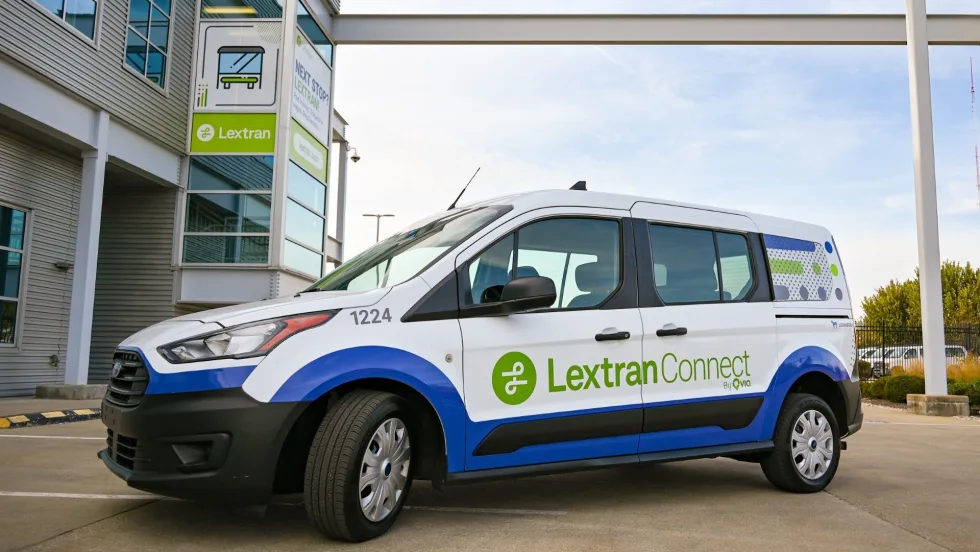
Lextran, Via Team for On Demand, HDR to Work on Twin Cities BRT, and More
In METRO's latest installment, we also take a look at recent news from Keolis, Complete Coach Works, Anchor Transportation, and more partnerships making headlines across the transportation sector.
Read More →
Caltrain’s Electrification Drives a New Era of Ridership Growth
The railroad’s shift to electric service has brought more frequent trains, stronger customer satisfaction, and increased ridership, earning it APTA’s Outstanding Public Transportation System award.
Read More →
Video Surveillance in Public Transit: What Riders Really Think
As video surveillance gains public acceptance, new research from Axis Communications reveals what transit riders expect from agencies when it comes to safety, privacy, and AI.
Read More →
New York MTA Launches Historic $1.9B Signal, Track Modernization Project
Funded in part by congestion pricing revenue, the project will replace nearly century-old signals along the A and C lines in Brooklyn and Queens.
Read More →
Biz Briefs: New Electric Offering from Alexander Dennis/Volvo, Transdev in Boston, and More
In METRO's latest installment, we also take a look at recent news from STV, WSP, Prevost, and more partnerships making headlines across the transportation sector.
Read More →
Roman Cornell on ABC Companies’ Evolution and the Future of Passenger Transportation
The company’s CEO discusses carrying forward a third-generation family legacy, ABC’s continued evolution in passenger transportation, support for increasingly complex fleets, and how technology and continued investment could help operators improve uptime.
Read More →
ETA CEO John Maglio on Transit Technology, Innovation, and Building Agency Trust
ETA founder and CEO John Maglio explores the evolution of transit technology, the importance of reliable systems, and how stronger partnerships can help agencies improve operations and the passenger experience.
Read More →
Frontrunner Bus Group Introduces XF Low-Floor Bus with Enhanced Accessibility
The new mid-sized bus features a full flat-floor design, eight-inch curbside step-in height, and zero-entry rear ramp to improve passenger access and operational flexibility.
Read More →
Building a Flexible Path to Transit Electrification with BAE's John Hroncich
John Hroncich discusses BAE Systems’ modular and scalable approach, lessons learned from decades of real-world operations, and how agencies can identify electrification strategies that fit their fleets.
Read More →