



Chicago Transit approves $1.39B budget for 2013
The plan maintains current service levels, freezes base fares, and continues investment to modernize and repair infrastructure to best serve customers.

The Chicago Transit Authority (CTA) approved the 2013 budget of $1.39 billion, a spending plan that maintains current service levels, freezes base fares, and continues investment to modernize and repair infrastructure to best serve customers.
The board of directors passed the budget following two public hearings on the 2013 budget held in December. The budget eliminates a projected deficit of $165 million through management efficiencies, improved labor cost management and a slight increase in CTA fare pass prices to bring them in line with other major U.S. cities, the first increase in four years. Revenues from fare passes will rise by 10%.
The 2013 budget is the second consecutive budget that preserves capital investment in the CTA’s bus and rail systems for years to come by not diverting scarce capital funds to balance the operating budget, a past practice that delayed critical infrastructure projects.
According to the Chicago Civic Federation, the 2013 CTA budget is the first structurally balanced budget in seven years. Between 2008 and 2011, the CTA borrowed more than half a billion dollars to pay for operating expenses, often at the expense of capital investments in the system’s aging infrastructure.
The budget reflects a historic tentative labor agreement with the Amalgamated Transit Union Locals #241 and #308, which are CTA’s largest unions and represent more than 7,000 bus and rail operators. The four-year tentative agreement slows the rate of growth in health care spending and emphasizes preventive care, among changes shaving approximately $50 million off the 2013 budget deficit. Agreements with a dozen other CTA unions resulted in similar changes contributing nearly $10 million of savings.
The budget also reflects management reforms that have already been put into place and continued reforms, including improved supply management practices, which are expected to save the agency an additional $50 million of costs annually.
The third component of CTA’s strategy to ensuring fiscal stability includes modest price changes to its fare passes that will generate about $56 million of new revenue for the agency. Base fares remain unchanged at $2 for bus and $2.25 for rail. The prices for passes (3-day, 7-day and 30-day) will be increased by $6, $5 and $14, respectively, but still will provide significant discounts to frequent transit users. The one-day pass, primarily used by tourists, will have its price increased to $10. CTA pass discounts are currently the second-most generous of major U.S. cities.
An additional fare change that was approved by the board was a $5 fare on transit trips originating at the O’Hare Blue Line station, which includes a $2.75 surcharge in addition to the base full fare of $2.25. After reviewing public feedback on the proposed $5 fare, the board agreed that the CTA will work with the Chicago Department of Aviation to develop a system to exempt employees working on O’Hare International Airport property. Until that system is developed, the board approved a temporary solution through July 1, 2013 that will exempt all riders using Chicago Card or Chicago Card Plus cards from paying the full $5 fare, giving airport workers more options to avoid the surcharge that is intended primarily for visitors and infrequent users.
CTA will work with employers that have operations at O’Hare to encourage employees who currently use magnetic strip pay-per-ride cards to sign up for Chicago Card or Chicago Card Plus.
The budget also includes fare reductions for Chicago Public Schools students. To encourage school attendance, students currently paying 85 cents will only pay 75 cents.
The CTA’s fiscal reforms are significant considering the agency’s chronic underfunding under a 30-year-old state funding formula, which ignores both number of rides and ridership capacity. CTA provides 82% and 58%, respectively, in exchange for just 49% of state funding. Also, state and federal mandates require the CTA to provide more than $100 million each year in free and heavily discounted rides. The state provides only $28 million to help offset the cost of its mandates.
Most significantly, the General Assembly in 2008 — just before the Great Recession ground the economy to a halt — required immediate and fully-funded pension and health care trusts. Although new revenue was passed as part of the 2008 mandate, it fell $100 million short of covering the new costs. In 2013, the CTA’s operating budget will grow by $32 million because of mandates from the 2008 legislation.
In addition to notable fiscal reforms, CTA continues its aggressive plan to modernize its transit system. Over the last 18 months Mayor Emanuel and the CTA have launched more than $2 billion in modernization projects, upgrading aging infrastructure and improving the customer experience. The 2013-2017 Capital Improvement Program (CIP) totals $2.8 billion, with projects designed to modernize aging CTA infrastructure, overhaul and replace fleet vehicles, and bring the system into a state of good repair. The projects represent more than $4 billion in modernization work that has already begun under Mayor Emanuel, or will in the next couple of years.
The CTA has financed more transit police and built a sophisticated camera surveillance network that’s driven down crime. More than 100 rail station improvement projects have been completed; replacement of the bus and rail fleet is underway; and contracts have been let to eradicate slow zones. Work is under preparation for construction of a new railroad on Chicago’s south side. Better management has reduced absenteeism and workers compensation costs, and a modern supply chain is nearly in place. New technologies, from Bus and Train Tracker to contactless fare media, are making CTA travel more convenient, safer, and efficient.
Ridership has increased significantly in the past 19 months, jumping by 5.4% or more than 28 million new rides.
More Bus

Finding the ‘Happy Medium’: Optimizing Maintenance Without Sacrificing Reliability
The key to maintenance optimization isn’t doing less work—it’s doing the right work at the right time on the right assets.
Read More →
LA Metro, City of West Hollywood, and Partners Advance Smarter Bus Lane Enforcement
The award-winning partnership combines AI-powered detection with human oversight to improve bus reliability, accessibility, and enforcement efficiency.
Read More →
PSTA Modernizes Workforce Management with Digital Bidding System
The award-winning Workforce Transit Modernization project replaced paper bidding with a transparent digital platform, cutting administrative effort while improving access for operators.
Read More →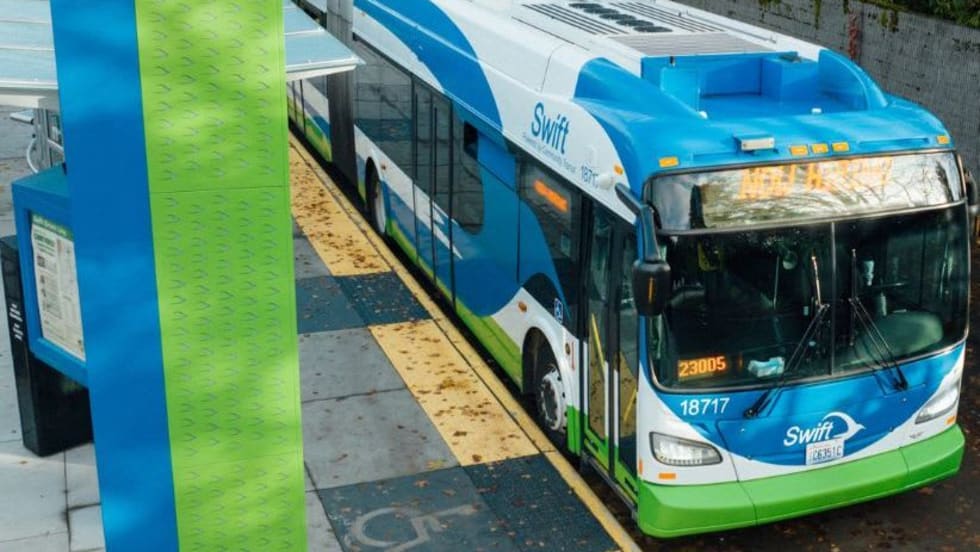
Washington's Community Transit Sets Six-Year Roadmap for Growth, Expansion
Approved TDP targets more bus service, new mobility options, Swift BRT expansion, and a potential Everett Transit annexation.
Read More →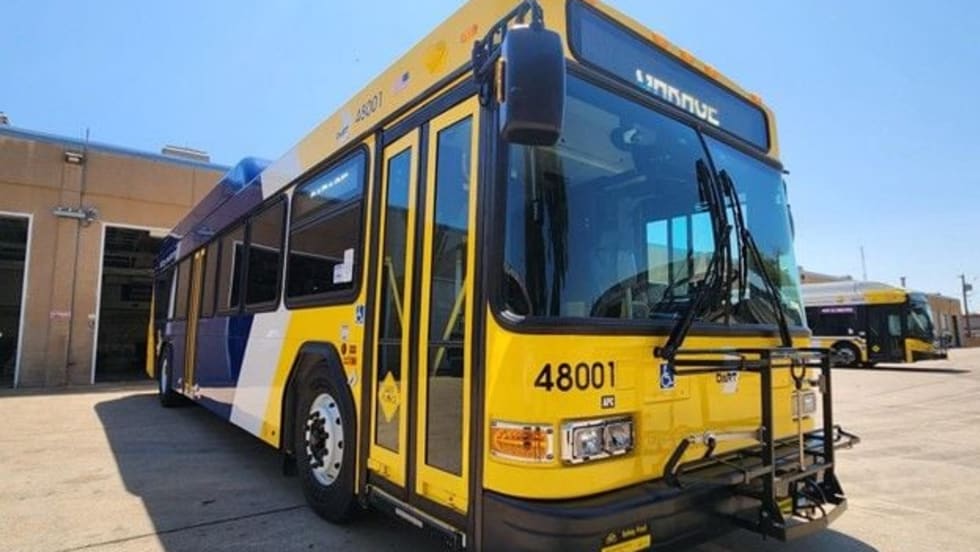
DART Customer Satisfaction Reaches Six-Year High
Overall satisfaction rose to 74.9%, while the agency’s Net Promoter Score reached a record 33.7.
Read More →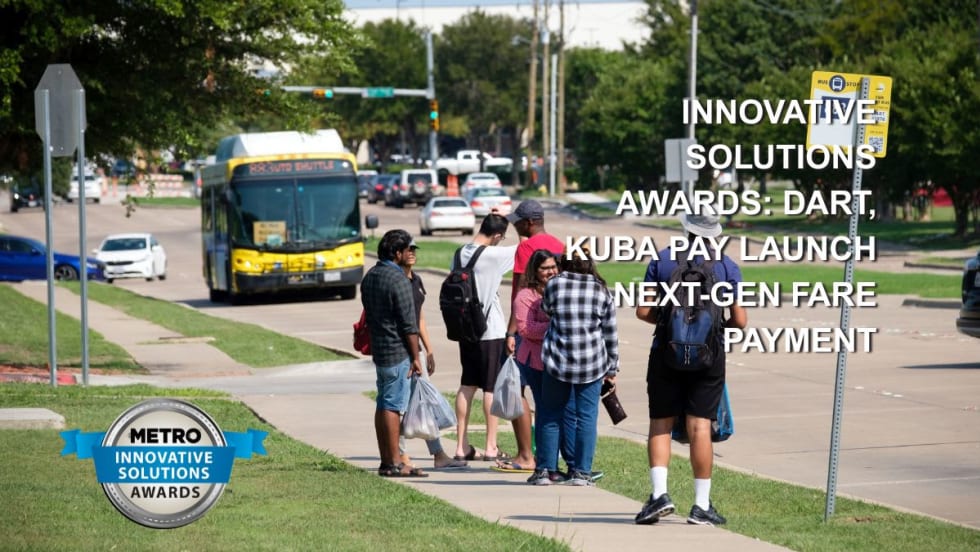
How DART's GoPass Is Redefining Regional Mobility
Serving 14 transit agencies, GoPass simplifies multimodal travel by allowing riders to plan, pay for, and manage an entire trip through one app.
Read More →
Biz Briefs: OCTA Taps Clean Energy for Hydrogen Station, Stadler to Supply Via Rail Vehicles, and More
From manufacturers and suppliers to transit agencies and motorcoach operators, these updates offer a snapshot of the projects, partnerships and business moves driving the industry forward.
Read More →
METRO Magazine Announces 2026 Innovative Solutions Awards Winners
Projects Recognized for Advancing Mobility Through Technology, Accessibility, Workforce Innovation, and Operational Excellence
Read More →
Biz Briefs: STV teams with Amtrak, Motorcoach Operators Boost Fleet and Land Contracts, and More
From manufacturers and suppliers to transit agencies and motorcoach operators, these updates offer a snapshot of the projects, partnerships and business moves driving the industry forward.
Read More →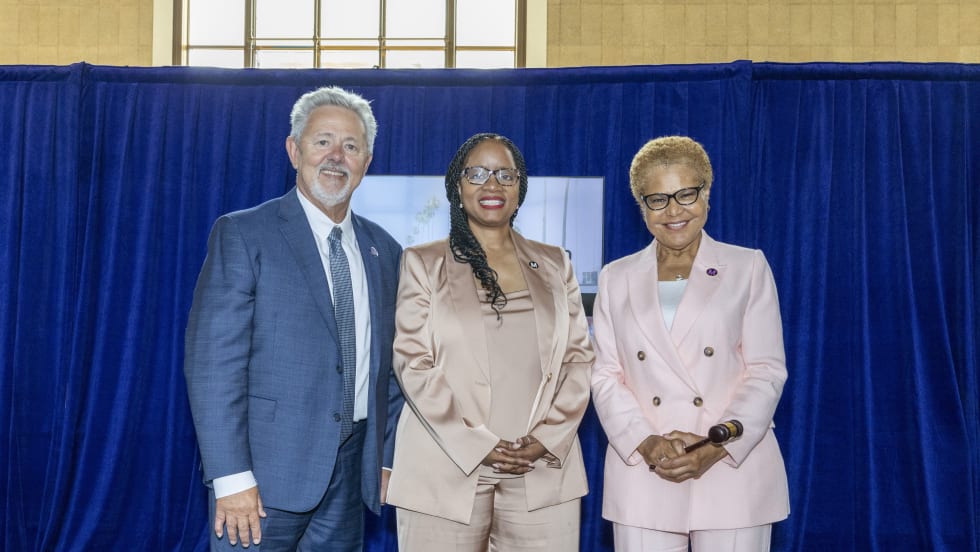
LA Metro Marks Banner Year, Sets Ambitious Goals for New Fiscal Year
Incoming LA Metro Board Chair and Los Angeles Mayor Karen Bass joined outgoing Board Chair Fernando Dutra and LA Metro CEO Stephanie Wiggins to review accomplishments from fiscal year 2026, which included the opening of new rail extensions, advancement of major transit projects, expanded safety programs, and new rider amenities.
Read More →