



TriMet adds 4 Gillig hybrid buses
The hybrids, with technology similar to a Chevy Volt, will run one of the busiest routes among the agency’s 79 bus lines. With the addition of the hybrids, 55 new buses have been put into service since October.

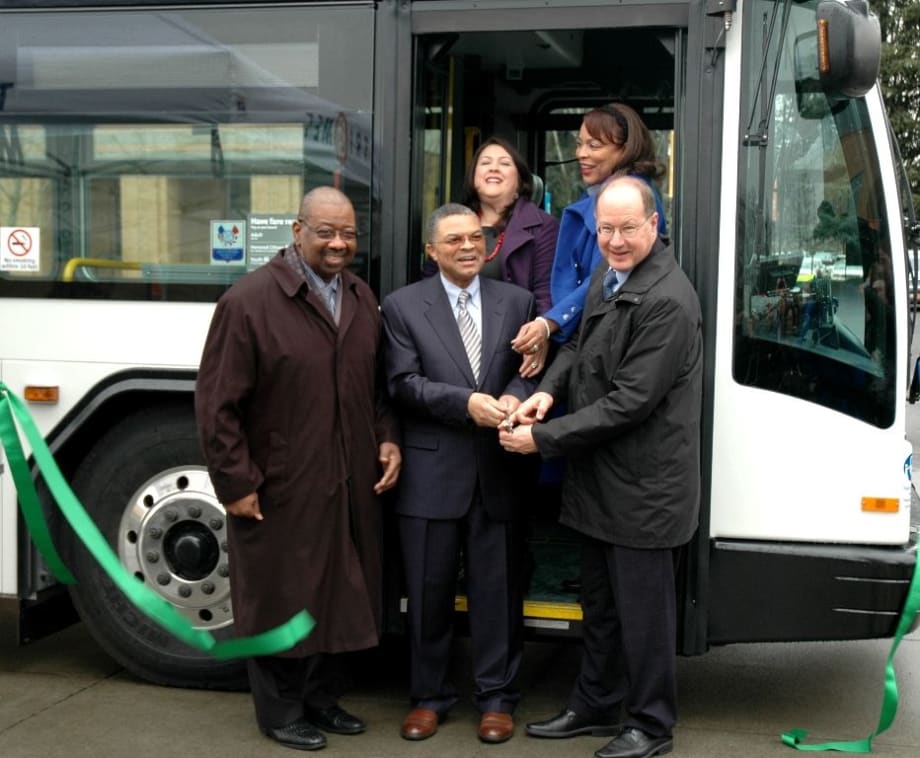
Ribbon cutting (front row, left to right): Dr. T. Allen Bethel, TriMet Board member; Dr. Algie Gatewood, Portland Community College Cascade Campus president; Neil McFarlane, TriMet GM. (back row, left to right) Carmen Rubio, Latino Network executive director; Loretta Smith, Multnomah County commissioner
Ribbon cutting (front row, left to right): Dr. T. Allen Bethel, TriMet Board member; Dr. Algie Gatewood, Portland Community College Cascade Campus president; Neil McFarlane, TriMet GM. (back row, left to right) Carmen Rubio, Latino Network executive director; Loretta Smith, Multnomah County commissioner
Portland, Ore.-based TriMet and community partners held a ribbon-cutting ceremony to launch four new state-of-the-art Gillig hybrid buses into service. Federal grant funds were used to purchase these low-emissions, high-efficiency hybrid buses.
The hybrids, with technology similar to a Chevy Volt, will run one of the busiest routes among TriMet’s 79 bus lines. With the addition of the hybrids, 55 new buses have been put into service since October. Most of the new bus purchases were funded by grants.
TriMet GM Neil McFarlane said the new buses will run on Line 72 between North Portland and Clackamas Town Center, a 17-mile route with the second highest ridership of the bus network. It averages about 17,000 rides a day.
“These cleaner, quieter buses will be more fuel efficient and replace some of our oldest buses well past retirement that have higher emissions and are more costly to maintain,” said McFarlane. “These new buses will benefit our riders, but also all of the residents living along this popular bus line.”
TriMet launches four new hybrid buses into service on the Line 72-Killingsworth/82nd Ave, with an event at the Portland Community College (PCC) Cascade Campus.
The hybrids are expected to be 20% to 50% more fuel efficient, with 95% fewer emissions. The quiet electric motor has fewer moving parts than a traditional transmission, so they will last longer and require less maintenance.
TriMet is putting these cleaner buses along Line-72 because of its dedication to transit and health equity and improving the air quality of the community, since this line serves a disproportionally high percentage of low-income and minority residents who are impacted by high emissions from transportation and industry.
PCC Cascade Campus President Dr. Algie Gatewood hosted the hybrid event. “Thousands of our students ride transit every day to get to PCC on their way to economic prosperity, and now the ride will be a lot more comfortable and reliable for them,” said Dr. Gatewood.
More Bus

New York MTA Plans Largest Bus Fleet Upgrade in More Than a Decade
The agency is seeking manufacturers for 650 new CNG buses to replace aging vehicles, improve reliability, and advance its broader fleet modernization strategy.
Read More →
Building a Flexible Path to Transit Electrification
John Hroncich discusses BAE Systems’ modular and scalable approach, lessons learned from decades of real-world operations, and how agencies can identify electrification strategies that fit their fleets.
Read More →
Bus Tech Talk: Keeping Transit Technicians Ahead of the Technology Curve
LA Metro’s Obed Mejia discusses technician training, evolving maintenance technology, fleet replacement, and strategies for getting the most out of today’s transit fleets.
Read More →
Biz Briefs: RIPTA Unveils New Frontrunners, Clevland RTA Adds New Siemens, and More
In METRO's latest installment, we take a look at recent news from Siemens, Prevost, Dodge, and more partnerships making headlines across the transportation sector.
Read More →
People Movement: Holly Arnold Joins Transdev and More
In this edition, we also cover recent appointments and announcements at Pace, CamTran, MCI, and more, showcasing the individuals helping to shape the future of transportation.
Read More →
The High Cost of Transit Buses: Industry Leaders Look to Procurement Reform
Transit leaders and policymakers examine how standardized bus designs, streamlined procurement, and predictable funding could help agencies stretch budgets and deliver better service.
Read More →
The Business Voice Behind Public Transportation
As chair of APTA’s Business Members Board of Governors, Ray Melleady explains how more than 850 business members are partnering with transit agencies to advance funding, innovation, and industry-wide collaboration.
Read More →
From Surviving to Thriving: Building Stronger Transportation Organizations
Bus Business Consultants founder Brian Dickson shares lessons on leadership, organizational health, and creating options for long-term success in a changing transportation industry.
Read More →
Finding the ‘Happy Medium’: Optimizing Maintenance Without Sacrificing Reliability
The key to maintenance optimization isn’t doing less work—it’s doing the right work at the right time on the right assets.
Read More →
LA Metro, City of West Hollywood, and Partners Advance Smarter Bus Lane Enforcement
The award-winning partnership combines AI-powered detection with human oversight to improve bus reliability, accessibility, and enforcement efficiency.
Read More →