



Chicago advances BRT plans
The announcement is based on a year-long assessment of various BRT alternatives along Ashland and Western avenues. Through the results of this analysis, CTA and CDOT will prioritize BRT for Ashland Avenue to meet the needs of bus riders in this corridor.

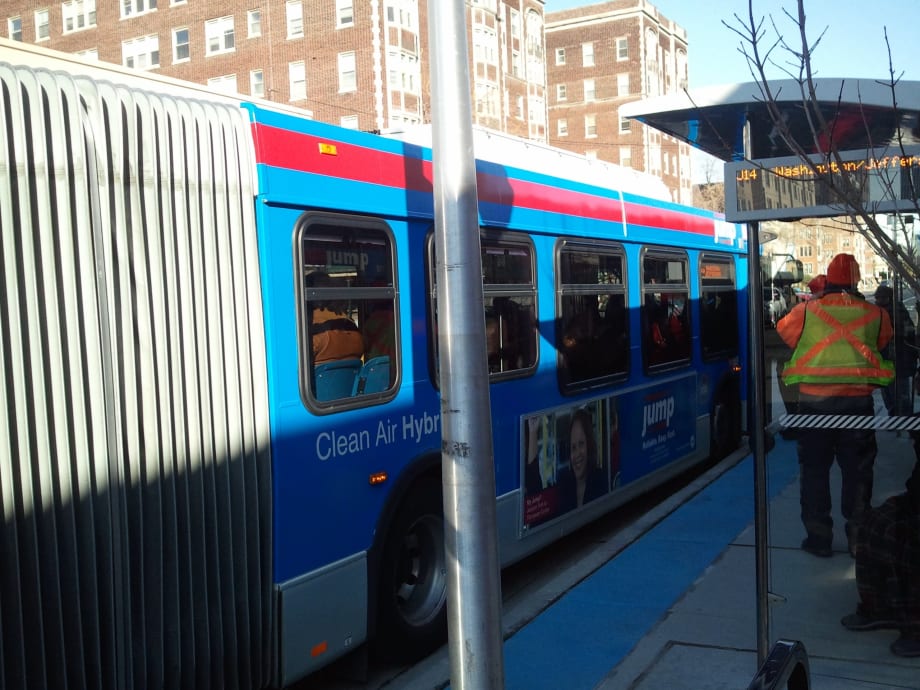
Chicago officials announced plans to develop a vision for faster and more reliable transit in Chicago, which will include studying center-running bus rapid transit (BRT) on a 16-mile stretch of Ashland Avenue between 95th Street and Irving Park Road.
The Chicago Transit Authority (CTA) and Chicago Department of Transportation (CDOT) will also begin working with local stakeholders on developing a plan that would create faster, more reliable bus service by increasing bus speeds by more than 80% during peak travel times and create economic benefits for business and residents along the entire corridor.
The announcement is based on a year-long assessment of various BRT alternatives along Ashland and Western avenues. Through the results of this analysis, CTA and CDOT will prioritize BRT for Ashland Avenue to meet the needs of bus riders in this corridor, which has the highest ridership on CTA’s bus system and connects to seven CTA “L” stations, two Metra stations and 37 bus routes.
According to the proposed design, a dedicated center bus lane in each direction would have limited stops — every half-mile and at CTA stations as well as traffic-signal priority at intersections. New amenity-filled bus-boarding stations with enhanced, landscaped medians between stations will benefit bus riders, as well as area residents and businesses.
The vision to redesign streets to make transit more efficient includes bus-only lanes, transit signal priority and balancing the needs for all users, including autos. This vision maximizes street potential, enhances the pedestrian environment and represents the highest BRT standard.
In addition to faster travel, proposed BRT on Ashland will:
Save about 8 minutes per trip based on the current average trip length on the #9 Ashland bus of 2.5 miles.
Preserve approximately 90% of parking on both sides of the street.
Enhance streetscapes with more than 75 blocks of new streetscaping, including medians, better lighting, wider sidewalks and more greenery.
Allow the potential for pre-payment for faster boarding, similar to CTA "L" stations.
Preserve approximately 95% of loading zones for delivery trucks.
While BRT analysis and design efforts will continue in 2013 for 16 miles of Ashland Avenue from Irving Park Road to 95th Street, implementation would be phased and the first phase is being designed for the central area from Cortland Ave. (1800 N) to 31st Street.
Preliminary estimates show that BRT can be implemented for approximately $10 million per mile. Planning and design analysis to this point have been funded by FTA grants, which were supported by U.S. Senator Dick Durbin (D-IL) and other members of the Illinois congressional delegation.
RELATED ARTICLE: Check out, "Chicago Gets Jump on BRT."
More Bus

People Movement: Dan Dipert Coaches Adds Third-Generation Leader, Keolis Names New Valley Metro VP/GM, and More
In this edition, we also cover recent appointments and announcements at the Wabtec, SilverRide, HNTB, and more, showcasing the individuals helping to shape the future of transportation.
Read More →
New York MTA Plans Largest Bus Fleet Upgrade in More Than a Decade
The agency is seeking manufacturers for 650 new CNG buses to replace aging vehicles, improve reliability, and advance its broader fleet modernization strategy.
Read More →
Building a Flexible Path to Transit Electrification
John Hroncich discusses BAE Systems’ modular and scalable approach, lessons learned from decades of real-world operations, and how agencies can identify electrification strategies that fit their fleets.
Read More →
Bus Tech Talk: Keeping Transit Technicians Ahead of the Technology Curve
LA Metro’s Obed Mejia discusses technician training, evolving maintenance technology, fleet replacement, and strategies for getting the most out of today’s transit fleets.
Read More →
Biz Briefs: RIPTA Unveils New Frontrunners, Clevland RTA Adds New Siemens, and More
In METRO's latest installment, we take a look at recent news from Siemens, Prevost, Dodge, and more partnerships making headlines across the transportation sector.
Read More →
People Movement: Holly Arnold Joins Transdev and More
In this edition, we also cover recent appointments and announcements at Pace, CamTran, MCI, and more, showcasing the individuals helping to shape the future of transportation.
Read More →
The High Cost of Transit Buses: Industry Leaders Look to Procurement Reform
Transit leaders and policymakers examine how standardized bus designs, streamlined procurement, and predictable funding could help agencies stretch budgets and deliver better service.
Read More →
The Business Voice Behind Public Transportation
As chair of APTA’s Business Members Board of Governors, Ray Melleady explains how more than 850 business members are partnering with transit agencies to advance funding, innovation, and industry-wide collaboration.
Read More →
From Surviving to Thriving: Building Stronger Transportation Organizations
Bus Business Consultants founder Brian Dickson shares lessons on leadership, organizational health, and creating options for long-term success in a changing transportation industry.
Read More →
Finding the ‘Happy Medium’: Optimizing Maintenance Without Sacrificing Reliability
The key to maintenance optimization isn’t doing less work—it’s doing the right work at the right time on the right assets.
Read More →