



LIRR adds auto queuing system at Penn Station
The new system just recently became operational and immediately proved its value, speeding up the sales process and making clear to customers which of 12 ticket windows were open for business.

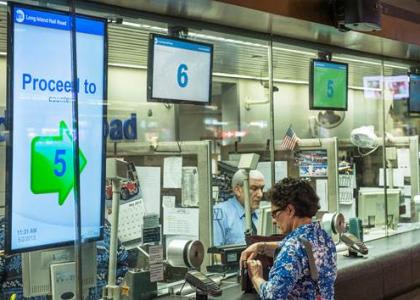
To make purchasing Long Island Rail Road (LIRR) tickets at Penn Station simpler, the agency debuted an automated queuing system that directs customers to the window staffed by next available ticket clerk.
The new system just recently became operational and immediately proved its value, speeding up the sales process and making clear to customers which of 12 ticket windows were open for business.
"Customers can definitely see a difference in waiting time as do our ticket clerks and both have welcomed the innovation,” said LIRR President Helena Williams.
It was just about a year ago that the LIRR eliminated the sometimes chaotic window-by-window ticket lines that had been the mode of operation at Penn Station for generations. After a test run proved successful, the LIRR adopted a queuing system similar to those found in banks.
But it was soon apparent to LIRR managers and ticket clerks that despite their best efforts precious minutes were still being lost as customers hesitated while trying to find the open window. They concluded a better signal system was needed and determined the new automated queuing system fit the bill.
Now, for customers on the central ticket line there can no longer be any doubt about finding the right window. When an agent becomes available, he or she sets off the signal that simultaneously lights up the window number, sounds a bell and prompts a recorded voice that directs the customer to their counter. When there is no clerk working at a window, the screen clearly displays the word “Closed.”
Penn Station is the LIRR’s busiest terminal with sales of 18,000 tickets on an average weekday, 4,500 sold by agents and the balance at ticket machines.
RELATED ARTICLE: Check out, "2012 Women in Transportation: Helena Williams."
More Management
Indian River Transit’s Community-Focused Approach Earns National Recognition
Named APTA’s 2026 Outstanding Public Transportation System in its size category, Florida’s Indian River County transit system continues to grow ridership through fare-free service and a focus on evolving community needs.
Read More →
ENC Lands MATA Contract and More in Biz Briefs
In this edition of Biz Briefs, we spotlight the latest developments shaping the future of mobility.
Read More →
From Surviving to Thriving: Building Stronger Transportation Organizations
Bus Business Consultants founder Brian Dickson shares lessons on leadership, organizational health, and creating options for long-term success in a changing transportation industry.
Read More →

Everett Transit, Community Transit Outline Consolidation Agreement
The proposed agreement calls for a 50% increase in bus service in Everett, a new microtransit zone, continued paratransit service, and the transfer of Everett Transit operations to Community Transit.
Read More →
Strada360’s Steve Lassey on Turning Transit Data Into Better Decisions
From breaking down data silos to preparing for AI, Strada360 CEO Steve Lassey discusses how transit agencies can use technology to improve operations, customer information, and long-term decision-making.
Read More →
People Movement: Phil Washington Joins HNTB, Denver RTD Launches CEO Search, and More
In this edition, we also spotlight recent personnel moves at STV, the Eno Center for Transportation, and more, highlighting the people taking on new roles across the transportation industry.
Read More →
SEPTA Details Accelerate Vision for Transit System
The plan outlines investments in trolley modernization, new Metro and Regional Rail vehicles, accessible stations, and more frequent bus and rail service.
Read More →
FTA Ends Direct Oversight of MBTA Safety Actions
The federal agency closed its remaining special directive to the Massachusetts Department of Public Utilities following a safety review that began in 2022.
Read More →
Report: Transit Bus Manufacturing Supports 34,100 Jobs, $5.1B in GDP
The “Buses Mean Business” report examines the transit bus manufacturing industry’s economic footprint, supply chain, and rising demand for vehicle replacements.
Read More →
LIT Marks 10-Year Milestone at Annual Summit
Hosted by the COTA from September 10 to 13, the Summit carried the theme “Celebrating 10 Years of Excellence, Leadership, and Impact,” with every part of the program honoring the people, agencies, and partners who built LIT over its first decade.
Read More →