



Pittsburgh Port Authority honored for BRT system
Policy group named the Martin Luther King Jr. East Busway one of the nation’s highest quality bus rapid transit systems. It awarded the system the Bronze Standard, out of basic BRT, bronze, silver or gold designations.

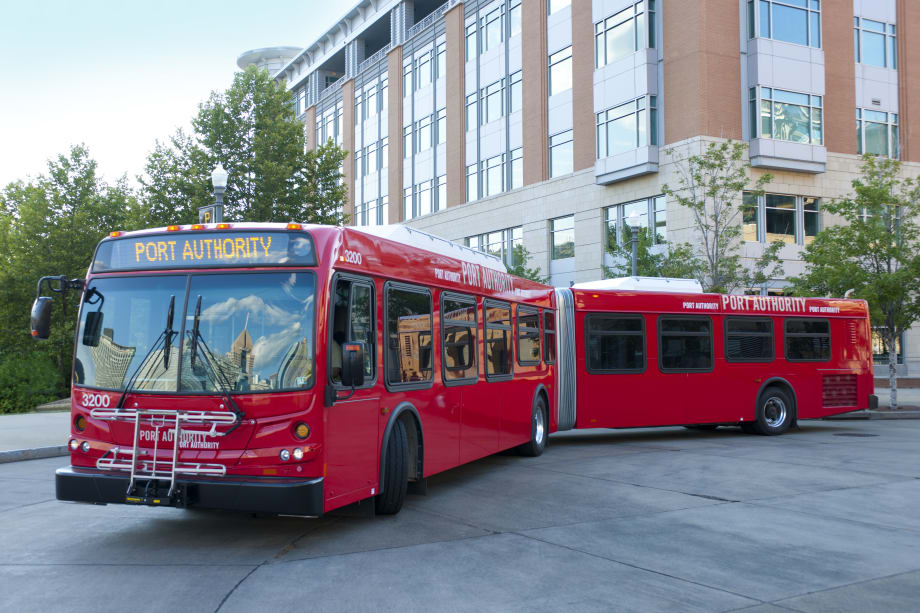
Port Authority of Allegheny County received recognition from the Institute for Transportation and Development Policy (ITDP), which designated the Martin Luther King Jr. East Busway as one of the nation’s highest quality bus rapid transit systems.
ITDP named the East Busway as one of only five systems in the U.S. that meets its BRT Standard, a defining and scoring designation for bus rapid transit (BRT). Port Authority’s East Busway was awarded the Bronze Standard, out of basic BRT, bronze, silver or gold designations.
“Pittsburgh has three of the seven true BRT corridors in the United States,” said ITDP CEO Walter Hook. “Despite the increasing prevalence, prominence and success of BRT systems, many people remain unaware of the characteristics of the best BRT systems and their potential to provide levels of service typically associated with metro and subway systems. Pittsburgh is a great example of what can be accomplished with a proper BRT, and our hope is that more cities will adopt this cutting-edge form of mass transit.”
Port Authority’s East Busway spans nine miles, serving about 25,000 riders daily. It offers service on 15 routes from nine stations. The original segment of the busway opened in February 1983 between downtown Pittsburgh and Edgewood. In 2003, it was extended an additional 2.3 miles. The routes along the busway operate a minimum of five days a week, with routes utilizing the busway as well, which allows a bypass of the heavily congested Parkway East, making for faster trip times.
“The recognition of the Martin Luther King Jr. East Busway by ITDP is extremely rewarding,” said Allegheny County Executive Fitzgerald. “This busway serves a vibrant corridor that includes Shadyside, East Liberty and Wilkinsburg. It reflects what a great success that BRT is and underscores the possibilities for BRT in other areas, including service to the Downtown-Uptown-Oakland corridor. These efforts have been proven to support economic development activity, foster residential growth and bring about other community benefits.”
More than 40 organizations have called on the Port Authority to assess the potential benefits of bus rapid transit in that corridor, which links the state’s second- and third-largest job centers. As part of an effort called GetTherePGH, these organizations are studying how bus rapid transit might boost this corridor and areas beyond.
In addition to the East Busway, busways in Los Angeles, Las Vegas and Eugene, Ore., also received Bronze Standards. Only Cleveland’s Health Line received a Silver Standard. The local BRT Stakeholders Advisory Group is planning a visit in the next few months to visit Cleveland’s Health Line.
More Bus
VIA, MBTA Reach Pre-Pandemic Ridership Milestones as Transit Use Climbs
VIA surpasses three million monthly trips for the first time since 2020, while the MBTA tops one million average weekday trips as both agencies report continued ridership growth.

What Transit Maintenance Facilities Should Know About Gas-Detection Placement
Proper gas-detector placement is critical to maintaining safety in transit maintenance facilities, requiring agencies to consider fleet fuel types, ventilation, shop operations, and ongoing equipment maintenance.

Improving Transit Safety and Reliability Through AI
Hayden AI’s Chief Growth Officer, Charley Territo, discusses how AI-powered camera enforcement is helping transit agencies keep bus lanes and stops clear, improve accessibility, and move from pilot programs to full-scale deployments.

Castro to Lead RTC of Southern Nevada and More in People Movement
In this edition, we also cover recent appointments and announcements at the STV, MCI, and more, showcasing the individuals helping to shape the future of transportation.

Study: Denver RTD Generates $2.1 Billion in Annual Economic Activity
An economic impact study finds the agency supports approximately 17,500 jobs, delivers $1.6 billion in annual community and mobility benefits, and generates $2.42 in economic value for every dollar invested.

Mark Aesch Nominated to Lead Federal Transit Administration
The former Rochester transit chief and TransPro founder, who has also contributed to METRO Magazine, brings decades of industry experience and a focus on performance, accountability, and financial sustainability to the nomination.

Pierce Transit Moves to Expand Fleet Following Proposition 1 Approval
The agency authorized the purchase or refurbishment of up to 60 buses to support a 47% service expansion, as voters nationwide approved billions in new transit funding.

Transit Expands Agency Partnerships, Reaching 200 Official App Partners
COO Jake Sion discusses Transit’s growth, the success of its Transit Royale program, and how technology is helping agencies improve the rider experience.
Everett Transit, Community Transit Approve Consolidation of Services
The agreement will bring Everett Transit into Community Transit’s network in April 2027, with plans to increase bus service by 50% by 2031 and expand regional connections.
Brian Dickson on Building Stronger, More Resilient Transportation Organizations
Bus Business Consultants Founder Brian Dickson discusses the leadership principles, operational discipline, and strategic planning that separate transportation companies positioned for long-term success from those stuck in survival mode.