



D.C. Metro launches 'close call' reporting system
Pilot program designed to enhance safety by increasing the opportunity for employee reporting of incidents or situations that have the potential for more serious consequences.

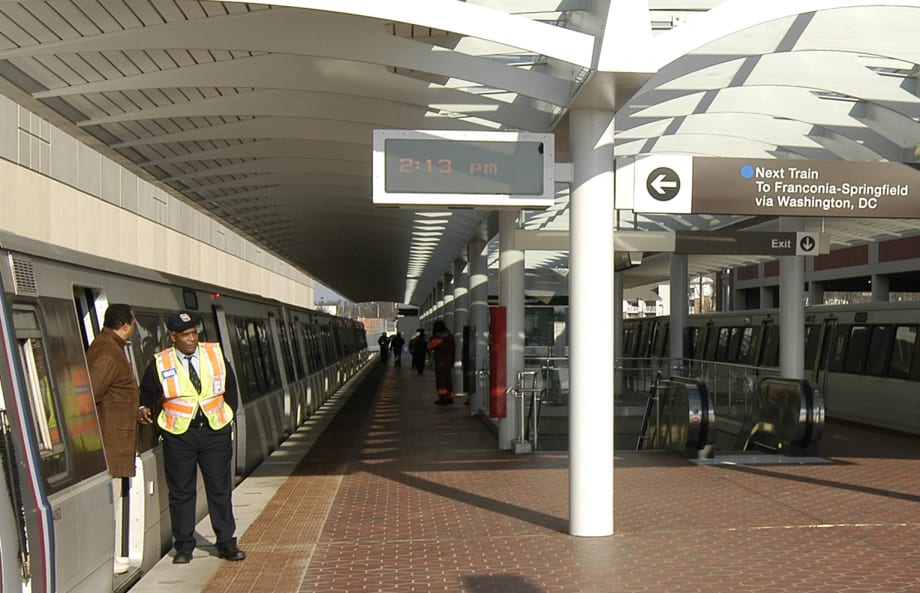
Largo Towne Center Metro rail station. WMATA photo by Larry Levine
The Washington Metropolitan Area Transit Authority (Metro), in partnership with the ATU Local 689, is launching a new pilot program designed to enhance safety by increasing the opportunity for employee reporting of incidents or situations that have the potential for more serious consequences. Metro will become the first rail transit agency in the nation to promote a confidential “Close Call Transit Safety Reporting System.”
While Metro has instituted many safety initiatives to report safety concerns, close call reporting provides another avenue of reporting incidents confidentially, which will enable employees to keep a constant focus and attention to safety. These incidents will not be subject to administrative discipline, but the knowledge of their existence is critical in maintaining and changing the safety culture, according to Metro.
“We want to know what we don’t know, and Close Call reporting is a proven way of gathering information at a stage when we can act to prevent more serious safety incidents, reverse bad habits or address emerging trends,” said Metro GM/CEO Richard Sarles.
Confidentiality for employees who report close calls is critical for success of the pilot. It allows them to report events that would otherwise go unreported, without fear of possible discipline.
The partnership also includes the U.S. Department of Transportation’s Bureau of Transportation Statistics (BTS), a part of the Research Innovative Technology Administration, to help manage the project and take confidential safety reports from employees.
Beginning this summer, Metro employees who see or experience unsafe conditions can submit a report to BTS. To maintain confidentiality, BTS removes all identifying information, conducts interviews with employees who submit reports, and then presents information about emerging trends and new sources of risks to a joint Metro/Labor committee known as the Peer Review Team. This trained team, which works under a strict confidentiality agreement required by BTS, will meet regularly to establish root causes of reported events and recommend actions Metro should take to stop them from reoccurring.
BTS has more than six years’ experience in the same role for Canadian Pacific Railway, Union Pacific Railroad and New Jersey Transit in the Federal Railroad Administration’s separate and ongoing Confidential Close Call Reporting System (C3RS) pilot.
“While reporting will be confidential, this program does not eliminate employee accountability for serious rules violations such as signal adherence,” said Metro Deputy GM, Operations, Rob Troup.
RELATED:Bombardier track safety tech lauded.
More Rail

New York MTA Advances Final Contract for Second Avenue Subway Expansion
Contract Four is the largest in the Second Avenue Subway Phase 2 project and includes construction of station infrastructure, tracks, and signals for the subway expansion, MTA officials said. Work on Contract Four will begin in 2027.
Read More →
San Diego MTS Breaks Monthly Trolley Ridership Record
Agency officials said July’s ridership indicates MTS’s continued recovery from the pandemic.
Read More →
Report Examines NJ TRANSIT Reliability, Funding Challenges
The Garden State Initiative analysis examines the roles of Amtrak infrastructure, fleet management, and agency operations while recommending a more performance-based approach to improving reliability.
Read More →
Stadler, CapMetro Sign Long-Term Rail Fleet Support Agreement
Beginning in 2027, Stadler will provide on-site technical expertise, spare parts support, training, and obsolescence management to help extend the reliability and longevity of CapMetro’s GTW fleet.
Read More →
Biz Briefs: Alstom Lands Canadian Contract, LYT to Supply California TSP, and More
In METRO's latest installment, we take a look at recent news from Complete Coach Works, Beep, FlixBus, and more partnerships making headlines across the transportation sector.
Read More →
CATS Gold Line Marks 5 Years of Service, 2.8M Passenger Trips
With a six-mile expansion planned, the Charlotte streetcar is positioned to connect more neighborhoods and major transit hubs across the region.
Read More →
Why Simulating Pedestrian Movement Has Become Essential for Modern Rail Stations
Pedestrian microsimulation is helping rail planners identify bottlenecks, test station designs, and prepare complex transit hubs for growing passenger volumes.
Read More →
Amtrak Begins Major Construction at New York’s Sunnyside Yard
The new maintenance facility will support Amtrak’s Airo trainsets while improving maintenance efficiency and turnaround times in New York.
Read More →
Chicago Leaders Unveil Plans for O’Hare Airport Express Train
The privately developed project would offer a 15-minute trip between downtown and O’Hare’s Terminal 2, with trains operating every 15 minutes on a dedicated track. The service would use battery-electric trains and three existing freight rail rights-of-way.
Read More →
OCTA Maps Out 30-Year Strategy to Protect Coastal Rail Corridor
The draft feasibility report identifies strategies to protect the coastal rail line for decades as the agency continues near-term stabilization and sand placement efforts.
Read More →