



AC Transit carries thousands of extra riders during BART strike
Operators made 99% of their schedule runs without a hitch despite uncommonly long lines of riders at bus stops and having to maneuver packed coaches through heavily congested roadways. Meanwhile, the talks between ATU Local 192 and AC Transit management continue.

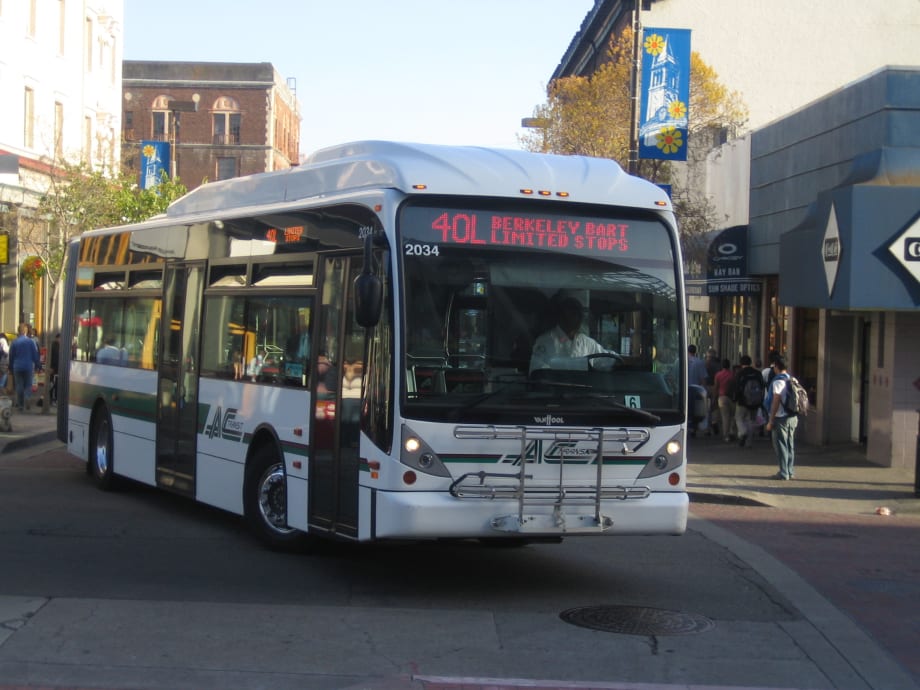
Photo courtesy lensovet, Wikimedia Commons.
Photo courtesy lensovet, Wikimedia Commons.
AC Transit buses rolled at peak capacity in the immediate aftermath of the labor dispute that has shut down the Bay Area Rapid Transit Districts’ (BART) normal train operations.
In response to the BART walkout, dozens of AC Transit staff volunteered to arrive early at key BART stations where they assisted in crowd control and provided directions to passengers who might be unfamiliar with bus operations.
To further manage the unusually high volume of riders, the agency deployed its 60-foot articulated buses onto its heaviest passenger lines, most notably its Transbay service which carried standing-room only loads into San Francisco. Additionally, extra service was added to augment Transbay trips from downtown Oakland into San Francisco.
AC Transit operators made 99% of their schedule runs without a hitch despite uncommonly long lines of riders at bus stops and having to maneuver packed coaches through heavily congested roadways. By 9:30 a.m. all passengers — thousands of them — were cleared from a bottleneck in downtown Oakland.
“Our operators did a magnificent job under some stressful conditions that will likely persist until BART returns to its normal service,” said AC Transit General Manager David Armijo. “The operators and the staff volunteers are commended for stepping up at a time when their services were so badly needed.”
Meanwhile, the talks between Amalgamated Transit Union Local 192 and AC Transit management will continue in an effort to reach a labor agreement with the agency’s bus operators and mechanics. The contract expired midnight Sunday. The ongoing talks will allow AC Transit to continue to provide a high level of service, and marks a clear victory for bus riders.
RELATED: "Key to Managing Workplace Issues – Communication."
More Bus

New York MTA Plans Largest Bus Fleet Upgrade in More Than a Decade
The agency is seeking manufacturers for 650 new CNG buses to replace aging vehicles, improve reliability, and advance its broader fleet modernization strategy.
Read More →
Building a Flexible Path to Transit Electrification
John Hroncich discusses BAE Systems’ modular and scalable approach, lessons learned from decades of real-world operations, and how agencies can identify electrification strategies that fit their fleets.
Read More →
Bus Tech Talk: Keeping Transit Technicians Ahead of the Technology Curve
LA Metro’s Obed Mejia discusses technician training, evolving maintenance technology, fleet replacement, and strategies for getting the most out of today’s transit fleets.
Read More →
Biz Briefs: RIPTA Unveils New Frontrunners, Clevland RTA Adds New Siemens, and More
In METRO's latest installment, we take a look at recent news from Siemens, Prevost, Dodge, and more partnerships making headlines across the transportation sector.
Read More →
People Movement: Holly Arnold Joins Transdev and More
In this edition, we also cover recent appointments and announcements at Pace, CamTran, MCI, and more, showcasing the individuals helping to shape the future of transportation.
Read More →
The High Cost of Transit Buses: Industry Leaders Look to Procurement Reform
Transit leaders and policymakers examine how standardized bus designs, streamlined procurement, and predictable funding could help agencies stretch budgets and deliver better service.
Read More →
The Business Voice Behind Public Transportation
As chair of APTA’s Business Members Board of Governors, Ray Melleady explains how more than 850 business members are partnering with transit agencies to advance funding, innovation, and industry-wide collaboration.
Read More →
From Surviving to Thriving: Building Stronger Transportation Organizations
Bus Business Consultants founder Brian Dickson shares lessons on leadership, organizational health, and creating options for long-term success in a changing transportation industry.
Read More →
Finding the ‘Happy Medium’: Optimizing Maintenance Without Sacrificing Reliability
The key to maintenance optimization isn’t doing less work—it’s doing the right work at the right time on the right assets.
Read More →
LA Metro, City of West Hollywood, and Partners Advance Smarter Bus Lane Enforcement
The award-winning partnership combines AI-powered detection with human oversight to improve bus reliability, accessibility, and enforcement efficiency.
Read More →