



BART, unions reach agreement, resume service
Extending the current contracts for 30 days. Trains began running again last Friday.

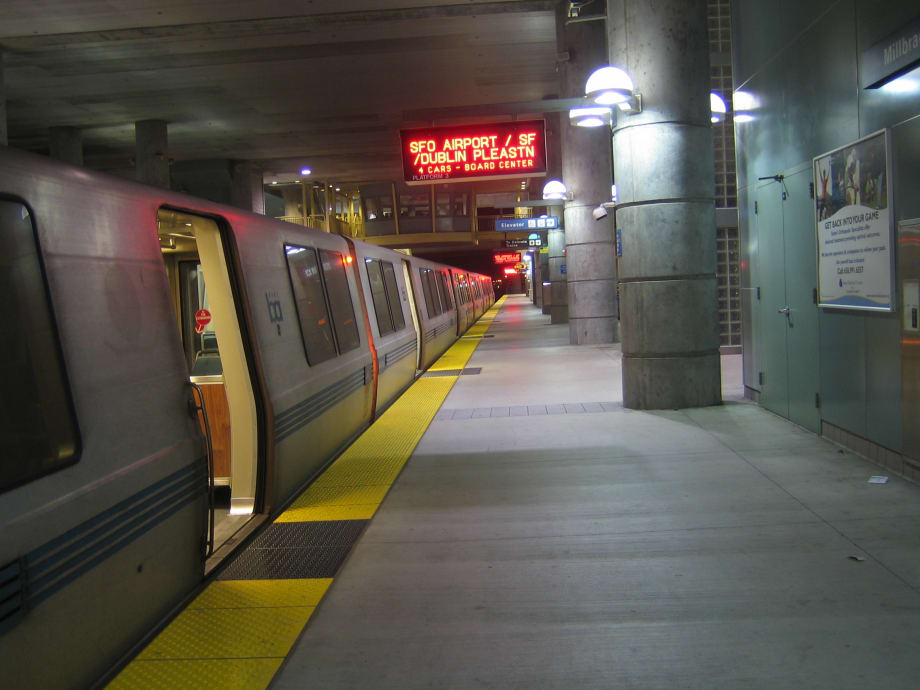
Photo courtesy lensovet, Wikimedia Commons.
Photo courtesy lensovet, Wikimedia Commons.
The Bay Area Rapid Transit District (BART) and its unions reached an agreement late last Thursday to extend the current contracts for 30 days. BART trains began running at 3 p.m. last Friday, ending the strike.
Last week, BART released the following statement from GM Grace Crunican regarding the agreement between BART and its unions to extend the current agreement for 30 days:
"I am happy to announce the BART system will be open and fully operational at 3 p.m. on Friday.
I want to thank Labor Secretary Marty Morgenstern and his fine mediation team for all their help and support in crafting this deal, which will allow us to continue bargaining while running the trains.
We look forward to continuing our work with Secretary Morgenstern and his mediators.
Unfortunately, the issues that brought us to this point remain unresolved. Despite lots of hard work, BART and its unions have failed to come to an agreement on contract issues that matter to all of us today and into the future. We still have a wide gap of disagreements to bridge over the next 30 days.
What we share in common is a commitment to our passengers and the mission of public transit.
That focus is why we stand together tonight to announce that we will continue working to reach an agreement during the next 30 days while the trains continue to run. It is my resolve to bargain in good faith and to keep the trains running.
The BART bargaining teams on both sides of the table have worked tirelessly to bargain a new contract under difficult circumstances. Their work is appreciated. Most importantly for me, I want to welcome back all the BART employees who have been on strike during the past week.
Now let's get the trains moving."
More Management

LIT Marks 10-Year Milestone at Annual Summit
Hosted by the COTA from September 10 to 13, the Summit carried the theme “Celebrating 10 Years of Excellence, Leadership, and Impact,” with every part of the program honoring the people, agencies, and partners who built LIT over its first decade.
Read More →
People Movement: Dan Dipert Coaches Adds Third-Generation Leader, Keolis Names New Valley Metro VP/GM, and More
In this edition, we also cover recent appointments and announcements at the Wabtec, SilverRide, HNTB, and more, showcasing the individuals helping to shape the future of transportation.
Read More →
METRO Opens Submissions for 2026 Motorcoach Awards
Nominations are now being accepted for METRO Magazine’s Operator of the Year and Innovative Operator of the Year awards.
Read More →

New York MTA Advances Final Contract for Second Avenue Subway Expansion
Contract Four is the largest in the Second Avenue Subway Phase 2 project and includes construction of station infrastructure, tracks, and signals for the subway expansion, MTA officials said. Work on Contract Four will begin in 2027.
Read More →
Transit Agencies Highlight Safety Gains at National Summit
Leaders from 15 major transit systems shared crime-reduction results and safety initiatives while discussing the role of continued federal support.
Read More →
NITA Names New Leadership, Expands Reduced-Fare Program at First Board Meeting
The new regional transit authority appointed its first board chair and interim executive director while extending reduced fares across CTA, Metra, and Pace for eligible riders.
Read More →
Beyond the Checklist: A Structured Approach to Transit Maintenance
Reliability-Centered Maintenance helps transit agencies move beyond routine checklists to focus limited resources on the assets and failures that have the greatest impact on safety, reliability, and service.
Read More →
APTA 2026 Nominating Committee Selects Leadership Slate, Names Chair and Vice Chair Nominees
Leadership changes will help shape the association’s priorities and its representation of the transportation industry during the 2026–2027 term.
Read More →
DART Launches Major Security, Fare Enforcement Initiative
The 90-day demonstration will deploy coordinated security teams at five light rail stations while testing controlled access and gathering data to guide future investments.
Read More →
Advancing Fare Collection Through Technology and Innovation
Learn about delivering 1300 gates at 91 stations while managing fare evasion. Explore the large scale deployment, solution customization and real-world results that affect the region. Prepare for deployment in your region now.
Read More →