



TOD tips offered by U. of Minn. report
A key finding revealed a pent-up demand for transit access in the Twin Cities metropolitan region. Suggestions for encouraging TOD included fostering collaboration between groups that already have shown an interest in transit-accessible locations.

A new University of Minnesota (U of M) research study recommends ways to make it easier for developers and employers to select sites that encourage living-wage jobs and mixed-income housing near transit.
A key finding of the study, which was based on interviews with developers and business leaders, revealed a pent-up demand for transit access in the Twin Cities metropolitan region.
A team led by U of M researchers Yingling Fan and Andrew Guthrie found that providing a great work location is critical for employers in recruiting highly skilled young professionals who are likely to desire — or demand — urban living and access to transit.
Researchers also found that multifamily residential developers, redevelopment specialists and large corporate office tenants have a strong interest in transit-accessible sites, but regulatory barriers, cost issues, and uncertainty surrounding future development of transit often discourage both developers and businesses from selecting such sites.
The region has been experiencing a transit renaissance in recent years. One project, the Central Corridor light rail — also known as the Green Line — next year will become the second LRT line to operate in Twin Cities. The Metro Red Line, the region’s first bus rapid transit (BRT) line, began operations along Cedar Avenue in June.
By 2030, a network of 14 connected transit corridors is planned for the Minneapolis–St. Paul metropolitan region. The success of this network hinges on ridership from nearby housing and businesses, and the success of development depends on access.
Metropolitan Council chair Susan Haigh said shaping development around transit enhances both the development and transit and will spur jobs and economic development, improve access to destinations and opportunities, and strengthen neighborhoods.
“For the business community to invest along transit corridors, a stable funding source must be established that allows us to build more fixed-route transit, like light rail and bus rapid transit,” Haigh added. “A 21st-century transit system provides the permanence and certainty that would encourage the private market to put capital into these centers of activity and community.”
In addition, developers said efforts to make transit-accessible housing affordable by design rather than by subsidy are crucial to promoting mixed-income neighborhoods in station areas.
To find out what policymakers can do to help spur transit-oriented development, the research team interviewed key players from the private sector in the Twin Cities, including developers, real estate brokers and business leaders. As a result, they created a set of policy recommendations aimed at effectively promoting mixed-income housing and living-wage job creation near transit corridors.
Key recommendations include:
• Foster communication and collaboration between the public sector and groups in the private sector that already have shown an interest in transit-accessible locations, such as multifamily residential developers, redevelopment specialists, large corporations, small innovative employers and employers of low-wage workers.
• Promote vibrant, walkable neighborhoods through flexible design and regulatory reform, higher density and lower parking requirements.
• Help affordable-housing specialists pursue cost-effective designs that reduce parking ratios and increase density by raising height restrictions.
• Promote diverse transit options — including high-frequency bus routes and high-quality rail — and accelerate system development.
The study was sponsored by Metropolitan Council as part of the Corridors of Opportunity Initiative, a broad-based plan to accelerate the build-out of a Twin Cities regional transit system so that people of all incomes and backgrounds share in the resulting opportunities. The study was funded under a grant from the U.S. Department of Housing and Urban Development.
Fan, an assistant professor with the U of M Humphrey School of Public Affairs, conducted the research in association with the Center for Transportation Studies (CTS) and collaborates with the CTS as a faculty scholar.
More Bus
Brian Dickson on Building Stronger, More Resilient Transportation Organizations
Bus Business Consultants Founder Brian Dickson discusses the leadership principles, operational discipline, and strategic planning that separate transportation companies positioned for long-term success from those stuck in survival mode.
Read More →
LA Metro Breaks Ground on Vermont BRT Project
The 12.4-mile corridor is projected to serve 66,200 daily riders, reduce travel times by up to 24%, and create the nation's busiest bus rapid transit corridor.
Read More →
Roman Cornell on ABC Companies’ Evolution and the Future of Passenger Transportation
The company’s CEO discusses carrying forward a third-generation family legacy, ABC’s continued evolution in passenger transportation, support for increasingly complex fleets, and how technology and continued investment could help operators improve uptime.
Read More →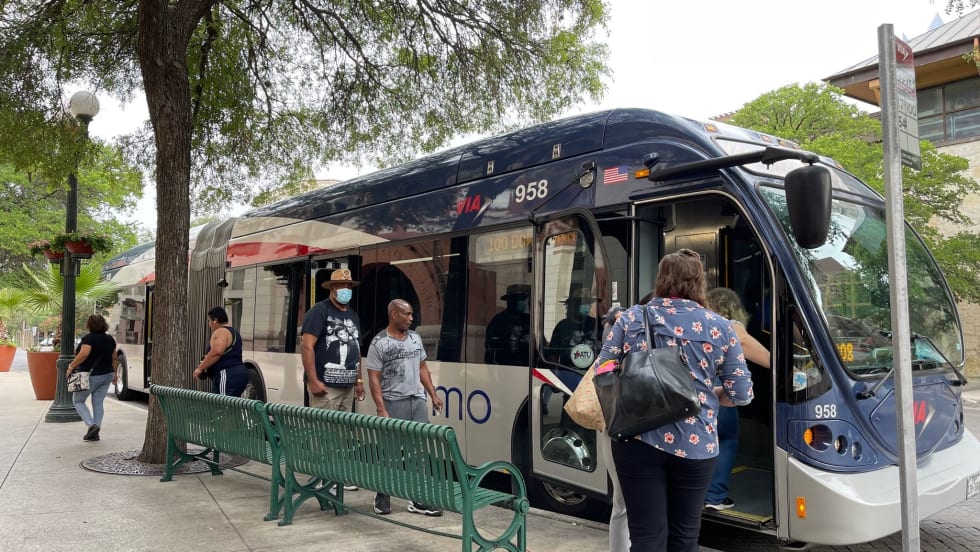
VIA Bus Ridership Grows 10.1% Through August 2026
San Antonio's VIA Metropolitan Transit reported the highest bus ridership growth among major Texas transit systems. Federal Transit Administration data ranked it second among the nation's 50 largest transit systems.
Read More →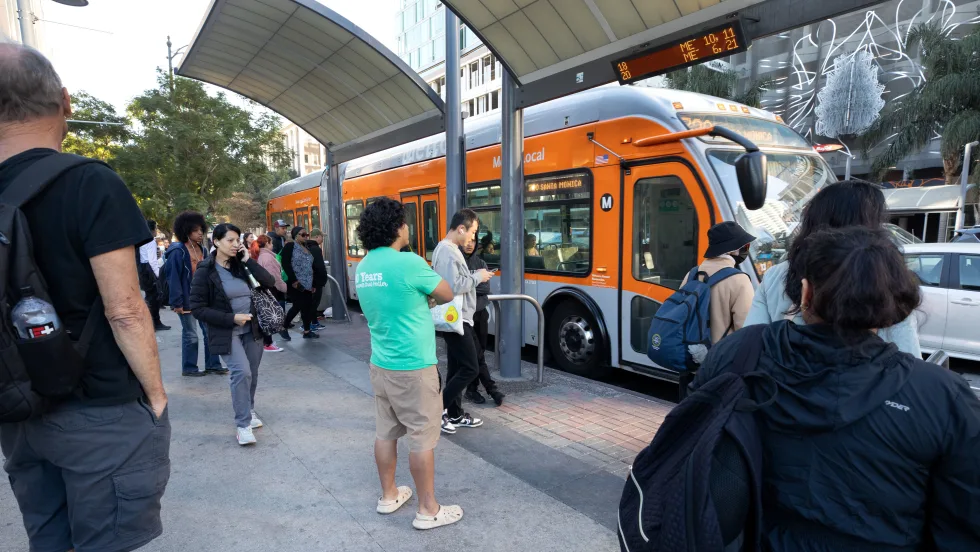
LA Metro September Ridership Climbs 3.9%, Led by Rail Growth
The agency recorded more than 27.2 million boardings, with rail ridership increasing 12.4% year over year and the D Line posting the largest gains.
Read More →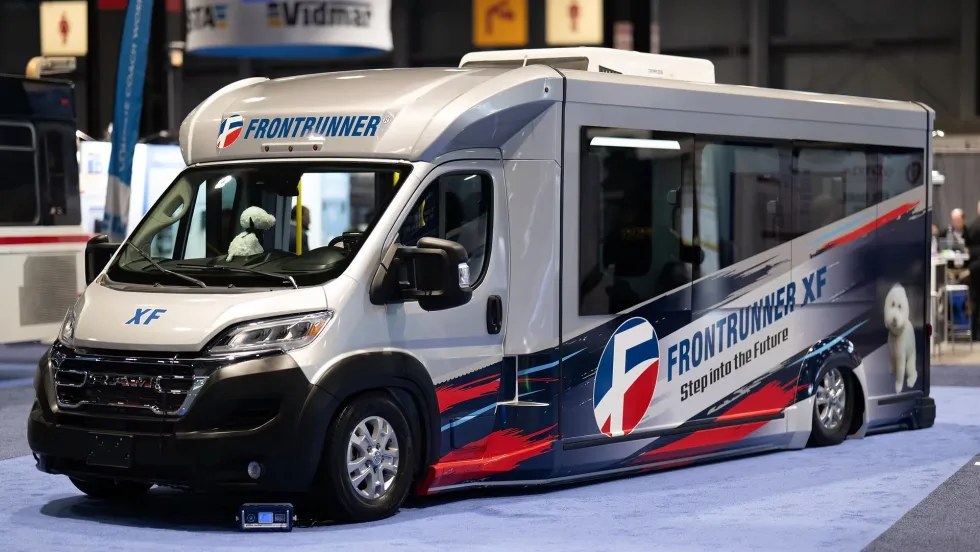
Frontrunner Bus Group Introduces XF Low-Floor Bus with Enhanced Accessibility
The new mid-sized bus features a full flat-floor design, eight-inch curbside step-in height, and zero-entry rear ramp to improve passenger access and operational flexibility.
Read More →
Scenes from APTA TRANSform & EXPO 2026
Transit leaders, manufacturers, and industry professionals gathered in Chicago to explore new technologies, share ideas, and discuss the future of public transportation.
Read More →
More Than a Summer Job: Building the Next Generation of Transit Talent
The Delaware River Port Authority and PATCO have transformed their internship program into a hands-on professional development experience that introduces students to the breadth of transportation careers — and creates a pipeline for future employees.
Read More →
LA Metro Board Awards 220 Battery-Electric Bus Contract to ENC
The contract, which is the largest base award of battery-electric buses by a U.S. transit agency, will be built in Southern California, sustaining good jobs as LA prepares to welcome the world in 2028
Read More →
Public Transit Conference Returning to GFX in 2027, Call for Papers Now Open
The Call for Papers is now open, allowing transit agency professionals and industry experts to help shape the PTC educational program by submitting session ideas for consideration.
Read More →