



Alstom JV wins South African contract
The contract is part of PRASA’s aim to revitalize the rail industry, create jobs and provide efficient, reliable and safe public transport.

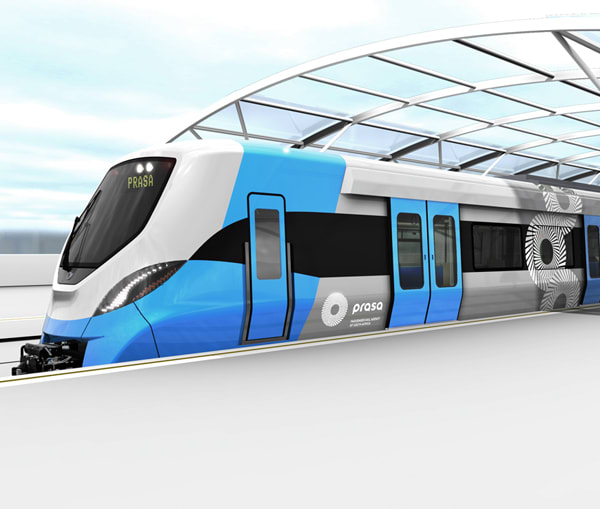
In addition to this contract, Gibela will provide technical support and supply of spare parts over an 18-year period. This project is one of the biggest in rail transport worldwide and is the largest contract ever signed in Alstom’s history.
The contract is part of PRASA’s aim to revitalize the rail industry, create jobs and provide efficient, reliable and safe public transport. This ambitious program was launched by the South African government in 2010 to respond to the growing number of commuters in the country.
The program will replace the aging suburban trains in service in Pretoria, Johannesburg, Cape Town and Durban, with electric trains over a period of 20 years.
PRASA and Gibela will now proceed with the process of reaching financial close at the end of December 2013.
PRASA will be supplied with X’Trapolis Mega, the new X’Trapolis train developed by Alstom. Each single-deck train is composed of six cars and is able to carry more than 1,300 passengers. Thanks to the modularity of X’Trapolis, PRASA will be able to adjust the configuration of the train depending on the number of commuters (from four to six cars with the option of having the set coupled).
The train is equipped with air conditioning, ergonomic seats, real-time on-board information, Wi-Fi Internet access, and a combination of direct and indirect lighting to increase the feeling of space.
More Management

METRO Opens Submissions for 2026 Motorcoach Awards
Nominations are now being accepted for METRO Magazine’s Operator of the Year and Innovative Operator of the Year awards.
Read More →
New York MTA Advances Final Contract for Second Avenue Subway Expansion
Contract Four is the largest in the Second Avenue Subway Phase 2 project and includes construction of station infrastructure, tracks, and signals for the subway expansion, MTA officials said. Work on Contract Four will begin in 2027.
Read More →
Transit Agencies Highlight Safety Gains at National Summit
Leaders from 15 major transit systems shared crime-reduction results and safety initiatives while discussing the role of continued federal support.
Read More →

NITA Names New Leadership, Expands Reduced-Fare Program at First Board Meeting
The new regional transit authority appointed its first board chair and interim executive director while extending reduced fares across CTA, Metra, and Pace for eligible riders.
Read More →
Beyond the Checklist: A Structured Approach to Transit Maintenance
Reliability-Centered Maintenance helps transit agencies move beyond routine checklists to focus limited resources on the assets and failures that have the greatest impact on safety, reliability, and service.
Read More →
APTA 2026 Nominating Committee Selects Leadership Slate, Names Chair and Vice Chair Nominees
Leadership changes will help shape the association’s priorities and its representation of the transportation industry during the 2026–2027 term.
Read More →
DART Launches Major Security, Fare Enforcement Initiative
The 90-day demonstration will deploy coordinated security teams at five light rail stations while testing controlled access and gathering data to guide future investments.
Read More →
Advancing Fare Collection Through Technology and Innovation
Learn about delivering 1300 gates at 91 stations while managing fare evasion. Explore the large scale deployment, solution customization and real-world results that affect the region. Prepare for deployment in your region now.
Read More →
Game Day in Motion: Moving Millions During the 2026 World Cup
Between packed transit stations and team motorcoaches, see how agencies and operators across North America tackled the transportation demands of the 2026 FIFA World Cup.
Read More →
Surface Transportation Extension Averts Shutdown, Leaves Transit Funding Gap
The stopgap keeps federal transportation programs moving, but missing advance funding could complicate the transit and rail projects agencies are planning next.
Read More →