



IndyGo approved to maintain current service, fares
Last year at this time, the council approved an increase of $6 million for the 2013 budget, which allowed IndyGo to make noticeable upgrades to local bus service.

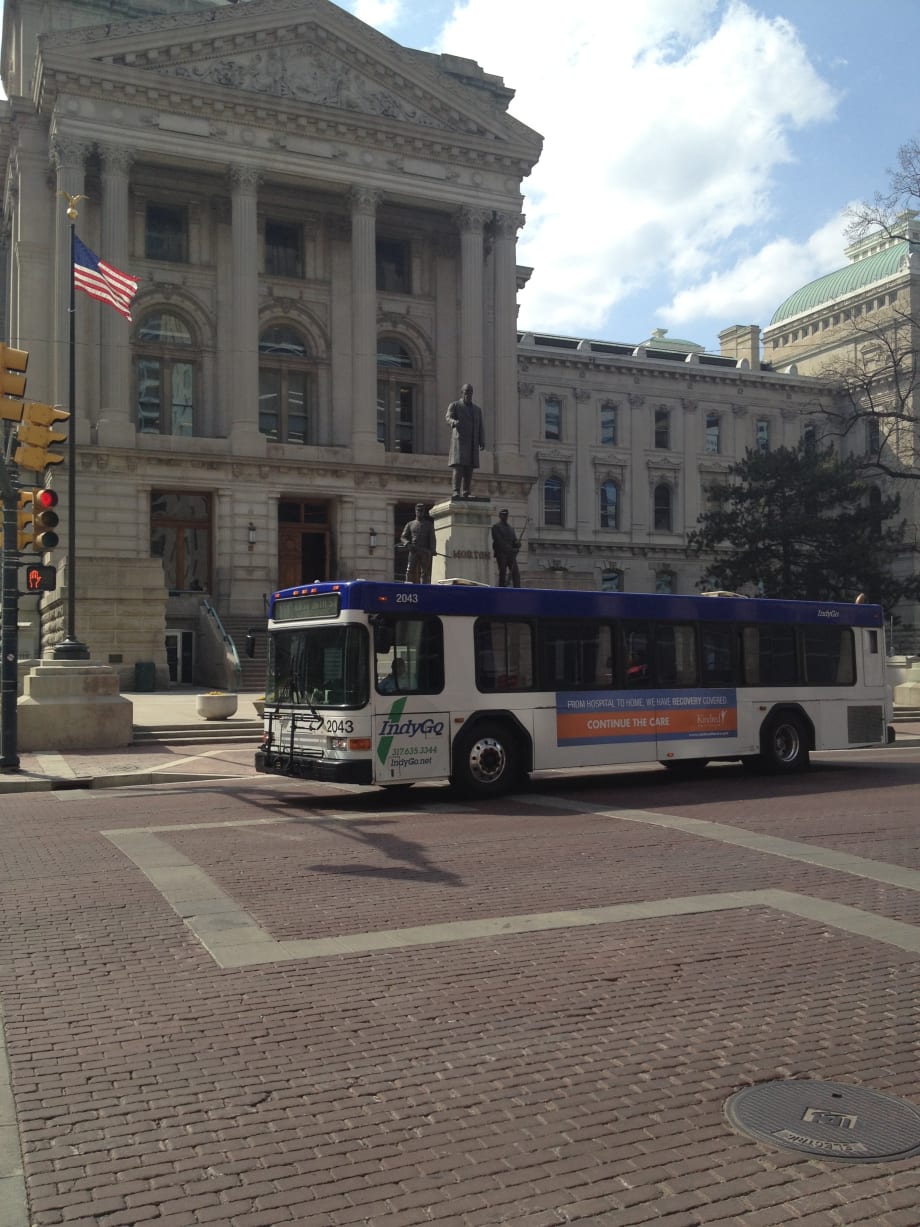
IndyGo's 2014 budget was approved by the Indianapolis City County Council, allowing the transit agency to maintain its current service levels and fare structure next year.
Last year at this time, the council approved an increase of $6 million for the 2013 budget, which allowed IndyGo to make noticeable upgrades to local bus service. The improvements, guided by the Indy Connect bus plan, were phased in over the first half of the year and included new frequent service on core lines, the addition of a route along the 86th/82nd St. corridor, additional Sunday service on Route 34, and route realignments for better productivity and access to destinations.
IndyGo has seen impressive ridership figures as a result of these improvements including double-digit percentage increases on each of IndyGo’s three lines with frequent service (routes 8, 10 and 39).
System-wide, August 2013 ridership soared to nearly one million trips, and by year’s end, ridership is expected to exceed 2012 totals despite huge spikes last year during the Super Bowl.
“The $6 million investment in service for 2013 has resulted in extraordinary ridership gains, evidence that there is a demand for more transportation options in our community,” said IndyGo’s President/CEO Michael Terry. “Stability in our service levels for 2014 is vital to maintaining expanded ridership.”
RELATED: "IndyGo's Michael Terry at BusCon 2013."
In addition to successful implementation and performance of enhanced service this year, IndyGo has garnered two federal grants that will allow the agency to retire its oldest buses sooner than would have otherwise been possible. IndyGo’s most recent and notable grant was a $10 million TIGER award, which will allow the agency to re-power approximately 20 existing diesel buses with a completely electric propulsion system.
Additionally, $10 million from the federal State of Good Repair grant program will replace nearly 30 older buses with brand new clean diesel ones.
More Bus

People Movement: Dan Dipert Coaches Adds Third-Generation Leader, Keolis Names New Valley Metro VP/GM, and More
In this edition, we also cover recent appointments and announcements at the Wabtec, SilverRide, HNTB, and more, showcasing the individuals helping to shape the future of transportation.
Read More →
New York MTA Plans Largest Bus Fleet Upgrade in More Than a Decade
The agency is seeking manufacturers for 650 new CNG buses to replace aging vehicles, improve reliability, and advance its broader fleet modernization strategy.
Read More →
Building a Flexible Path to Transit Electrification
John Hroncich discusses BAE Systems’ modular and scalable approach, lessons learned from decades of real-world operations, and how agencies can identify electrification strategies that fit their fleets.
Read More →
Bus Tech Talk: Keeping Transit Technicians Ahead of the Technology Curve
LA Metro’s Obed Mejia discusses technician training, evolving maintenance technology, fleet replacement, and strategies for getting the most out of today’s transit fleets.
Read More →
Biz Briefs: RIPTA Unveils New Frontrunners, Clevland RTA Adds New Siemens, and More
In METRO's latest installment, we take a look at recent news from Siemens, Prevost, Dodge, and more partnerships making headlines across the transportation sector.
Read More →
People Movement: Holly Arnold Joins Transdev and More
In this edition, we also cover recent appointments and announcements at Pace, CamTran, MCI, and more, showcasing the individuals helping to shape the future of transportation.
Read More →
The High Cost of Transit Buses: Industry Leaders Look to Procurement Reform
Transit leaders and policymakers examine how standardized bus designs, streamlined procurement, and predictable funding could help agencies stretch budgets and deliver better service.
Read More →
The Business Voice Behind Public Transportation
As chair of APTA’s Business Members Board of Governors, Ray Melleady explains how more than 850 business members are partnering with transit agencies to advance funding, innovation, and industry-wide collaboration.
Read More →
From Surviving to Thriving: Building Stronger Transportation Organizations
Bus Business Consultants founder Brian Dickson shares lessons on leadership, organizational health, and creating options for long-term success in a changing transportation industry.
Read More →
Finding the ‘Happy Medium’: Optimizing Maintenance Without Sacrificing Reliability
The key to maintenance optimization isn’t doing less work—it’s doing the right work at the right time on the right assets.
Read More →