



Feds release $3B for transit agencies impacted by Sandy
The funds will be awarded on a competitive basis for projects that protect critical transit infrastructure from being damaged or destroyed by future natural disasters.

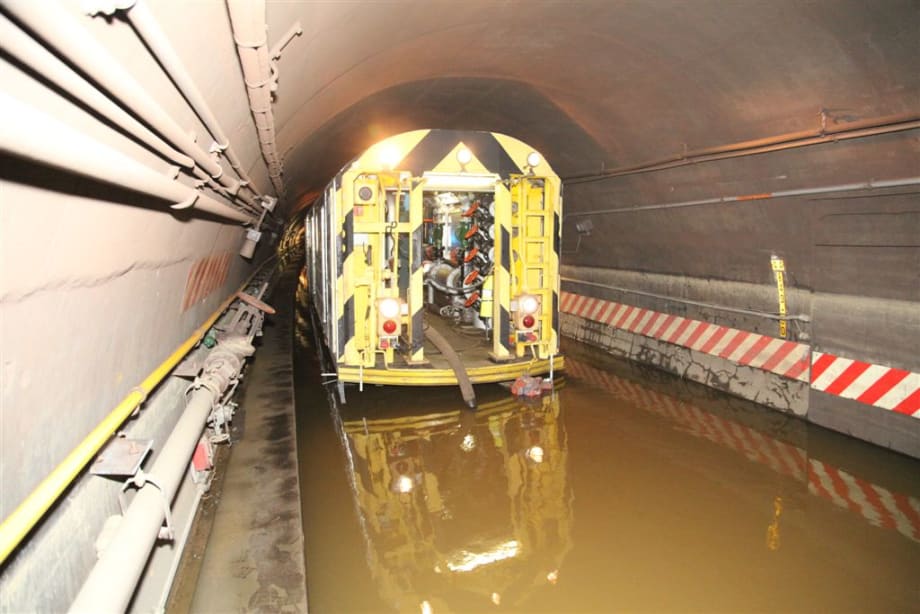
New York City Transit employees pumping water out of the Cranberry Street Tunnel, which carries the A and C trains between Brooklyn and Manhattan underneath the East River.
Photo Courtesy MTA
New York City Transit employees pumping water out of the Cranberry Street Tunnel, which carries the A and C trains between Brooklyn and Manhattan underneath the East River.
Photo Courtesy MTA
U.S. Transportation Secretary Anthony Foxx announced the availability of approximately $3 billion to strengthen the resiliency of public transportation systems affected by Hurricane Sandy, which triggered the worst transit disaster in U.S. history just over a year ago.
The funds will be awarded by the Federal Transit Administration (FTA) on a competitive basis for projects that protect critical transit infrastructure from being damaged or destroyed by future natural disasters.
“We’ve made great progress in the year since Hurricane Sandy devastated transportation systems in New York, New Jersey and other states in the storm’s path,” said Secretary Foxx. “With this funding, the Obama Administration is making good on its promise to the millions of transit riders throughout the region that we will continue to rebuild their roads, bridges and subways stronger than before.”
Public transportation providers serving portions of the states where President Obama issued a major disaster declaration in the wake of the October 2012 storm are eligible to apply for funding through FTA’s Public Transportation Emergency Relief Program. This covers Connecticut, Delaware, Maryland, Massachusetts, New Hampshire, New Jersey, New York, Ohio, Pennsylvania, Rhode Island, Virginia, West Virginia, and the District of Columbia. The Notice of Funding Availability for Resiliency Projects in Response to Hurricane Sandy is available here.
The Disaster Relief Appropriations Act of 2012 provided $10.9 billion for FTA’s Emergency Relief Program for recovery, relief, and resiliency efforts in areas affected by Hurricane Sandy. That total was subsequently cut by almost $545 million due to sequestration. FTA is allocating the remaining $10.4 billion in multiple tiers for response, recovery and rebuilding; for locally prioritized resiliency projects and for competitively selected resiliency work.
Apart from Secretary Foxx’s funding announcement, FTA has made available roughly $5.7 billion to help transit systems in the affected states. The work now under way includes reconstruction of the Montague and Greenpoint subways tubes, Hoboken Terminal and other critical infrastructure.
More Bus

New York MTA Plans Largest Bus Fleet Upgrade in More Than a Decade
The agency is seeking manufacturers for 650 new CNG buses to replace aging vehicles, improve reliability, and advance its broader fleet modernization strategy.
Read More →
Building a Flexible Path to Transit Electrification
John Hroncich discusses BAE Systems’ modular and scalable approach, lessons learned from decades of real-world operations, and how agencies can identify electrification strategies that fit their fleets.
Read More →
Bus Tech Talk: Keeping Transit Technicians Ahead of the Technology Curve
LA Metro’s Obed Mejia discusses technician training, evolving maintenance technology, fleet replacement, and strategies for getting the most out of today’s transit fleets.
Read More →
Biz Briefs: RIPTA Unveils New Frontrunners, Clevland RTA Adds New Siemens, and More
In METRO's latest installment, we take a look at recent news from Siemens, Prevost, Dodge, and more partnerships making headlines across the transportation sector.
Read More →
People Movement: Holly Arnold Joins Transdev and More
In this edition, we also cover recent appointments and announcements at Pace, CamTran, MCI, and more, showcasing the individuals helping to shape the future of transportation.
Read More →
The High Cost of Transit Buses: Industry Leaders Look to Procurement Reform
Transit leaders and policymakers examine how standardized bus designs, streamlined procurement, and predictable funding could help agencies stretch budgets and deliver better service.
Read More →
The Business Voice Behind Public Transportation
As chair of APTA’s Business Members Board of Governors, Ray Melleady explains how more than 850 business members are partnering with transit agencies to advance funding, innovation, and industry-wide collaboration.
Read More →
From Surviving to Thriving: Building Stronger Transportation Organizations
Bus Business Consultants founder Brian Dickson shares lessons on leadership, organizational health, and creating options for long-term success in a changing transportation industry.
Read More →
Finding the ‘Happy Medium’: Optimizing Maintenance Without Sacrificing Reliability
The key to maintenance optimization isn’t doing less work—it’s doing the right work at the right time on the right assets.
Read More →
LA Metro, City of West Hollywood, and Partners Advance Smarter Bus Lane Enforcement
The award-winning partnership combines AI-powered detection with human oversight to improve bus reliability, accessibility, and enforcement efficiency.
Read More →