



Chicago Transit awards $25M contract for Blue Line project
The station work is part of the $492 million "Your New Blue" plan announced in December — the largest comprehensive investment for the Blue Line since 1984.

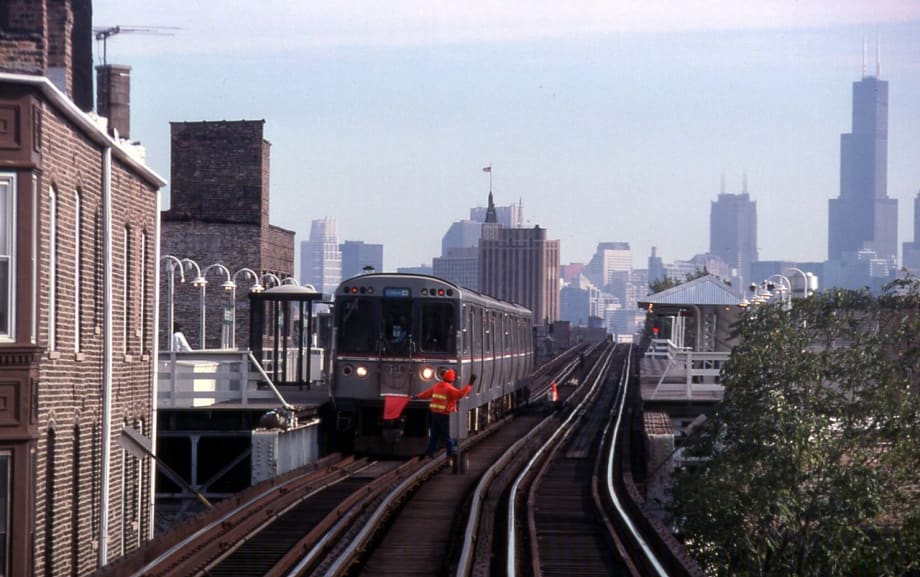
Photo courtesy David Wilson
T
he Chicago Transit Authority (CTA) board approved the award of a $25.6 million design/build contract for the rehabilitation of the Damen, Western and California stations as part of the “Your New Blue” project to improve and upgrade the O’Hare branch of the Blue Line.
The board also approved contracts for artists to develop unique artwork for each station that reflects the neighboring community and will beautify the stations for customers’ enjoyment.
The station work is part of the $492 million Your New Blue plan announced in December by Mayor Rahm Emanuel and Gov. Pat Quinn — the largest comprehensive investment for the Blue Line since it was extended to O’Hare in 1984.
Part of Mayor Emanuel’s Building a New Chicago program to improve and modernize infrastructure, the project includes several track and station improvement projects along a 12.5-mile stretch of the Blue Line O’Hare Branch between the Grand and Cumberland stations, as well as upgrades to the signal system between the Jefferson Park and O’Hare stations.
The Damen, Western and California stations were originally constructed nearly 120 years ago and have undergone varying degrees of repairs over the years. Improvements will include exterior stationhouse restoration, such as painting, tuck-pointing, replacement of windows and doors, sidewalk repairs, and platform repairs or replacement.
After reviewing 100 responses to a Call for Artists issued in December for artistic merit and related qualifications, the CTA awarded contracts to three artists, two of which are local, to create public art.
The CTA this spring will host public meetings to gather community input into the artwork designs. Renderings of the proposed artwork will be made public later this year.
Federal Formula Funds provided by the Federal Transit Administration (FTA) will be used to pay for the total art budget for the three stations, which is not to exceed $480,000, and includes costs associated with artist fees, fabrication, shipping/delivery, administrative fees and a project contingency fund.
Funding for Your New Blue is a combination of local, state and federal sources. The first projects of the four-year plan are expected to get under way in 2014. Project schedules are still being finalized, but the project is expected to begin with track work, following by station renovations, power upgrades and signal improvements.
More Rail

New York MTA Advances Final Contract for Second Avenue Subway Expansion
Contract Four is the largest in the Second Avenue Subway Phase 2 project and includes construction of station infrastructure, tracks, and signals for the subway expansion, MTA officials said. Work on Contract Four will begin in 2027.
Read More →
San Diego MTS Breaks Monthly Trolley Ridership Record
Agency officials said July’s ridership indicates MTS’s continued recovery from the pandemic.
Read More →
Report Examines NJ TRANSIT Reliability, Funding Challenges
The Garden State Initiative analysis examines the roles of Amtrak infrastructure, fleet management, and agency operations while recommending a more performance-based approach to improving reliability.
Read More →
Stadler, CapMetro Sign Long-Term Rail Fleet Support Agreement
Beginning in 2027, Stadler will provide on-site technical expertise, spare parts support, training, and obsolescence management to help extend the reliability and longevity of CapMetro’s GTW fleet.
Read More →
Biz Briefs: Alstom Lands Canadian Contract, LYT to Supply California TSP, and More
In METRO's latest installment, we take a look at recent news from Complete Coach Works, Beep, FlixBus, and more partnerships making headlines across the transportation sector.
Read More →
CATS Gold Line Marks 5 Years of Service, 2.8M Passenger Trips
With a six-mile expansion planned, the Charlotte streetcar is positioned to connect more neighborhoods and major transit hubs across the region.
Read More →
Why Simulating Pedestrian Movement Has Become Essential for Modern Rail Stations
Pedestrian microsimulation is helping rail planners identify bottlenecks, test station designs, and prepare complex transit hubs for growing passenger volumes.
Read More →
Amtrak Begins Major Construction at New York’s Sunnyside Yard
The new maintenance facility will support Amtrak’s Airo trainsets while improving maintenance efficiency and turnaround times in New York.
Read More →
Chicago Leaders Unveil Plans for O’Hare Airport Express Train
The privately developed project would offer a 15-minute trip between downtown and O’Hare’s Terminal 2, with trains operating every 15 minutes on a dedicated track. The service would use battery-electric trains and three existing freight rail rights-of-way.
Read More →
OCTA Maps Out 30-Year Strategy to Protect Coastal Rail Corridor
The draft feasibility report identifies strategies to protect the coastal rail line for decades as the agency continues near-term stabilization and sand placement efforts.
Read More →