



Megabus focus of DePaul U. report
The Chaddick Institute for Metropolitan Development study evaluates the prices of travel between October 2013 and January 2014 on various modes of transportation — air, bus and rail — in 52 popular city pairs with travel distances between 100 and 500 miles under various advance purchase scenarios.

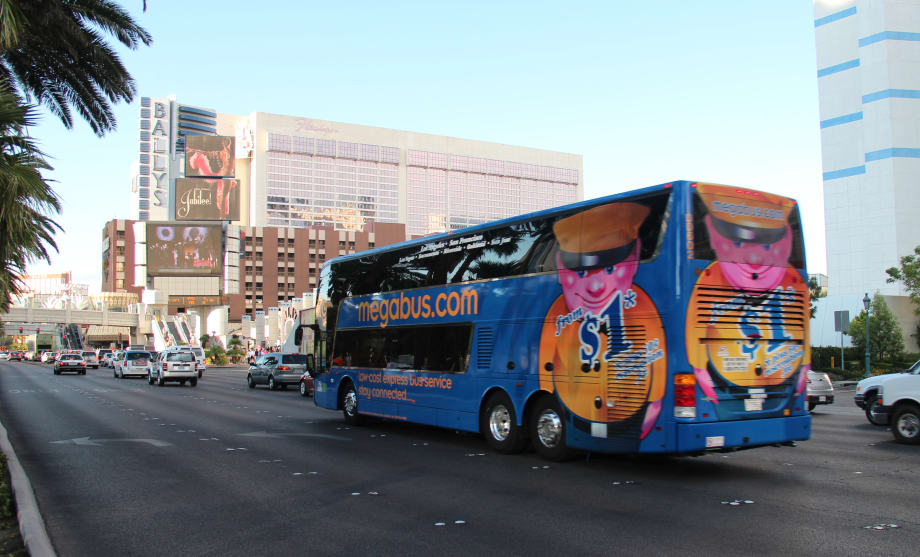
The study evaluates the prices of travel between October 2013 and January 2014 on various modes of transportation — air, bus and rail — in 52 popular city pairs with travel distances between 100 and 500 miles under various advance purchase scenarios. The results show that the differences in fares between modes are significant and larger than is commonly believed.
"The savings from bus travel proved remarkably robust, regardless of whether a consumer books in advance or waits until just a day before departure to buy a ticket," said Joseph P. Schwieterman, professor, School of Public Service and Director of Chaddick Institute for Metropolitan Development at DePaul University. "This ticketing flexibility adds greatly to the popularity of bus travel."
As an example, in the New York to Pittsburgh city pair, the average fare was $51.30 for megabus.com, with a seven-day advance purchase. Under the same date/parameters, air travel was considerably more expensive at $182.50 and $186.78 on Southwest.com and Orbitz.com, respectively.
Highlights of the study include:
City-to-city bus companies, including megabus.com, have dramatically expanded in recent years and have added service at a rate far faster than any other transportation mode.
Customers save at least $31 on one-way trips compared to train travel and $169 per trip compared to air travel.
Travelers in the Northeast enjoy the largest savings when switching from trains to buses. A traveler booking a week ahead saves an average of $67 per one way trip.
Travelers in the Pacific enjoy the largest savings when switching from air travel to buses. A traveler booking four weeks ahead saves an average of $142 one way.
One-way price difference between bus and air travel can exceed $250 each way.
Even air travelers booking their trips four weeks in advance to obtain the lowest airfares save nearly $200 roundtrip by taking the bus.
Bus customers who purchase tickets one day before departure save an average of more than $300 roundtrip over what they would spend for airline tickets booked a week in advance.
In all regions of the country, motor coach travel is substantially less expensive than single-occupant driving, even for motorists who consider only the cost of fuel and tolls and ignore depreciation.
To view the study, click here.
More Motorcoach

METRO Opens Submissions for 2026 Motorcoach Awards
Nominations are now being accepted for METRO Magazine’s Operator of the Year and Innovative Operator of the Year awards.
Read More →
Biz Briefs: Alstom Lands Canadian Contract, LYT to Supply California TSP, and More
In METRO's latest installment, we take a look at recent news from Complete Coach Works, Beep, FlixBus, and more partnerships making headlines across the transportation sector.
Read More →
Biz Briefs: RIPTA Unveils New Frontrunners, Clevland RTA Adds New Siemens, and More
In METRO's latest installment, we take a look at recent news from Siemens, Prevost, Dodge, and more partnerships making headlines across the transportation sector.
Read More →
People Movement: Holly Arnold Joins Transdev and More
In this edition, we also cover recent appointments and announcements at Pace, CamTran, MCI, and more, showcasing the individuals helping to shape the future of transportation.
Read More →
ABA Report: Motorcoach Travel Generates $161.6B Economic Impact
The 2025 analysis finds motorcoach travel supported nearly 900,000 jobs and generated $28 billion in federal, state, and local taxes.
Read More →
CharterUP’s Armir Harris on Technology, AI, and the Future of Group Mobility
In a recent episode of METROspectives, CharterUP Founder/CEO Armir Harris discussed the company’s evolution from an online charter bus marketplace into a technology platform supporting public- and private-sector mobility and much more.
Read More →
People Movement: ABC Names John Walsh as Chief Commercial Officer
In this edition, METRO also covers recent appointments and announcements at the DART, STV, and more, showcasing the individuals helping to shape the future of transportation.
Read More →
From Surviving to Thriving: Building Stronger Transportation Organizations
Bus Business Consultants founder Brian Dickson shares lessons on leadership, organizational health, and creating options for long-term success in a changing transportation industry.
Read More →
Biz Briefs: Luminator Marks Milestone and More
From manufacturers and suppliers to transit agencies and motorcoach operators, these updates offer a snapshot of the projects, partnerships and business moves driving the industry forward.
Read More →
ABAF Study Reveals Growing Insurance Crisis for Motorcoach Operators
Preliminary findings show 98% of operators faced premium increases over the past five years, while shrinking insurer participation is putting added pressure on businesses and customers.
Read More →