



Lane Transit District employs innovation to bolster accessibility
Eugene, Ore.-based agency believes all customers have the right to travel throughout the community on public transit, which is a major reason it began retrofitting buses with lifts in the early 1980s.


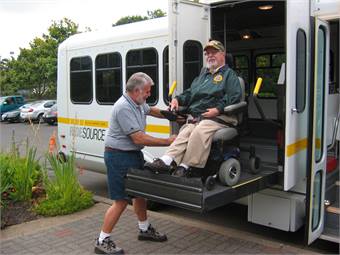
In 1985, LTD became the first transit agency in the nation to be 100% lift accessible.
Eugene, Ore.-based Lane Transit District (LTD) believes all customers have the right to travel throughout the community on public transit, which is a major reason it began retrofitting buses with lifts in the early 1980s.
By 1985, LTD became the first transit agency in the nation to be 100% lift accessible, giving the agency room to continue to innovate and refine its accessibility programs over the years.
"There is a culture within the Eugene community of being inclusive, and it has really permeated through every agency to treat people with equality,” explained Kris Lyon, human services transportation coordinator for LTD. “To this day, we have people with disabilities that move here because we are so transit friendly.”
Transit host, trainer programs
LTD’s programs include a first-of-its-kind transit trainer and transit host program that was implemented more than a decade ago, allowing people with disabilities to successfully use fixed-route bus service.
The programs have been developed by LTD’s Accessible Services staff and the teamwork it has developed through its relationship with Alternative Work Concepts (AWC), a nationally recognized nonprofit employment agency for persons who experience physical and multiple disabilities, and the LTD’s Accessible Transportation Committee (ATC). Teamwork is further bolstered through the efforts of LTD operations staff, which coordinates individualized training sessions and ensures LTD buses are dispatched to individuals’ homes for transit training.
“We have some people with some pretty profound disabilities that are now able to ride the bus because they’ve been trained, on whatever route they take, what they need to watch for and where they need to get on and off the bus,” Lyon said. “Because of that consistency, they are able to ride the bus at a significantly lower cost.”
Lyon added if the rider needs to transfer, the agency’s transit host program kicks in.
“The transit host will meet somebody at one bus and make sure they make their transfer to the next bus. The transit hosts are also out on the platform at our main stations to answer questions for other customers,” she said. “Also, AWC employs people with disabilities, so quite often you will have somebody with a physical disability training somebody with a physical disability.”
Lyon said the overall benefit of having travel training and transit host programs is a significant cost-savings per trip for the agency — $34 per trip on paratransit versus $3-plus on fixed-route services.
Streamlining the booking process
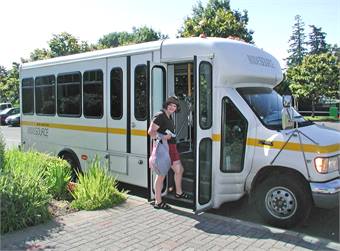
To make the process of booking trips easier for its customers, LTD began an effort to create a regional one-call center, the RideSource Call Center, which began operating in 2008, through a collaborative effort that included the support of local community-based organizations.
LTD’s RideSource dispatches Americans with Disabilities Act (ADA) rides, along with Medicaid medical rides, for people who are elderly, people who have disabilities and the region’s low-income populations, through partnerships with 23 different local private transportation providers it contracts with in addition to its own paratransit fleet.
The program enables the customer to call one number and the RideSource database knows what programs they are eligible for and assigns the most appropriate, lowest-cost option to meet their need. To make the program more efficient, the agency began expanding and refining its assessment program around 2009.
The multimillion-dollar program expansion also features the development of technological solutions that aid in brokering rides to the lowest-cost provider, and by combining trips in the most efficient manner.
“Everybody calls into one call center where we take care of the administrative pieces of who pays for the trip and which type of vehicle will be used for the trip,” explained Lyon. “It is much more seamless for the customer to only have to call one number, know that everything else will get taken care of and that a vehicle will show up at their door .”
In 2012, LTD was awarded a $1.1 million grant through FTA’s Veterans Transportation and Community Living Initiative, which is allowing the RideSource Call Center to upgrade its software systems that were developed in 1994, to better position the agency to serve veterans in the community. At press time, the agency was on the verge of signing a contract for the upgrade.
“The new contract will bring more customization for us to be able to do things like bid trips, mileage reimbursement and assign bus passes,” Lyon said. “It will also create a smoother way for information to flow back and forth between us and the subcontractor transportation providers as well as us and our assessment partners.”
More Paratransit

Biz Briefs: RIPTA Unveils New Frontrunners, Clevland RTA Adds New Siemens, and More
In METRO's latest installment, we take a look at recent news from Siemens, Prevost, Dodge, and more partnerships making headlines across the transportation sector.
Read More →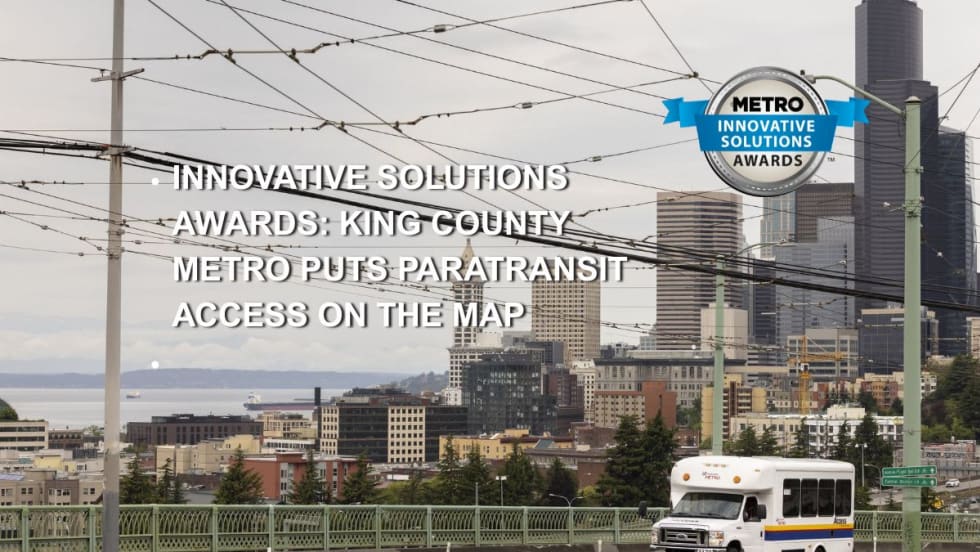
King County Metro Makes ADA Paratransit Easier to Navigate
METRO's Innovative Solutions Award winner replaces complex service-area descriptions with an accessible, interactive map that puts paratransit information directly in customers’ hands.
Read More →
Jacksonville’s NAVI Project Charts a New Course for Autonomous Public Transportation
Through its NAVI program, JTA is showing how autonomous vehicles, intelligent infrastructure, and coordinated operations can work together to deliver everyday public transportation.
Read More →
Driving Smarter Paratransit
John Hanlon shares how AlphaRoute is leveraging AI-powered technology to help paratransit providers optimize operations, support frontline staff, and enhance the rider experience.
Read More →
METRO Magazine Announces 2026 Innovative Solutions Awards Winners
Projects Recognized for Advancing Mobility Through Technology, Accessibility, Workforce Innovation, and Operational Excellence
Read More →
Biz Briefs: STV teams with Amtrak, Motorcoach Operators Boost Fleet and Land Contracts, and More
From manufacturers and suppliers to transit agencies and motorcoach operators, these updates offer a snapshot of the projects, partnerships and business moves driving the industry forward.
Read More →
Biz Briefs: Masabi Teams with St. Louis Metro and More
In METRO's latest installment, we take a look at recent news from Transdev, Hitachi, and more partnerships making headlines across the transportation sector.
Read More →
New York MTA Leverages Zoning Program to Advance Station Accessibility
Accessibility enhancements at Nevins St Station will be financed through a development agreement tied to the MTA's Zoning for Accessibility initiative.
Read More →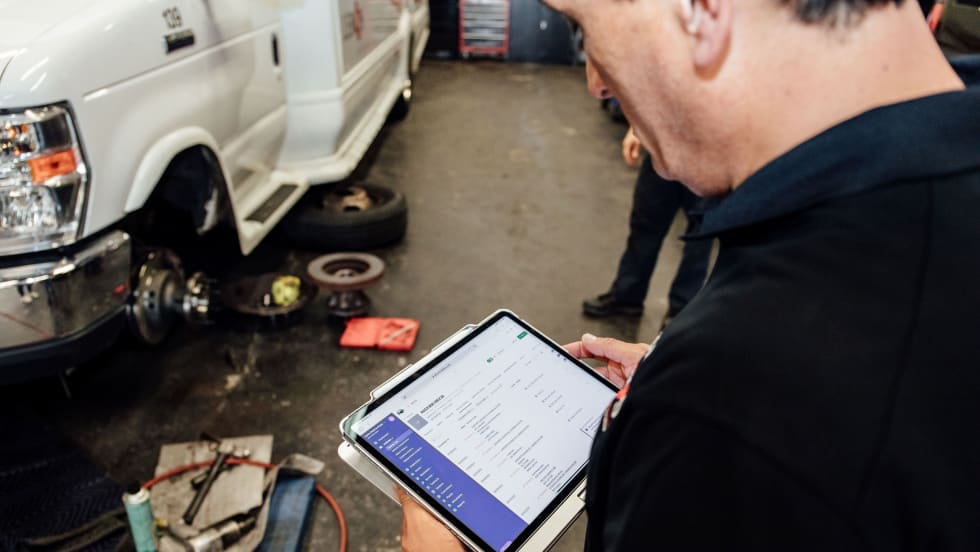
Reinventing Fleet Maintenance with Real-time Visibility and AI
Transit leaders need to know what needs fixing, where to look, who is responsible, when work is completed, and what it costs without having to chase information across disconnected systems.
Read More →
SamTrans Sets Priorities for Potential Connect Bay Area Revenue
The board-approved framework allocates future funding to maintaining service, rider improvements, equity initiatives, and infrastructure repairs.
Read More →