



Texas agency showcases new station, buses
El Paso, Texas' Sun Metro showcased its new low-floor Brio vehicles from New Flyer, which will run on CNG, have three doors for faster boarding, free Wi-Fi, two TV monitors for passenger information, three interior bicycle racks, two wheelchair positions and signal prioritization.

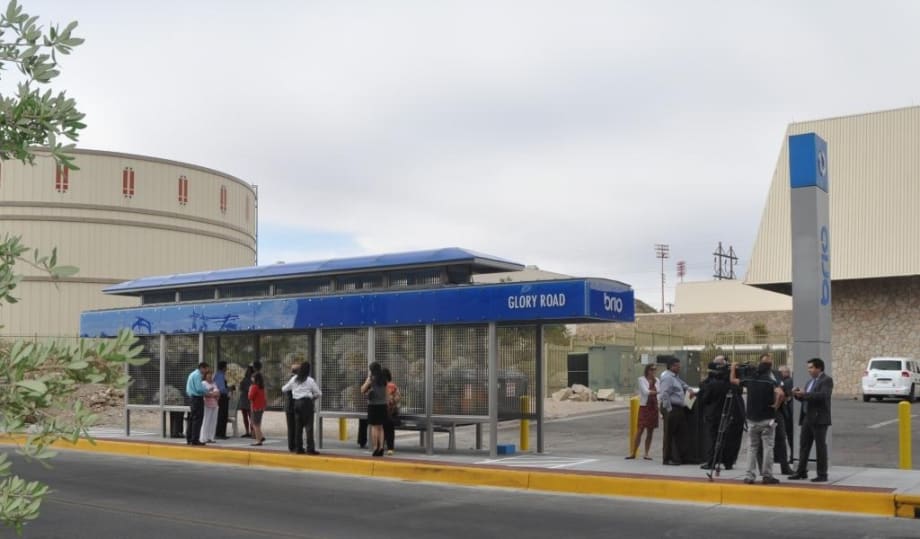
El Paso, Texas’ Sun Metro and city officials introduced the first completed Rapid Transit System (RTS) station and showcased eight of the 60-foot articulated vehicles that will be used for the new upcoming RTS service, known as the Sun Metro Brio.
Sun Metro Brio will introduce El Pasoans to a high-quality transit service that offers similar benefits to light rail transit, such as improved speed and reliability, but at a much lower implementation cost.
Construction along the Mesa Street corridor — the first of four corridors — began in June 2013 and is ongoing. The construction consists of the installment of 22 Brio stations from the Downtown Transfer Center to the Westside Transfer Center.
The Glory Road inbound (southbound) station became the first completed station for the Brio RTS Mesa corridor. The total project cost for the Brio Mesa corridor is $27.1 million, of which $13.5 million is funded by the Federal Transit Administration.
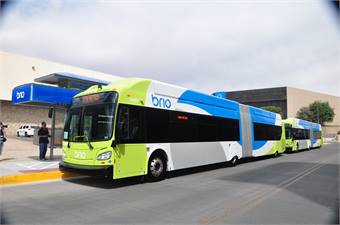
The low-floor New Flyer Brio vehicles will run on compressed natural gas, have three doors for faster boarding, free Wi-Fi, two TV monitors for passenger information, three interior bicycle racks, two wheelchair positions and signal prioritization.
The Sun Metro Brio will use modern, rubber-tire, high capacity New Flyer articulated vehicles. The vehicles will have a frequency of 10 minutes during peak service and 15 minutes during off-peak Monday through Friday, a 20-minute frequency on Saturday and no service on Sunday.
The low-floor Brio vehicles will run on compressed natural gas, have three doors for faster boarding, free Wi-Fi, two TV monitors for passenger information, three interior bicycle racks, two wheelchair positions and signal prioritization.
The Glory Road Brio station, which is distinctly branded, offers shade screens, free Wi-Fi, landscaping, a real-time arrival sign, a 17-foot high pylon, benches, bike racks, a BigBelly solar-powered trash compactor and a 10-inch platform to allow for near-level boarding.
A ticket vending machine will be installed prior to the start of the Brio service in late summer/early fall to allow for an improved and faster fare collection system.
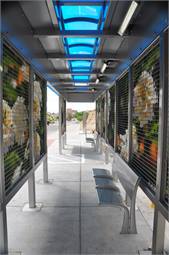
The majority of the stations will feature public artwork that is collectively known as
The majority of the stations, which will be placed about a mile apart, will also feature public artwork that is collectively known as "Leaves of Air," created by Boston-based Artist Catherine Widgery. The elusive artwork, which is set in the perforated shade screens, are images of local flora that can only be perceived as people move past the Brio station.
More Bus

Scenes from APTA TRANSform & EXPO 2026
Transit leaders, manufacturers, and industry professionals gathered in Chicago to explore new technologies, share ideas, and discuss the future of public transportation.
Read More →
More Than a Summer Job: Building the Next Generation of Transit Talent
The Delaware River Port Authority and PATCO have transformed their internship program into a hands-on professional development experience that introduces students to the breadth of transportation careers — and creates a pipeline for future employees.
Read More →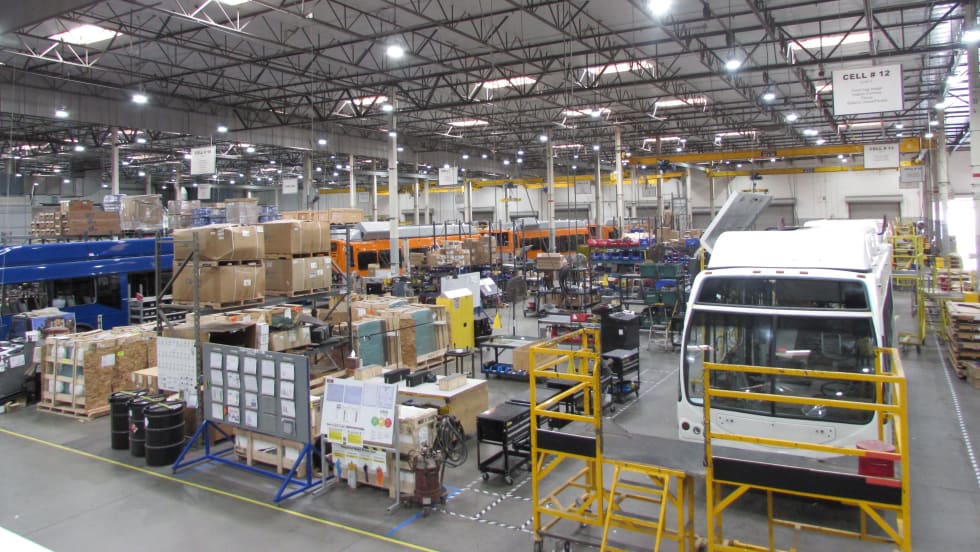
LA Metro Board Awards 220 Battery-Electric Bus Contract to ENC
The contract, which is the largest base award of battery-electric buses by a U.S. transit agency, will be built in Southern California, sustaining good jobs as LA prepares to welcome the world in 2028
Read More →
Public Transit Conference Returning to GFX in 2027, Call for Papers Now Open
The Call for Papers is now open, allowing transit agency professionals and industry experts to help shape the PTC educational program by submitting session ideas for consideration.
Read More →
Indian River Transit’s Community-Focused Approach Earns National Recognition
Named APTA’s 2026 Outstanding Public Transportation System in its size category, Florida’s Indian River County transit system continues to grow ridership through fare-free service and a focus on evolving community needs.
Read More →
ENC Lands MATA Contract and More in Biz Briefs
In this edition of Biz Briefs, we spotlight the latest developments shaping the future of mobility.
Read More →
From Surviving to Thriving: Building Stronger Transportation Organizations
Bus Business Consultants founder Brian Dickson shares lessons on leadership, organizational health, and creating options for long-term success in a changing transportation industry.
Read More →
Everett Transit, Community Transit Outline Consolidation Agreement
The proposed agreement calls for a 50% increase in bus service in Everett, a new microtransit zone, continued paratransit service, and the transfer of Everett Transit operations to Community Transit.
Read More →
SEPTA Details Accelerate Vision for Transit System
The plan outlines investments in trolley modernization, new Metro and Regional Rail vehicles, accessible stations, and more frequent bus and rail service.
Read More →
Report: Transit Bus Manufacturing Supports 34,100 Jobs, $5.1B in GDP
The “Buses Mean Business” report examines the transit bus manufacturing industry’s economic footprint, supply chain, and rising demand for vehicle replacements.
Read More →