



U.S. senators push to raise gas tax to shore up Trust Fund
Proposal would increase the federal gasoline and diesel taxes by six cents in each of the next two years for a total of 12 cents. This would provide enough funding to offset current MAP-21 spending levels over the next 10 years.

Architect of the Capitol
Architect of the Capitol
Two U.S. senators this week unveiled a proposal to raise the gas tax to shore up up the Highway Trust Fund, which funds improvements to roads, bridges and transit systems.
U.S. Senator Chris Murphy (D-Conn.) and U.S. Senator Bob Corker (R-Tenn.) bipartisan proposal to make changes to the federal motor fuels tax, would create a long-term, stable funding mechanism for the Highway Trust Fund and enact tax relief for American families and businesses.
“For too long, Congress has shied away from taking serious action to update our country’s aging infrastructure,” said Senator Murphy. “We’re currently facing a transportation crisis that will only get worse if we don’t take bold action to fund the Highway Trust Fund.”
RELATED:Sec. Foxx sends transportation bill to Congress
The federal Highway Trust Fund provides more than half of the country’s spending on transportation projects and will begin to run dry in July, likely halting the construction of any new transportation projects without action from Congress. This will create a $50 billion hole in states’ 2015 transportation budgets and a $160 billion hole in state budgets over the next decade if left unaddressed.
ekornblut via Flickr
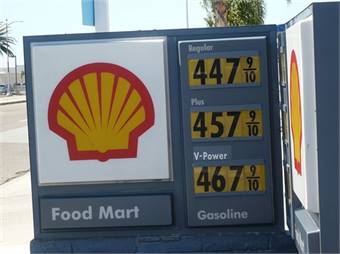
The federal gas and diesel taxes, which are used to fund this account, have not been updated in over 20 years -- despite the desperate need for road and bridge improvements. As a result, the purchasing power of the gas tax is approximately 63% of what it was in 1993, and continues to decline. A change to the federal gas tax would not only strengthen purchasing power, it would also create thousands of new jobs and allow states to invest in long-term economic development projects.
The senators’ proposal would increase the federal gasoline and diesel taxes by six cents in each of the next two years for a total of 12 cents. This would provide enough funding to offset current MAP-21 spending levels over the next 10 years and replace all of the buying power the federal gas tax has lost since it was last raised in 1993.
The plan would index the gas tax to inflation, using the Consumer Price Index (CPI), to ensure that it remains viable into the future.
RELATED:The most important P in PPP is the last one
To offset the revenue raised from increasing the gas tax to pay for roads and transportation projects, Murphy and Corker propose providing net tax relief for American families and businesses. Examples of tax relief could include: permanently extending some of the tax provisions in the “tax extenders” bill that already have broad, bipartisan support, creating potentially billions of dollars in permanent tax relief for American families and businesses over the next 10 years alone; or another bipartisan proposal to reduce taxes by at least the amount of revenue raised from the gas tax over the next decade.
Historically, this proposal has received bipartisan support. Presidents Ronald Reagan, Bill Clinton, and George H.W. Bush all raised the gas tax in order to fund the Highway Trust Fund and make infrastructure improvements.
More Bus

New York MTA Plans Largest Bus Fleet Upgrade in More Than a Decade
The agency is seeking manufacturers for 650 new CNG buses to replace aging vehicles, improve reliability, and advance its broader fleet modernization strategy.
Read More →
Building a Flexible Path to Transit Electrification
John Hroncich discusses BAE Systems’ modular and scalable approach, lessons learned from decades of real-world operations, and how agencies can identify electrification strategies that fit their fleets.
Read More →
Bus Tech Talk: Keeping Transit Technicians Ahead of the Technology Curve
LA Metro’s Obed Mejia discusses technician training, evolving maintenance technology, fleet replacement, and strategies for getting the most out of today’s transit fleets.
Read More →
Biz Briefs: RIPTA Unveils New Frontrunners, Clevland RTA Adds New Siemens, and More
In METRO's latest installment, we take a look at recent news from Siemens, Prevost, Dodge, and more partnerships making headlines across the transportation sector.
Read More →
People Movement: Holly Arnold Joins Transdev and More
In this edition, we also cover recent appointments and announcements at Pace, CamTran, MCI, and more, showcasing the individuals helping to shape the future of transportation.
Read More →
The High Cost of Transit Buses: Industry Leaders Look to Procurement Reform
Transit leaders and policymakers examine how standardized bus designs, streamlined procurement, and predictable funding could help agencies stretch budgets and deliver better service.
Read More →
The Business Voice Behind Public Transportation
As chair of APTA’s Business Members Board of Governors, Ray Melleady explains how more than 850 business members are partnering with transit agencies to advance funding, innovation, and industry-wide collaboration.
Read More →
From Surviving to Thriving: Building Stronger Transportation Organizations
Bus Business Consultants founder Brian Dickson shares lessons on leadership, organizational health, and creating options for long-term success in a changing transportation industry.
Read More →
Finding the ‘Happy Medium’: Optimizing Maintenance Without Sacrificing Reliability
The key to maintenance optimization isn’t doing less work—it’s doing the right work at the right time on the right assets.
Read More →
LA Metro, City of West Hollywood, and Partners Advance Smarter Bus Lane Enforcement
The award-winning partnership combines AI-powered detection with human oversight to improve bus reliability, accessibility, and enforcement efficiency.
Read More →