




Learn More: Are 'Bad' Microbes Getting a 'Free Ride' on Your Transit System?
Houston Metro: A Story of Innovation, Evolution
The Metropolitan Transit Authority of Harris County is an example of what can be achieved when vendor and customer work together as a team. The partnership began over 10 years ago in 2003 with an Integrated Vehicle Operations Management System (IVOMS) for Metro’s 1,000-plus fleet.
October 13, 2014
3 min to read
The Metropolitan Transit Authority of Harris County (Houston Metro) is an example of what can be achieved when vendor and customer work together as a team. The partnership began over 10 years ago in 2003 with an Integrated Vehicle Operations Management System (IVOMS) for Metro’s 1,000-plus fleet.
Over the next 10 years, the agency and vendor, INIT, continued to expand and upgrade the IVOMS system without cannibalizing the original systems on or off vehicle.
The Original System
This first phase of IVOMS included Wide Area Data using a Motorola RD-LAP data system; bulk data via a Wi-Fi LAN; both aural and visual ADA compliant announcements on the fixed-route vehicles; automatic passenger counting (APC) with near real-time reporting; Integration with legacy CAD components to collect login information; an MDT for messaging and backup login; GPS tracking; and Traffic Signal Priority integration.
The Central system supported a dozen workstations with map displays and a set of dispatching measures, including bi-directional text messaging, covert alarms, and a full suite of tools: Integration of the existing scheduling and run cutting software; system administration, announcements creation; and robust reporting software.
The system supported over 1,300 vehicles with INIT’s vehicle logic unit (VLU), COPILOTpc, and a server farm comprised of physical servers and a SAN for data storage.
System Evolution
Due to the modular design of the INIT system, Houston has been able to grow IVOMS to adapt to changing customer needs and corporate directives, on both a technical and operational level. INIT implemented a series of additional functions including:
Integrating the third party Q Card smart card payment validators on all fixed-route buses.
Adding a variety of supportive dispatcher functions.
Adding signage in the Market Street office building to display the total number of riders served each day in near real time.
Migration of Technologies
The first major advancement in technology was to move the IVOMS system from physical servers to a fully virtualized environment. Houston was the first 1,000-plus vehicle transit system to be virtualized in the world. The migration allowed Metro to take advantage of features like VM Ware’s HA (High Availability), as well as employ fewer physical servers leading to cost savings.
As part of Metro’s Safe Bus project, INIT data was migrated to 3G/4G cellular and Wi-Fi through Cisco Mobile Routers and Motorola Modems. This required the support of both RD-LAP and the Cisco Router simultaneously as vehicles were migrated.
In order to support third-party real-time passenger information applications, INIT implemented SIRI and GTFS-RT interfaces for Metro. These interfaces supply INIT departure prognosis for use by third-party Web, smartphone and IVR applications.
Metro’s latest project is the full integration of their P25 Motorola voice radios into the IVOMS system. This comprises additions to both the central and on-vehicle systems to provide full functions including, covert microphones, group, individual and calls to passengers. A graphical interface is integrated into the dispatcher workstations to establish voice calls.
Summary
Over the 10 years since IVOMS was first implemented, INIT has worked with Houston Metro to expand and modernize the system successfully without interruption to service. The modern evolution of technologies included: new server configurations; additional on-vehicle integration to third-party devices like the routers and radios; and many customer facing innovations. However, through all of these, the core system has not been replaced. The vehicles are still running on the original VLUs and the core components of the central system are still in service.
As Houston continues to grow and expand their fleet, newer VLUs will be integrated. INIT will seamlessly support both types as all systems are backward compatible.
About the Author: Bill McFarland is director of technical services for INIT, Innovations in Transportation Inc.
More Bus

The Business Voice Behind Public Transportation
As chair of APTA’s Business Members Board of Governors, Ray Melleady explains how more than 850 business members are partnering with transit agencies to advance funding, innovation, and industry-wide collaboration.
Read More →
From Surviving to Thriving: Building Stronger Transportation Organizations
Bus Business Consultants founder Brian Dickson shares lessons on leadership, organizational health, and creating options for long-term success in a changing transportation industry.
Read More →
Finding the ‘Happy Medium’: Optimizing Maintenance Without Sacrificing Reliability
The key to maintenance optimization isn’t doing less work—it’s doing the right work at the right time on the right assets.
Read More →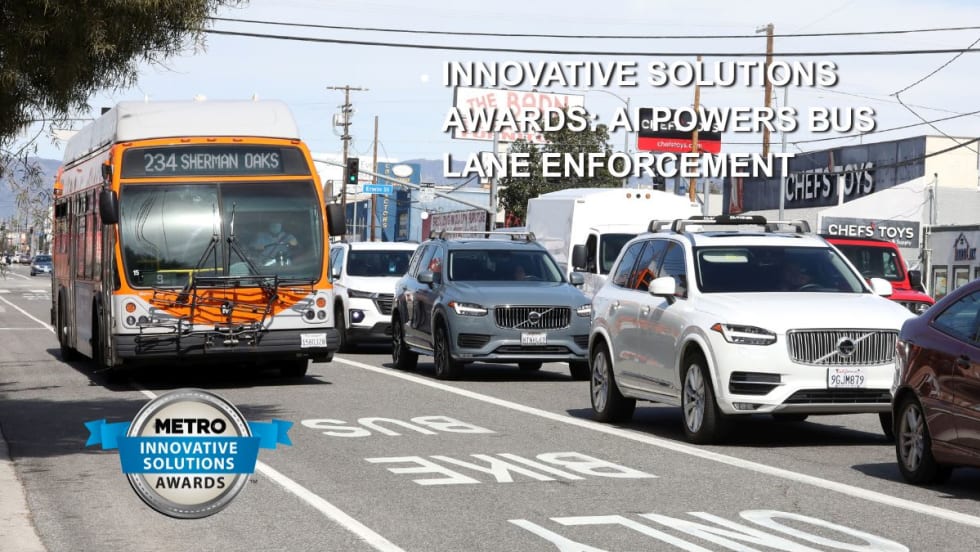
LA Metro, City of West Hollywood, and Partners Advance Smarter Bus Lane Enforcement
The award-winning partnership combines AI-powered detection with human oversight to improve bus reliability, accessibility, and enforcement efficiency.
Read More →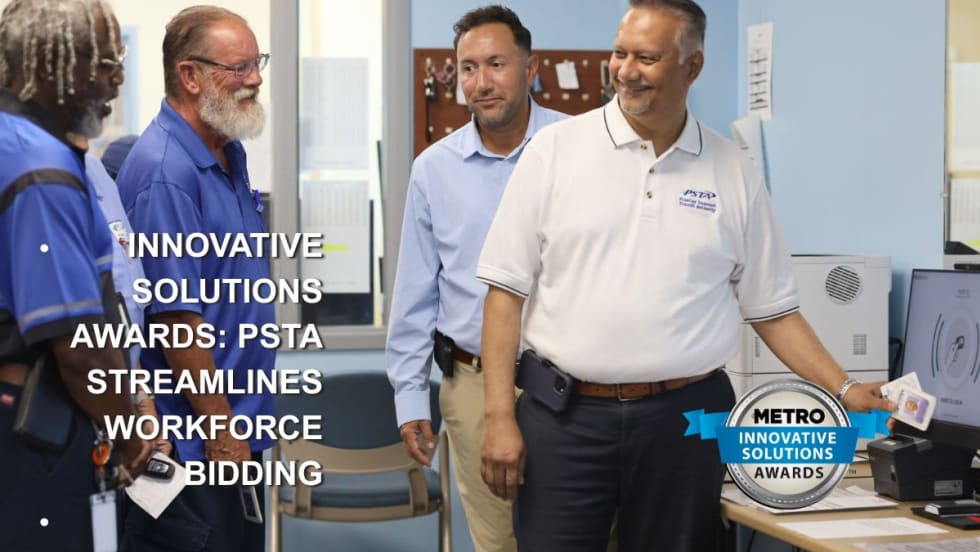
PSTA Modernizes Workforce Management with Digital Bidding System
The award-winning Workforce Transit Modernization project replaced paper bidding with a transparent digital platform, cutting administrative effort while improving access for operators.
Read More →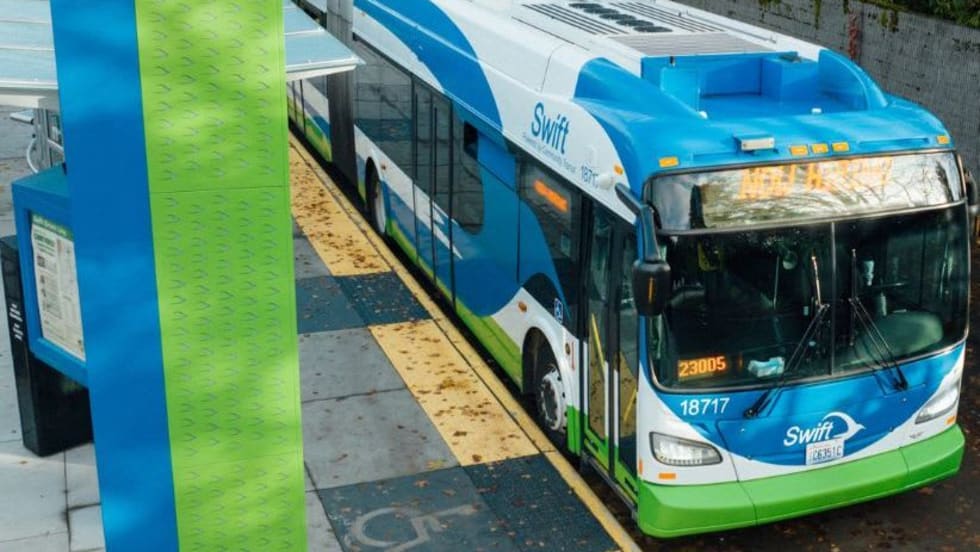
Washington's Community Transit Sets Six-Year Roadmap for Growth, Expansion
Approved TDP targets more bus service, new mobility options, Swift BRT expansion, and a potential Everett Transit annexation.
Read More →
DART Customer Satisfaction Reaches Six-Year High
Overall satisfaction rose to 74.9%, while the agency’s Net Promoter Score reached a record 33.7.
Read More →
How DART's GoPass Is Redefining Regional Mobility
Serving 14 transit agencies, GoPass simplifies multimodal travel by allowing riders to plan, pay for, and manage an entire trip through one app.
Read More →
Biz Briefs: OCTA Taps Clean Energy for Hydrogen Station, Stadler to Supply Via Rail Vehicles, and More
From manufacturers and suppliers to transit agencies and motorcoach operators, these updates offer a snapshot of the projects, partnerships and business moves driving the industry forward.
Read More →
METRO Magazine Announces 2026 Innovative Solutions Awards Winners
Projects Recognized for Advancing Mobility Through Technology, Accessibility, Workforce Innovation, and Operational Excellence
Read More →